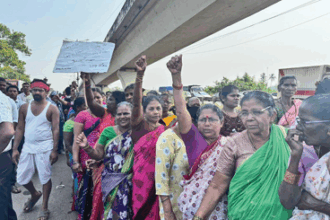
What about the ‘aam admi’?
Ever since the Union Budget on Monday, the share market – which was sliding deeply downhill for weeks – has suddenly taken an upturn. With an unprecedented 600-plus point jump on the day after the budget, the country’s bourses have gained around five per cent in value during the week since Finance Minister Pranab Mukherjee successfully presented a document that gave nothing, but also took nothing away from Indian industry.
Nothing? That is not entirely true. Business in Goa stands to lose a good deal from this budget, but more about that another time.
The thing about India’s media is that it is middle class, both in its staffing as well as in its sensibilities. And, in terms of the the viewpoints it holds and the aspirations it projects, the English language media – nationally the most important and influential – is becoming more and more metropolitan urban upper middle class. It tends to project issues and crusade on causes that concern these sections more than any other. And, not surprisingly, for the Indian media, Pranab-babu’s Budget seemed an unmixed blessing.
Not that the canny Finance Minister didn’t say all the right things. He did. Take for example the following quote, taken verbatim from the budget speech. It is long but we have included all of it, not only because it is very relevant, but because Mr Mukherjee said it so much better than we could ever have:
“Our principal concern this year has been the continued high food prices. Inflation surfaced in two distinct episodes. At the beginning of the year, food inflation was high for some cereals, sugar and pulses. Towards the second half, while prices of these items moderated and even recorded negative rates of inflation, there was [a] spurt in [the] prices of onion, milk, poultry and some vegetables. Of late, prices of onion[s] have crashed in [the] wholesale markets and we have had to remove the ban on their exports.
“Despite improvement in the availability of most food items, consumers were denied the benefit of [the] seasonal fall in prices normally seen in winter months. These developments revealed shortcomings in distribution and marketing systems, which are getting accentuated due to growing demand for these food items with rising income levels. The huge differences between wholesale and retail prices and between markets in different parts of the country are just not acceptable. These are at the expense of remunerative prices for farmers and competitive prices for consumers.”
That, in a nutshell, says it all. It is a matter of ‘principal concern’. Food prices are rising disproportionately. And even when the food prices go down, it hurts the farmers, but does not help the consumers. The only people who benefit, at all times, are wealthy middlemen and traders. The government knows this, just like all the ‘aam admi’ that struggle to stretch their monthly budgets to maintain their standards of living, but mostly fail.
But what does the government do about this, apart from acknowledging it so eloquently? Nothing.
There was no pledge to fix the shortcomings in the country’s distribution and marketing systems, which he identified as the main cause of the problem. There were no market intervention measures contemplated to ensure either that farmers got remunerative prices or that consumers got affordable grains, pulses and vegetables. There were no threats to hoarders and price manipulators. Apart from a general assurance to bring a ‘Right to Food Bill’ before Parliament in the coming financial year, the Finance Minister made no announcements – none at all – to address what he said was the government’s ‘principal concern’. That’s the so-called ‘aam admi’ government for you…
7 March,2011