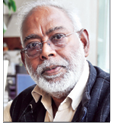
JOHN DAYAL
In the harrowing aftermath of the 2012 Nirbhaya gang-rape case in Delhi, north India’s television studios became battle grounds for impassioned debates on justice, retribution, and the role of capital punishment. The brutal assault and subse quent death of the 23-year-old physiotherapy student, pseudony mously known as Nirbhaya (“fear less”), ignited nationwide outrage. Her mother, Asha Devi, emerged as a poignant national icon. Night after night, Asha Devi appeared on prime-time shows, her voice trembling yet resolute, demand ing the death penalty for the four convicted perpetrators. This col umnist found himself facing her ire in the debates as confirmed abolitionist. “They don’t deserve to live,” she repeatedly asserted, channelling the collective grief and fury of a nation grappling with endemic vi olence against women. Eventually, after years of le gal battles, all four convicts were hanged in Tihar Jail on March 20, 2020—a moment hailed by many as justice served. Yet, despite this high-profile ex ecution, rape cases in India have continued to rise alarmingly, par ticularly against young girls and Dalit women. According to the National Crime Records Bureau (NCRB) data for 2024, reported rape cases in creased by 12% from the previous year, with over 31,000 incidents, many involving minors and mar ginalised communities. A 2025 report by the Centre for Dalit Rights highlighted that Dalit women face disproportionate vi olence, with conviction rates in such cases hovering below 25%. Patently, the death penalty has failed to deter perpetrators or ad dress systemic vulnerabilities. But it has thoroughly exposed capital punishment’s fundamental flaws: It offers illusory deterrence while perpetuating deep-seated inequalities. Far from curbing crime, execu tions like those in the Nirbhaya case have not stemmed the tide of sexual violence. The data shows a criminal justice system where the poor and marginalised suffer the noose while the wealthy evade ac countability. Reporters in New Delhi saw this in the case of the notorious eye surgeon to the country’s Presi dents, Dr NS Jain who had his wife Vidya Jain murdered before his eyes so he could be with his lover, had a privileged life in Tihar jail. Two poor Rajasthan landless la bourers he had hired to wield the knife were hanged. Capital punishment is discrim inatory, error-prone, ineffective, and morally corrosive—chipping away at the nation’s ethical foun dation, as articulated by noted Carnatic musician and social com mentator T.M. Krishna in his book We, the People of India: Decoding a Nation’s Symbols. The Catholic Church has said this over the decades, opposing positions held by many other churches, socially in the United States. Successive Popes have increas ingly condemned capital punish ment as incompatible with human dignity, beginning with Pope Paul VI (1963-1978), who spoke of a more compassionate approach during the post-Vatican II era. With this, Vatican’s position shifted from conditional tolerance to outright opposition as Pope John Paul II (1978-2005), in his 1995 encyclical Evangelium Vitae (The Gospel of Life), argued that the death penalty should be avoid ed unless absolutely necessary for societal defence, cases which were “very rare, if not practically non-existent.” By 1997, the Catechism of the Catholic Church had been revised to emphasise non-lethal alterna tives, Pope Benedict XVI (2005 2013), urging the minimisation and restriction of executions as they were contrary to the Gospel’s emphasis on mercy and rehabili tation. Most decisively, Pope Francis (2013-2025) declared the death penalty “inadmissible” in all cir cumstances, saying it “attacks the inviolability and dignity of the person.” Pope Francis stressed that judi cial errors, societal advancements in incarceration, and the sanctity of life render capital punishment illegitimate. He called for global abolition. The Popes’ condemnations, reinforcing that state-sanctioned killing undermines human digni ty, has gained universal resonance. The Nirbhaya executions, while emotionally cathartic for some, exemplify how capital punish ment disproportionately targets the underprivileged; their so cio-economic status mirrored the broader pattern revealed in com prehensive studies. The four convicts—Akshay Thakur, Pawan Gupta, Vinay Shar ma, and Mukesh Singh—were all from impoverished backgrounds: Migrant labourers and slum dwellers with limited education and no prior access to quality legal representation. Between 2016 and 2025, ses sions courts imposed death sen tences on 1,279 individuals. By year’s end in 2025, 574 people were on death row—the highest since 2016’s 400—predominant ly from economically vulnerable groups. The 2016 Death Penalty In dia Report by Project 39A (now named The Square Circle Clinic) analysed sentences from 2000 2015 and found 76% of death row inmates from backward classes or religious minorities. As many as 24.5% were from Scheduled Castes/Tribes, and 74.1% were economically disadvantaged. A 2023 update in the Indian Journal of Criminology extended this to 2022 data, showing per sistence: 68% of new sentences involved daily wage earners or unemployed individuals. NCRB’s Prison Statistics India 2024 corroborates, with over 60% of death row prisoners be low the poverty line. Amnesty International India’s 2025 report, Lethal Lottery, ex amined 488 sentences from 2020 2025, revealing only 3% involved affluent accused, often due to su perior legal resources. Nuances abound: Caste inter sects with class, as Dalit and Adi vasi communities face compound ed discrimination. A 2024 study by the Dalit Hu man Rights Defenders Network, which analysed 200 rape-murder cases warranting death penal ties post-Nirbhaya amendments, found 55% involved Dalit victims, but convictions were secured in only 18%, with sentences rarely upheld. No executions have occurred in cases involving corporate tycoons or politicians since independence, per a 2022 Vidhi Centre for Legal Policy analysis. Beyond inequality, the death penalty’s fallibility demands scru tiny. High acquittal rates signal rampant trial-level errors, risking irreversible miscarriages. In 2025, High Courts acquitted over 25% of appealed death sen tences, while the Supreme Court acquitted in more than half, con firming none for the third year running, The Square Circle Clinic data published in the Hindu said. Of 1,310 sentences from 2016 2025, High Courts upheld only 8.31% (70), acquitting 285 and commuting 411. The Supreme Court, reviewing 37 upheld cases, acquitted 15 and commuted 14. NCRB 2024 notes 312 pending High Court cases involving 478 persons, with delays averaging 2.99 years—up to 11.53 in Jammu and Kashmir. Post-Nirbhaya, the death pen alty’s expansion to child rape in 2018 aimed to deter, yet NCRB 2024 shows child rape up 15%, Dalit women assaults rising 20%. The Law Commission’s 2015 Report (No. 262) found no deter rence evidence, recommending abolition except terrorism. India retains death amid glob al abolition: 113 countries fully abolished by 2024, 145 in practice. The civilised way is to replace capital punishment with regu lated life sentences; CHRI 2025 shows rehabilitation cuts recidi vism 40%. And no more blood is shed. (John Dayal is an author, Editor, occasional documentary film maker and activist