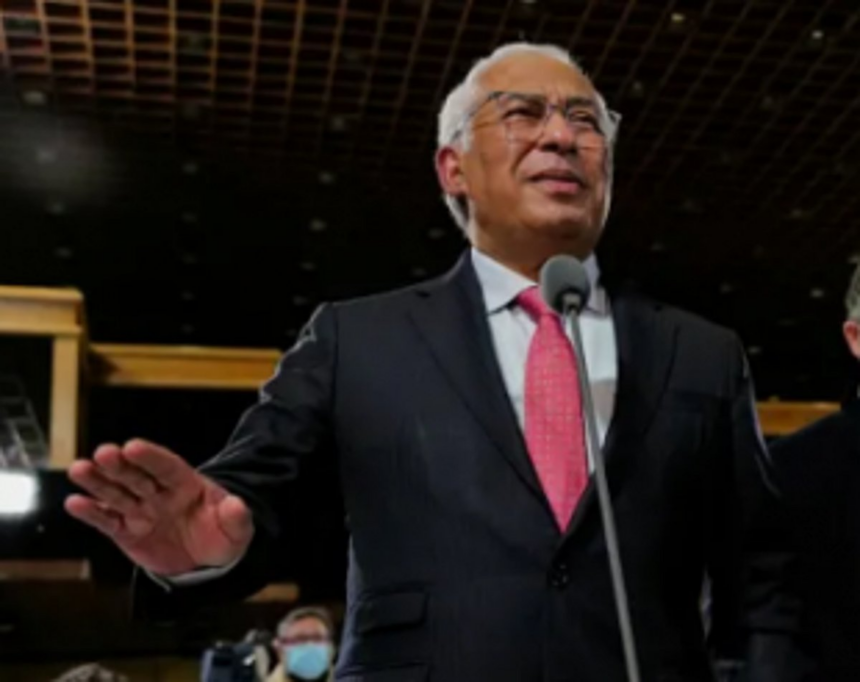
It’s been a roller coaster of a ride for Costa and his Socialist Party. In October 2015, he had led the party to what was seen as a near-impossible attempt at power. His ascent to the Prime Ministership had been delayed as the then ruling combination had been given first stab at power, but unable to produce the numbers, Costa was offered the opportunity and had managed to cobble together a coalition with the left parties. He had finally been appointed Prime Minister in November that year, at the helm of a government that had not been expected to complete even a term. He managed to stay on as prime minister for that entire four-year term and get back on track the country’s economy.
Four years later, he was back leading another coalition that lasted two years and the government was dismissed in November 2021 when it failed to get the budget for 2022 passed by Parliament. The snap polls called for January 2022 were not expected to go in his favour, but the Socialist Party managed a victory that assures it the possibility of taking forward its programme without having to rely on coalition partners.
The Socialist Party may have surprised Portugal with the victory, but getting the economy back on track is going to be a major effort. Portugal, with a population of 10.3 million people, is the poorest in Western Europe, and the post pandemic struggle to keep the growth graph up will depend on aid received from the European Union. Going the way of the new government is Costa’s past success when under his leadership the country emerged from the economic slowdown and also paid back debts. The country may need to take some more harsh decisions, and the government has the mandate, but Costa needs to ensure that his past allies are also on the same page with him.
In effect, Costa knows what he has been elected to do. He was clear that an absolute majority ‘doesn’t mean absolute power. It doesn’t mean to govern alone. It’s an increased responsibility and it means to govern with and for all Portuguese,’ media reports quoted him saying after the victory. The economy is at the top of his agenda as he said that the victory has created the conditions to bring investment and reforms for ‘Portugal to be more prosperous, fairer, more innovative’. Snap elections were called when his budget was blocked by the far-left parties and the right-wing parties working together. It was a budget that had introduced income tax cuts for the middle class and also higher public investment that would help recover from the post-pandemic downfall. Can he do it now?
Of partial Goan descent, Costa is the son of Goan writer Orlando da Costa whose ancestral house still exists in Margao. In January 2017, on his State visit to India, Costa had dropped in at the family residence. He has occupied various positions in Portugal, including that of the Mayor of Lisbon, before going on to challenge the incumbent to lead the Socialist Party and then his appointment as prime minister. When he did enter the Palacio de Sao Bento for the first time, it came as no surprise to Portuguese political observers. That was a position he had been expected to someday occupy. Now, after two terms of leading a coalition government, he can finally take his plans for the country forward, without having to depend on coalition partners.