The weekend turned sorrowful for hundreds of families across countries as within a 24-hour span nearly 300 innocent lives were lost in Seoul, South Korea and Morbi, Gujarat.
In South Korea, the Halloween eve which attracted tens of thousands to the night-life hub district of Itaewon, within hours, turned disastrous as an alley was cramped with young partygoers, suffocating many leading to cardiac arrests. In no time, the party lane turned into an emergency struck warlike zone with visuals and images going viral of people trying to provide CPRs to those in need.
Halloween was being celebrated publicly in Seoul after two years of restrictions due to the Covid-19 pandemic. An estimated 154 people lost their lives while many are still undergoing treatment.
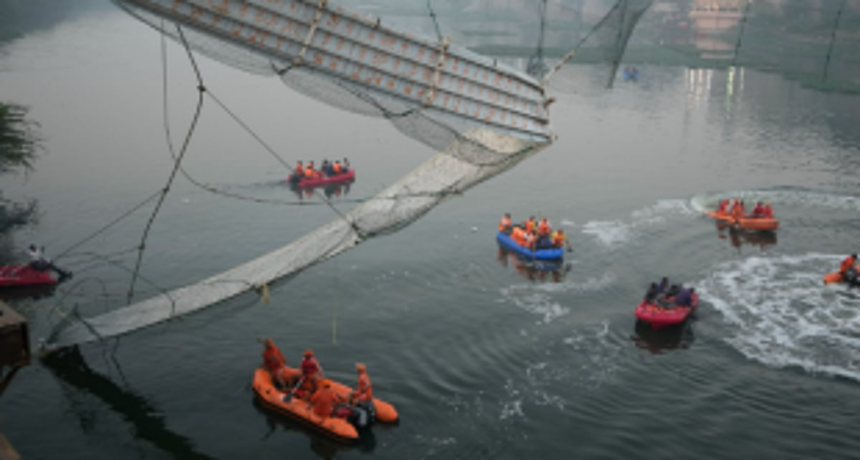
Back home in India, less than 24 hours after the Seoul tragedy, disaster struck when Morbi’s British-era cable-stayed suspension bridge collapsed just days after it was renovated and thrown open to the public. A local attraction, Sunday witnessed hundreds of visitors on the bridge and an estimated 500 people were on the bridge when the cables snapped and half of its portion collapsed into the river.
Until Monday evening, the death toll had risen to 141, even as hundreds injured are receiving treatment in hospitals.
In the aftermath of such a tragedy, a political slugfest could have been avoided. Nevertheless, the Opposition parties reminded the Prime Minister Narendra Modi his jibe to West Bengal Chief Minister Mamata Banerjee in 2016 ahead of the State Assembly elections.
On March 31, 2016 the steel span of the under-construction Vivekananda Road flyover in the Girish Park neighbourhood of Kolkata collapsed killing nearly 30 people. Then Modi had attacked Banerjee calling it “Act of God and act of fraud” as he was campaigning for the Bharatiya Janata Party ahead of the Assembly polls.
Significantly, while the State of Gujarat goes to polls, the dates to which are yet to be announced, Sunday’s tragedy has raised many questions for the BJP which has been reigning in the State for more than two decades and was elected to the seat of power at the Centre by running a campaign on the plank of ‘Gujarat model’.
An important question though is, could the tragedies have been averted, had the authorities practised caution and pressed in adequate safety measures.
It’s a well established fact that post the Covid-19 pandemic restrictions, people are expected to rush to events and places of touristic attraction.
In both the incidents, witnesses said that there was very little crowd control before the mass gathering for celebrations turned deadly. Videos and photos posted on social media show people crammed together, standing shoulder to shoulder in the narrow street in Itaewon as well as the Morbi Bridge.
For a tourist destination State, the tragedies have lessons for Goa as we open up for the tourism season. The State has already begun witnessing huge crowds of domestic tourists over the weekends and festivals. With tourism attraction events lined up during the winter, the State is expected to experience a swell in the number of visitors, especially during events such as EDMs and art festivals.
Every year, North Goa’s beach belt experiences a near chock-o-block traffic with two-wheelers, cars, buses and other vehicles trying to navigate the lanes of the popular beach destinations. The Christmas and New Year week, especially poses a great challenge to all the stakeholders.
The Goa Government should ensure that the State is prepared for the upcoming tourism season and taking a cue from the tragedies, plan effective mechanisms to avoid any disaster and also activate an effective emergency response toolkit.