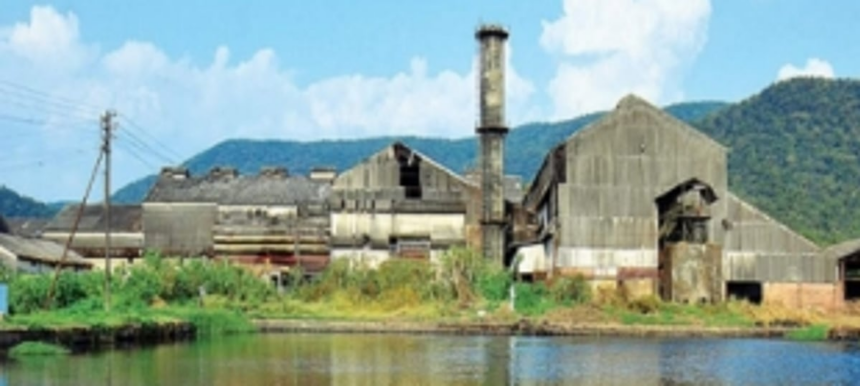
The Sanjivani Sugar Factory will not be shut down. This is news that would have come as a relief to the employees of the factory as well as the sugarcane farmers who had been facing a bleak future had the factory closed it doors. Despite assurances in the past months of it not being closed, ever since the threat of closure began to hang over the factory, there was always the possibility that it could still shut down, but now with the Cabinet decisioin to transfer if from the Registrar of Cooperative Societies to the Agriculture Department to ensure its smooth functioning, indicates that the government is indeed serious on keeping the factory open.
That, however, is just one step in ensuring that the factory does not fold up. What this factory needs is professional management that will lift it from a loss-making unit to a profitable one. Can a government department do that? Right now, the government has only said that it will soon be exploring various options to make the factory, which has not been operating for the past two seasons, operational again. One of the options that the government is looking at is a public private partnership (PPP). While that could be the way out for the unit, can the government delay it next decisions on the factory? As it is this decision has taken over a year since it was first proposed by the earlier government. Why wait, when the crushing season is fast approaching?
A promise has been made by the government, but keeping it will not be easy. Over the years the factory has accumulated problems that have remained unattended and losses that have drained the government. The farmers complain of a raw deal and almost regularly the crushing of sugarcane could not be taken up due to low production volumes. In August last year, the government had promised a new lease of life to the sugar factory and had suggested that farmers increase production, effectively placing the burder of the factory restarting on the farmers. Yet, the government contributed nothing in the last 13 months, except for the decision this week to transfer it to the Agriculture Department. Can the department now work wonders?
Much will also depend on the production of sugarcane, and the call for increase in cane was not merely to throw the ball back in the farmers’ court. The most recent produce of the cane was below 40,000 tonnes, which is less than half what Goa used to once produce. It has been suggested that the production be taken up to 1 lakh tonnes a year, but this can’t happen soon. It is a long term plan, so what happens in the interim period and how will the Agriculture Department be able to turn around the fortunes of the factory, when the Registrar of Cooperative Socieities has failed?
The blueprint to make the factory profitable has to be made available as soon as possible, for it is not just low volumes of sugarcane production, but the cash flow that has severely dented any attempts to pull the factory out of the red. It has other issues of outdated machinery that also have to be sorted out. Reviving the factory could well turn out to be a Herculean task for the Agriculture Department that frankly has no experience or expertise in the matter. The best bet for the government therefore could be a PPP partnership, where again it has to be able to convince the private partner that this factory is one that is worth taking on at this juncture. There are too many variables in this proposition, and there is little time to iron them out.