Vendors prep up for annual fairs and so does everyone else, people living near and far. However, there’s one kind of people that have never taken their responsibility seriously or despite the lack of it have never been held accountable, civic authorities.
The latest fiasco surrounding the Ashtami fair is just an annual chaotic routine followed by the Corporation of the City of Panaji (CCP). Year after year, newspapers and other mediums of media have been reporting the chaos that unfolds at the doorsteps of the CCP building. However, nothing seems to change.
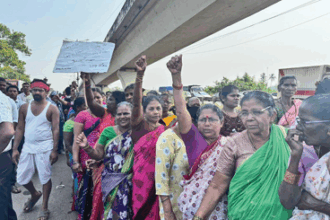
Knowing well that every vendor, irrespective of the size of the business, has been hit by the Covid’s economic catastrophe and therefore would be looking forward to a rewarding start post-pandemic, the CCP should have been more cautious and prepared. Alas, what one witnessed outside the civic body’s premises on August 16 was utter chaos and worst, the police using batons to disperse the agitated vendors.
From the initial murmurs of black marketing of the vendor forms, which cost Rs 200, to accusations of one of the councillor’s husband involved in illegally selling the forms at an exorbitant price tag of Rs 4,000 – 5,000, vendors were left in sheer dismay.
Then followed the acknowledgement from the CCP’s market committee chairman that only half the forms had been sold and the remaining had been reserved to be distributed amongst the councillors to be sold to local vendors of the capital. A day later, the whole process was disrupted and the civic body’s Commissioner announced that the previous process of forms distribution has been dismantled and the forms will be issued afresh.
While the whole drama was unfolding at the CCP, very important 3 days of business for the vendors was lost as the weekend went by without even the stall spaces being marked and allotted.
Understanding the economic loss for every stakeholder of the fair due to the negligence of the CCP is of key importance. While, initially the chaos around the fees collected from the vendors, of Rs 200 each form, was overshadowed with black marketing allegations thus sowing the seeds of corruption. Then the curtailing of the fair from a fortnight to 12 days has not just affected the vendors but also the revenue of the civic body. On a daily basis the CCP charges the vendors a rent for the 11 sq mts of allotted stall.
In addition to revenue loss for the CCP, the quantum of business loss for the vendors is not possible to be calculated as the Ashtami fair attracts not just locals who are preparing for the festivities of Gokul Ashtami and Ganesh Chaturthi, but during the weekend, tourists visiting the capital often shop at these stalls along the River Mandovi promenade on the Dayanand Bandodkar Marg.
The vendors have lost out on the first weekend business and will have to depend for doing good of the only weekend ahead of the Chaturthi. Additionally, the vendors have to pay the rent for the pandal, the transport and also the spaces for stocking their goods, irrespective of the profits they make or losses they incur.
Despite allegations of black marketing and councillors and their families involved in under the table dealings, neither the CCP nor the Department of Urban Development found it fit to inquire into the allegations. The CCP’s Commissioner as well as the Mayor did not deem it fit to question the market committee and the officers involved in the sale of forms about the fiasco, but outright dismantled one process and with the blessings of the local MLA and the Minister pushed through a new process.
Panjim is one the cities in the country being developed as a Smart City and even after 7 years of the mission being launched, Goa’s capital yearns for a proper system to distribute vendor forms for its annual fair.
Transparency is the corner stone of good governance and civic bodies are the foundational apparatus of this governance. If the municipalities and panchayats cannot be transparent about a simple process of distributing vendor forms for its annual fair, then corruption seeps in through multiple cracks of the system, including the officials, bureaucracy as well as the elected representatives.
An inquiry into the fiasco and setting accountability for the chaos is the only way to rid off the corrupt practices, affecting the lives of all the stakeholders, at the heart of it all the small businesses and vendors.