End of a ferry tale
The first Mandovi Bridge which crashed in less than two decades was opened in early 1970. It was inaugurated by Jagjivan Ram the Defence Minister at the time under Indira Gandhi. The Panjim bridge collapse was memorable in more ways than one. Bridges are meant to last at least 70 years if not 100. The Mandovi Bridge crumbled in just 16 on July 5, 1986. Mr Jagjivan Ram, by an odd coincidence, died a day later on July 6, 1986. The original Mandovi Bridge built by Pioneer Company Hyderabad had cost less than a crore, just Rs 82 lakh in fact.
It would take a good six years for Panjim to get reconnected to Porvorim with the new “new” bridge built by the UP State Bridges Construction Corporation (UPSBCC) in 1992. It’s difficult to figure out to this day why the Goa government chose to build two parallel bridges across the Mandovi when it could just as easily, and perhaps more efficiently, have built a single six-lane one. Nonetheless the reconstruction by Gammon India Ltd of the collapsed bridge that came to be called the new “old” bridge took a year longer than the UPSBCC one. It was thrown open to the public on April 23, 1993. Gammon India had also notched the contract for the Zuari Bridge that took a long and arduous 11 years to come up. It was thrown open in 1983.
We have several major rivers coursing through the State. Among the larger ones are the Zuari, Mandovi, Sal, Mapusa, Chapora, Cumbarjua and Galjibag. Nearly two-thirds of Goa’s 3702 sq km is covered by its major and minor rivers. This perhaps is partly what drives our governments’—past and present—obsession with bridge construction. The current one is proposing 45 bridges under the ever increasingly muscular Goa State Infrastructural Development Corporation. Chief Minister Manohar Parrikar who is chairman of GSIDC says they will all come up before the end of his tenure less than three and half years away.
Till the arrival of the Mandovi Bridge and the Zuari, ferry crossing had been a way of life in Goa. More so for the people of Ilhas (islands) which is also the Tiswadi taluka. Before Mr Jagjivan Ram threw open the Mandovi Bridge—and in the six years it took to build a new one after the 1986 collapse—it was a common feature to spend a good three hours trying to cross over from Panjim to Betim just to get home from work, if you were taking your car. Weekends would at times take five hours to get across just to go to Calangute. Crossing the Zuari pre-1983 was far more stressful, particularly if one had a flight to catch. A wedding that had to bridge the North Goa South Goa divide had to be meticulously planned so the bride wouldn’t be stuck in the desultory heat in the ferry queue.
Given the pace and eagerness to push through “development”, if the government has its way, every little tributary and canal in this State will have been bridged in the next few years. Islands will no longer be islands. Divar, Chorão and Vanxim will become drive-throughs, the next urban clusters of Panjim. Imagine they could become the next Porvorim, or Caranzalem, the new hunting grounds for our suave and highly persuasive realty brokers and builders.
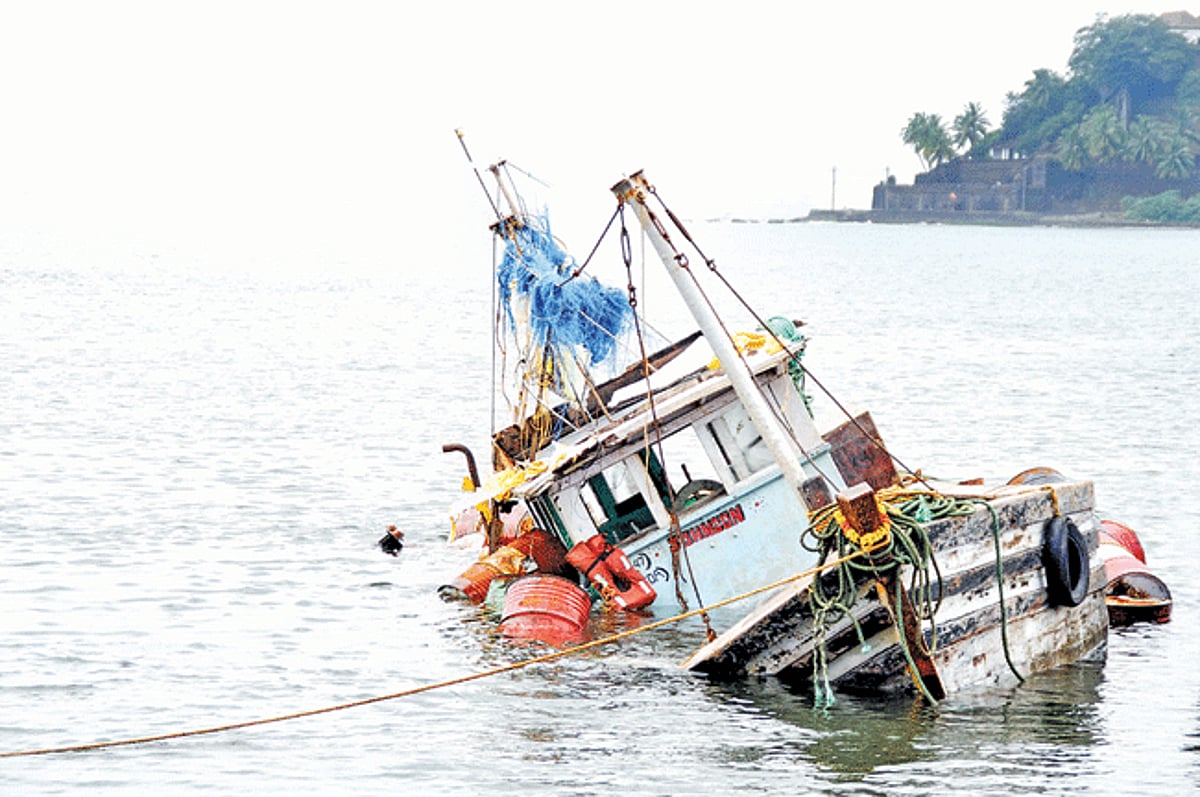
As more and more bridges come up, the ferries too will disappear. There are currently 37 of them operating on 19 routes. It won’t be long before each of these begins to shut down as the red carpet unfurls on the next new bridge. It’s a pity really. Because it’s not just about the old is giving way to the new, as it must. It’s also about keeping alive a heritage that is so much a part of the identity of Goa.