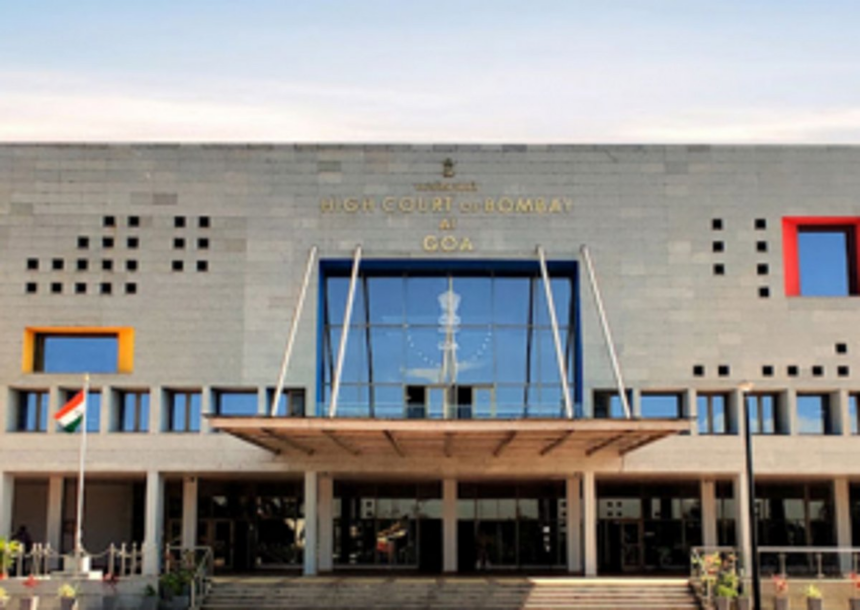
Goa needs a separate High Court for the simple reason that its age-old customs and law derived from Portuguese rule are different from the rest of India. The Judicial Commissioner’s Court of the late 1960s was vested with some powers of a High Court in 1964 after the pre-liberation Tribunal de Relacao was abolished when Goa, Daman and Diu was amalgamated with India. No doubt there will be speedier disposal of cases if Goa has its own High Court like Sikkim.
During their 450-year-rule, the Portuguese introduced a civil law system which was the exact opposite of the British common law system introduced in their colonies. In the common law system, the judges of the subordinate courts are stymied from doing justice because their hands are tied by precedents evolved by the superior courts whereas in civil law systems, it is the opposite.

Without romanticising Portuguese rule, the convictions or acquittals of those accused of heinous crimes during their era was swifter than the procedure now followed. The time lag between the charge being framed and the judgment delivered today often results in convictions being commuted or reversed in appeal.
No doubt the Portuguese were laid back or sussegad in their approach to life which has permeated the Goan psyche today. There were no industries prior to liberation as agriculture and mining were the mainstay of the Goan economy. The Portuguese believed that God had charged them with saving the souls of the non-Christians which was why they razed temples and built magnificent churches.
During the 1900s, large swathes of Indian sub-continent were under rajahs. The British conquered bits and pieces of territory after which Lord Macaulay introduced the Indian Penal Code in 1860 and in 1908 the Civil Procedure Code was introduced which excluded the succession laws of both Hindus and Muslims.
But in Goa, the Portuguese were egalitarian in their approach to the local populace. Today, the Goa Succession, Special Notaries and Inventories Act, 2012 has its origin in Portuguese law, one facet of which was known as inventario by which all movables and immovables which comprised the estate of a deceased person were listed and distributed equitably among the heirs.
In 2019, a two-judge bench of the Supreme Court declared in its judgment reported as Jose Paulo Coutinho versus Maria Luiza Valentina Pereira and another that Goa was a “shining example of an Indian State which has a Uniform Civil Code applicable to all, regardless of religion except while protecting certain limited rights.” This statement is a direct recognition of the fact that the Portuguese laws were far ahead of their time.
A two-judge bench of the Supreme Court comprising Justices Deepak Gupta and Aniruddha Bose observed the salient features of the Portuguese Civil Code of 1867 enunciated that a married couple was joint owner of all their assets held before marriage or acquired after marriage by each spouse. In case of divorce, each spouse was entitled to half share of the assets. Such averments in effect discouraged divorce which was in line with Christian theology that marriage was a sacrament. Hence, man could not fragment what God had united.
The Portuguese law permitted pre-nuptial agreements known as nikahnama under Shariah law. Muslim men whose marriages were registered in Goa prior to liberation were debarred from the practice of polygamy and triple talaq or oral divorce aeons before the Muslim Women (Protection of Rights on Marriage) Act, 2019. Such averments in the Portuguese Civil Code overrode the tenets pronounced in the holy Quran or the religious texts of religions. Religion is based on faith whereas a nation undergoes repeated upheavals with the decades so that law cannot remain static but must change with the changing circumstances.
The Portuguese Civil Code of 1867 was deemed to be a special law which overrode the general law of the land after Jawaharlal Nehru amalgamated Goa with the rest of India in 1961. The question which the SC had to decide in 2019 was whether the Indian Succession Act, 1925 or personal laws, such as the Hindu Succession Act, 1956, or the Muslim Personal Law (Shariat) Application Act, 1937, would apply to Goans who were domiciled outside Goa and acquired flats or land outside this State.
The SC judges declared the law of succession as promulgated by the Portuguese was both a special law and a local law. It was special because it dealt with a specific topic, the law of succession. It was local because it applied to the geographic territory of Goa alone and not outside this tiny State.
The general rule of construction laid down that all special laws overrode the general laws which meant the Portuguese succession laws overrode the Indian Succession Act. Goans domiciled outside Goa could still apply for inventory proceedings to ensure their estate was unified, inventoried and distributed equitably among all heirs even if their estate was partly within and outside Goa.
This 2019 SC judgment was a major victory for all Goans because the prevailing notion until this verdict was a conqueror was not bound to enforce the old laws of the conquered. When upheld, this concept would negate the very Opinion Poll of 1967 when Goans voted to keep their tiny territory separate from Maharashtra whose customs and traditions would have swamped Goan culture. 57th Jnanpith Award winner, Damodar Mauzo, was in the forefront of this battle.
It is true that in all other aspects such as crime, taxation and civil procedure, Goa has followed the laws enacted by the Indian Parliament. As far as succession is concerned, Goa has kept its separate identity. This is the reason why we need a separate High Court manned by judges who are well-versed in local laws and customs.
They should know Konkani and being conversant with the Portuguese language would also go a long way in justice dispensation.
(Dr Olav Albuquerque holds a Ph.D in law from the University of Mumbai)
and is a senior journalist-cum-advocate of the Bombay High Court.)