It is well established that the CRZ 2011 legislation was ratified to ensure livelihood security to the fisher communities and other local communities living in the coastal areas, to conserve and protect coastal stretches, its unique environment and its marine area and to promote development through sustainable manner based on scientific principles.
The CRZ 2011 had also mandated that the CZMP for Goa be prepared. A set of detailed procedures were included for the design of coastal plans. The guidelines are explicit about CRZ classification. There is no mention whatsoever about the demarcation of port limits, as inserted in the new draft CZMP.
The Major Ports Bill 2020 seems to be the sole reason for introducing port boundaries in the coastal plans. In the ports bill, section C, clause 25 states: “the board of each major port shall be entitled to create specific master plan in respect of any development or infrastructure established or proposed to be established within the port limits and the land appurtenant thereto and such master plan shall be independent of any local or State Government regulations of any authority whatsoever”. It further says: “provided that in case of any conflict between the master plan created by the board and any local authority, the master plan created by the board shall prevail”. The draconian nature of this law is abundantly clear.
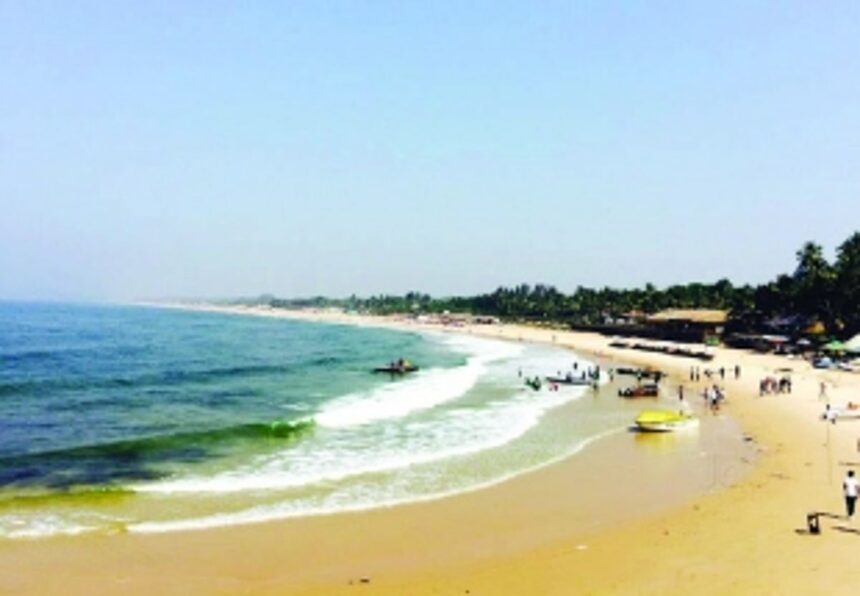
Since Mormugao is major Indian sea port, the draft CZMP 2021 specifies that large areas along the sea front and within the saline rivers will henceforth come under the jurisdiction of the port authority. As such, from Aguada to Cansaulim, and from Varca to Loliem in the south, the sea front will hereafter “belong” to and be classified as the property of the Mormugao port. It is shocking that the Rajbhavan perched on the Cabo headland, along with two thirds of the promontory with dense forests is included within port limits. Similarly, Miramar beach, Mandovi river banks up to the tidal flats of Chorao beyond the bridge will be controlled by the port. In the Zuari river, the sea side slopes of Dona Paula including parts of NIO property, Siridao beach, areas upstream of the bridge, Cortalim, Sancoale, Chicalim bays, as is the case of Khariwado fishing enclave. The Sao Jacinto island would in totality fall under the purview of the port. The NDZ of Baina beach and the adjacent rocky cliffs are almost entirely under port limits. The Velsao-Cansaulim-Arossim coast, a linear strip of about 50 metres in width over the dune fields of the entire region is shown as limits of the port control.
The clout of port authority does not end. Again, from Varca to Cavelossim, it appears the future will be governed by the port command. The port boundary overshoots the beach and uniformly extends around 50 metres into the dune belt. The CZMP from Quitol to Cola coast present a strange scenario. The port limit extends up the rocky cliffs some 100 metres into the CRZ III, thus including the fish breeding grounds and a long strip of hill top land as well. In Canacona, the port control seems to start just south of Agonda beach. The famous Palolem coast and adjacent hill tops are classified as CRZ II, whereas the offshore island, beach, bay and the boat parking strip all come within port limits. The boat parking area from Patnem to Rajbagh beach front is not only classified as CRZ II but also comes under port limit that also includes the Talpona estuary and mangrove shoals as well. Up to Loliem in Canacona, also a fish breeding strip, the entire rocky coast comprising pocket beaches and coves, the estuary of Galgibaga and the mangrove islands therein, and surprisingly, the turtle nesting site of Galbaga will also be controlled by the port.
On some sandy coasts, the port limit coincides with the HTL. At other places, the line crosses the HTL, and is marked nearly 100 metres over the dune fields, and hence, superimposed into the NDZ. On rocky coasts and cliffs, port limit ends beyond HTL, and covers large strips of hill tops as noted in Cabo and many promontories in Canacona. On riverine islands and shoals, the port has usurped the entire insular land mass. In an order dated August 31, 2017 by Ministry of Shipping, about Mormugao and Betul areas, it stipulates: “port limits shall include all wharves and other works made on behalf of the public for convenience for traffic of vessels, or for the improvement, maintenance or good government of the port and its approaches whether within or without high-water mark and, subject to any rights of private property therein, any portion of the shore or bank within fifty yards of high water mark”. Based on this definition, it is very confusing how mapping of port limits has followed different standards on the coasts of Goa.
The CZMP 2021 presents a puzzling conflict. The CRZ 2011 is a national legislation dealing with conservation of coastal systems. The ports bill 2020 is also a national instrument meant for promoting maritime trade and commerce. Both are acts of parliament uniformly applicable to all littoral states. On the ground, CRZ extends from the hinterland, over the beach, down to the low tide line. In comparison, the port limits also include the beach, the dunes and cliffs. An overlap of two instruments is thus evident. Therefore, it is not known how coastal issues will be solved and which authority will control beach shacks for example. A coastal dweller is bound to get confused as port limits and CRZ boundaries impinge on each other. If finalised without necessary inputs from a scientific perspective, this CZMP will be the last nail in the coffin of woes of the battered coastal ecosystems of Goa.
Dr Antonio Mascarenhas is a former Scientist, NIO, Goa)