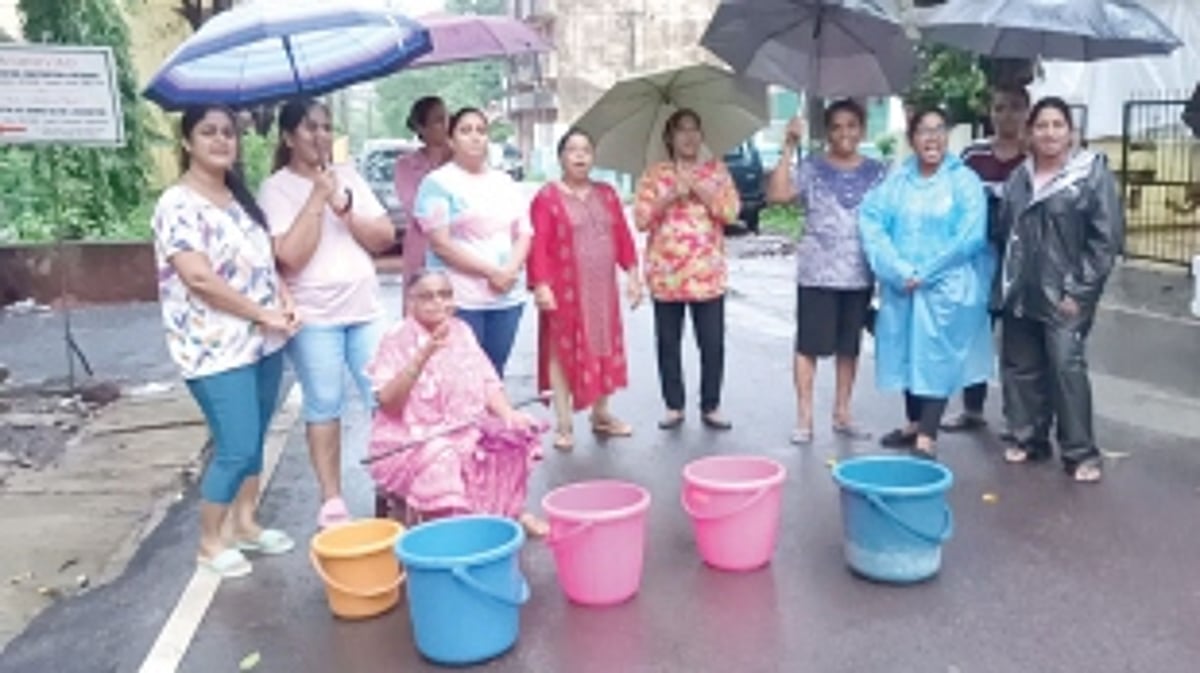
I refer to the O Heraldo news report ‘CM warns against opposing construction of bandharas for storing water ‘(July 6, 2023). The water crisis that has emerged in Goa is mainly as a result of population growth due to uncontrolled migration, rapid urbanisation, unforeseen industrial and other large scale projects and environmental degradation. These man-made factors have contributed to increasing water shortages, intensifying flood hazards, progressive groundwater contamination and pollution of rivers and water bodies.
Massive flooding has been caused in recent years leading to damaging roads, bridges, farmlands and settlement areas due to the release of water from upstream reservoirs, unplanned river diversion, over topping of the river banks and unplanned urbanisation of villages and towns. These man-made flooding disasters are due to inadequate storage capacities of reservoirs, related to sedimentation, unsustainable changes to land-use development plans and environmental degradation. Why are the dams getting filled-up prematurely during the first month of the monsoon season even with less total rainfall?
Kolhapur-type bandharas were allowed to be constructed in the lower reaches of the Mhadei River basin .These bandharas are not linked to any canal irrigation system or command area development action plans. Are these massive bandharas and additional bandharas proposed to be constructed in the future, further upstream of the existing structures, required for supporting the Detailed Project Reports (DPRs) for diversion of Mhadei river? Also, do we need these structures to meet the water supply requirements of unsustainable housing development projects?
Massive bandhara structures in the rivers can have positive impact on the ground water balance in the vicinity but can also destroy homes, farm lands, village settlements and other infrastructure due to over topping of the river banks caused due to sedimentation of the rivers. Have we not learnt enough lessons from previous flooding incidents caused due to sedimentation of rivers? Can we allow such massive development projects in the ecologically sensitive Western Ghats and surrounding region?
Sophisticated numerical modelling techniques for assessing the floods and water availability considers only the major streams within the catchment areas and ignores the minor streams for the calibration process due to lack of required site-specific hydrological data. Can we accept Detailed Project Reports(DPRs) prepared based on inadequate data considered for the modelling process?
There is an urgent need for identification of all existing established traditional water conservation & river control structures and concepts that are practised (or were practised) in Goa for a long time. The traditional structures of the State have often remained neglected due to absence of maintenance mechanisms, environmental degradation and lack of interest to undertake agricultural or horticultural activities.
The shortcomings in the protection and revival of traditional water conservation structures must be immediately resolved through multi-disciplinary activities to define maintenance mechanisms, preparation of inventories & condition surveys of structures, workable project reports with layout maps and master plans of water conservation schemes through involvement of local communities.
Most importantly, the water conservation and flood control initiatives should be supported by a clear policy for protection & revival of traditional water conservation and flood management concepts of Goa.