The water crisis facing farmers dependent on the Tillari waters is akin to the dangling carrot which, off and on, goes beyond the reach of the aspirant. What is frustrating for them is the rosy picture that was painted regarding supply of water “once the Tillari project is completed”. A string of episodes in recent months have left a bitter taste in the mouth of the farmers who now have to endure debilitating losses as a result of parched farm areas in the farming belt of north Goa.
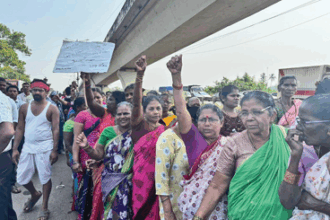
Tillari water was first stopped to carry out repairs on canals at various points. Then in December, flowing water was stopped by agitated villagers who were displaced for the dam project on the Maharashtra side, demanding that the government honour its assurances given to them during conception of the project as regards their rehabilitation in terms of jobs to some 630 individuals. This demand stemmed from the agreement signed between both states in 1990 which gave Goa 73 per cent water share. Since the three talukas of Bicholim, Pernem and Bardez were the prime beneficiaries of the project, the commitment made to the oustees as per the 1976 Rehabilitation Act of Maharashtra were fulfilled.
But subsequent protests seemed to have been stage-managed by local politicians who apparently tried to brow beat Goa into submission. But a strong stand taken by the current Goa government under Manohar Parrikar seems to have quelled the bullying tactics of our neighbour. Then came canal breaches within the Goa sector. And when efforts were made to restore water supply, the quantum of water provided to farmers was below the required levels. In the past few weeks, the water delivery system has been ruptured resulting in water failing to reach the destined points.
Now, the prime factor attributing to the disquiet among farmers is the poor construction and maintenance of canals, evident by the umpteen times the canals have been breached over the years ~ even during the construction phase. Even at that time, there was hardly any accountability and fixing of responsibilities on the engineers responsible for construction, supervision and maintenance of their respective canal sectors. True, there are arguments that the life span of the canal is “only 25 years” but those who seek to rest their argument on this logic ought to take a cue from the Portuguese construction of the Patto bridge in Panjim for instance, which has endured the heaviest ever traffic in the State for over 350 years. The canals, of course, are exposed to the vagaries of nature for years. But this is no justification for frequent breaches; that is a symptom of lackadaisical maintenance. How often, for example, have these canals been spruced up to ensure non-clogging of the pipeline?
Breakdowns occur primarily due to congestion because of an unclear path for water to flow. Goa is passing through a very difficult phase with mining coming to a grinding halt and the tourism industry emerging out of a comparatively lower tourist inflow this season. But how long can Goa counter the might of big brother Maharashtra when it comes to its “bullying” on water being released from Tillari? Till it receives a favourable order from the Water Disputes Tribunal, much damage can be done to farmers if the State is wholly dependent on its neighbour. Apart from the problem of Tillari oustees, Goa also has to counter the threat from its other neighbor, Karnataka, which is working towards diverting water from tributaries that feed the Mhadei.
Again, Maharashtra is working overtime to build a dam at Virdi which will leave Valvanti devoid of fresh water, adversely affecting Sanquelim villagers. In such a situation, how long can the State hope to be 100 per cent dependent on its neighbours, even considering that globally water is regarded as nobody’s property? For a start, Goa must have a storage capacity built up alongside the Tillari irrigation project to take care of natural calamities or maintenance of canals during which the water can be supplied from this storage reservoir to our farmers.
The state fortunately is endowed with bountiful rainfall and there’s sufficient reason to store this rain water, instead of permitting it to flow into rivers. The chief minister has rightly thought about using the water in mining pits to provide the required water to farmers, but this must be done on a vast scale wherein large, abandoned mining pits are converted into water reservoirs.
Farmers on the other hand must be introduced to Israeli techniques of farming where drip irrigation helped Israel metamorphose from a desert-terrain-dependent subsistence farming model to an exporter of vegetable produce. Some progressive farmers in Goa use coconut husk to maintain soil humidity in areas of water scarcity. This must be popularized. Goa is certainly over-populated and there’s a need to augment our water resources. For a start, all new constructions ought to be sanctioned with specified underground water harvesting tanks.
This is a must in keeping with the potable water challenges that lie in the years ahead.