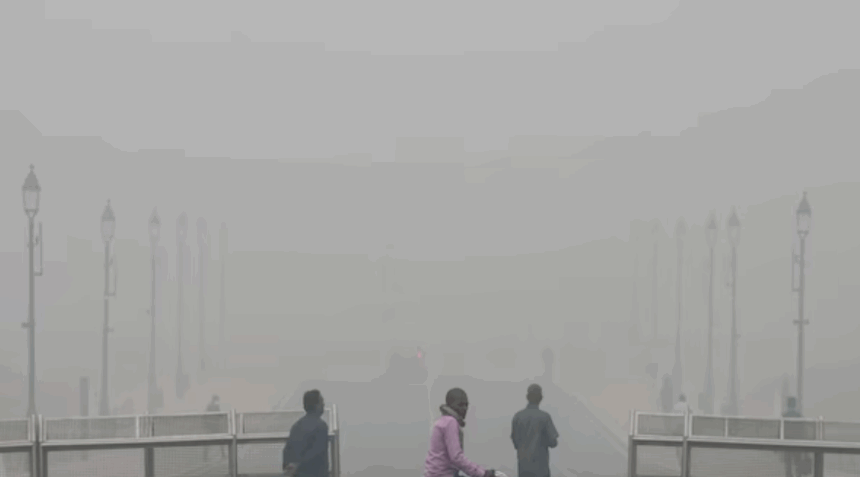
Amid deteriorating air quality in the national capital, government and private offices in Delhi have been directed to operate with only 50 per cent staff on site, with the remaining employees working from home. The measures were rolled out under the Graded Response Action Plan (GRAP) Stage 3, as mandated by the Commission for Air Quality Management (CAQM).
The Delhi government had earlier introduced selective restrictions for schools, advising administrators to prevent children from engaging in outdoor activities during periods of severe pollution.

Attendance in government offices was already expected to be low on Tuesday due to a public holiday declared to mark the 350th Shaheedi Purab of Guru Tegh Bahadur.
Delhi relies on the GRAP framework to determine the scale of interventions required based on pollution severity, a recurring winter challenge for the region. The CAQM monitors air quality data across the National Capital Region (NCR) and collaborates with various agencies to implement timely and coordinated responses.
This latest advisory follows a similar directive issued on Saturday, when private offices were asked to limit on-site attendance to 50 per cent as a precautionary step under GRAP-3.
Under the GRAP system, restrictions escalate according to the Air Quality Index (AQI):
- GRAP 1 is triggered when the AQI ranges from 201 to 300
- GRAP 2 corresponds to AQI levels between 301 and 400
- GRAP 3 is enforced when AQI falls between 401 and 450
- GRAP 4 comes into effect when pollution levels cross 451
Authorities continue to monitor conditions closely as winter pollution persists across the region.
(This story is published from a syndicated feed)