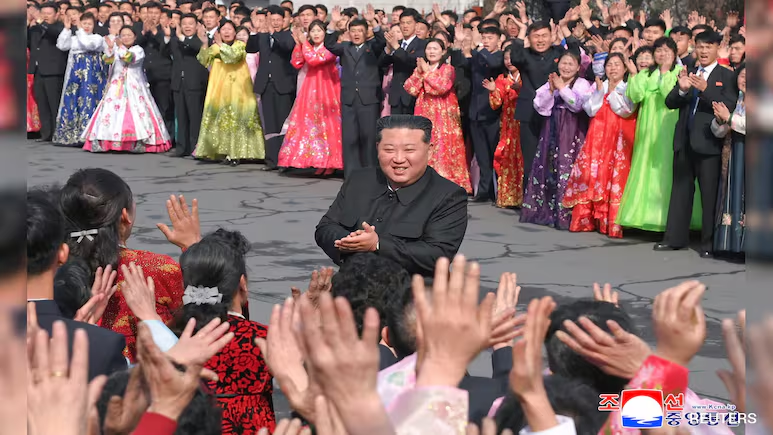
In a tightly controlled electoral process, North Korean leader Kim Jong Un once again recorded an overwhelming victory, with official figures claiming 99.93% support in the country’s latest parliamentary elections. The vote, held on March 15 to elect members of the 15th Supreme People’s Assembly, saw candidates backed by the ruling Workers’ Party of Korea win every seat.
According to state media, voter turnout reached an extraordinary 99.99%, with only a minuscule fraction of registered voters unable to participate due to being abroad or at sea. Interestingly, authorities also acknowledged that 0.07% of voters rejected the official candidates — a rare admission not publicly disclosed for decades.

Unlike democratic systems, North Korea’s elections offer no competing candidates. Each constituency presents a single, pre-approved nominee, leaving voters with a binary choice: endorse or reject. The small percentage of dissenting votes, therefore, does not represent opposition support but rather a symbolic rejection of the establishment-backed candidates.
The acknowledgment of “no” votes has drawn attention globally, as such figures are seldom revealed in the country’s tightly controlled political environment. Since assuming power in 2011 after the death of his father, Kim Jong Il, Kim has further consolidated authority, including constitutional changes in 2019 that reinforced his position as the nation’s supreme leader.