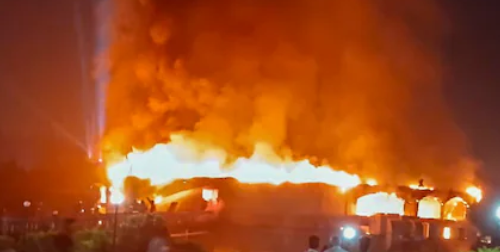
Strong criticism has been voiced against the Goa government following the introduction of the Jan Vishwas Ordinance, with activists and civil society members alleging that the new law weakens criminal accountability in the wake of the deadly Birch–Romeo Lane fire that claimed 25 lives.
Critics argue that the ordinance, which seeks to decriminalise offences across 12 statutes—including the Fire Act, Panchayat Raj Act, Excise Act and Health Act—has the effect of reducing jail sentences for certain violations and replacing them with enhanced monetary penalties. According to them, this change disproportionately benefits commercial establishments and their owners, particularly in cases involving serious safety lapses.

The Birch–Romeo Lane fire has become central to the controversy, with activists alleging that the ordinance decriminalises precisely the violations linked to the tragedy. These include alleged fire safety breaches, illegal operation of commercial clubs, obstruction of inspectors, and structural and regulatory non-compliance.
Opposition voices have further questioned the timing of the ordinance. While the state was mourning the victims of the fire, the ordinance was gazetted on December 9, 2025—just days after the incident. The document states that it was signed by the Governor on December 2, 2025, prior to the tragedy, a detail that has fuelled public debate and demands for clarity.
Activists have accused the state’s top leadership, including the Governor, Chief Minister, and concerned ministers, of enabling a legal framework that allegedly shields those responsible for the incident from criminal liability. They contend that instead of strengthening enforcement and ensuring justice for the victims, the ordinance curtails the powers of courts by removing custodial punishment for serious regulatory violations.
The government, however, has maintained that the Jan Vishwas Ordinance is part of a broader reform agenda aimed at reducing criminalisation of regulatory offences and improving ease of doing business. As public outrage continues, demands are growing for transparency, accountability and assurances that the ordinance will not undermine justice in cases involving loss of life.