VITHALDAS HEGDE
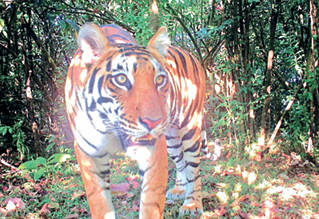
The Central Em powered Committee’s (CEC) recommendation to create a two-phase Tiger Reserve in Goa has triggered sharply contrasting reactions across the State, once again expos ing the deep divide between conservation advocates and the political establishment. In its report submitted to the Supreme Court, the CEC has proposed a two-phased approach. Phase I – Declare Ne travali Wildlife Sanctuary (211.05 sq km) and Cotigao Wildlife Sanctuary (85.65 sq km) as core areas, forming a 296.7 sq km tiger habitat linked to Karnataka’s Kali Tiger Reserve. Phase II – Notify Bhagwan Mahaveer Wildlife Sanctu ary – North (64.9 sq km) and Bhagwan Mahaveer National Park (107 sq km) as buffer zones, adding 171.9 sq km to the conservation landscape. The proposal stems from a Supreme Court-directed review after the Goa gov ernment appealed the Bom bay High Court’s 2023 order mandating the notification of a tiger reserve in the Mhadei region. Environmentalists broadly welcomed the move — but remain sharply divided on the omission of Mhadei from the core areas. Goa Foundation director Claude Alvares strongly sup ported the CEC’s stand.

“We have absolutely no problem. The CEC has finally agreed to give Goa a Tiger Reserve… Declaring Netravali and Cotigao as core areas means re habilitation will be needed, but these areas already fall under strict protection,” he said. He added that although Mhadei is not included in the core or buffer zones, it “remains under the tighter regime of a Wildlife Sanctuary, and therefore has not been weakened.” Environmentalist Rajendra Kerkar criticised the report sharply. “The CEC report does not reflect the ground reali ties in the Mhadei Wildlife Sanctuary. The team visited Ne travali and Cotigao but did not conduct a field visit in the crucial Mhadei region. Instead, they chose to meet MLAs and elected representatives of local bodies. Had they vis ited Mhadei, it would have been reflected in the report,” he said. “We worry because the Mhadei region is naturally suit ed for tiger habitat. From 2009 to 2019, two cubs, one sub-adult tiger and two adult tigers — five in total — were killed. The apathy of the Forest Department in probing the cases allowed the killers to go scot-free. Despite this, in 2022, the tiger census recorded the presence of five tigers. This is a crucial wildlife habitat and the main forest re gion that caters to more than 40% of Goa’s drinking water needs. Keeping Mhadei in the second phase reflects an un realistic understanding of the situation. There is an urgent need to notify the Mhadei region as a Tiger Reserve — for the present and for posterity.” Environmentalist Ramesh Gauns also wanted more from the recommendation. “The Supreme Court-appointed CEC is creating more confusion with its recommendations. It appears the Government of India pressured the team, be cause the issue was about notifying the Mhadei Wildlife Sanctuary. The purpose of this diversion is to nullify and indirectly support politicians with vested interests,” he al leged. “The CEC team never said there are no tigers in Mhadei. This is the government’s game plan, opening the gates for all other activities in Sattari taluka.” Environmentalist Rama Velip from Rivona backed the move. “I welcome the CEC’s recommendation to notify Ne travali and Cotigao as a Tiger Reserve. Very few people live in these areas and there is no need for large-scale reloca tion. People continue to live inside the Kali Tiger Reserve. Some politicians here oppose the plan because their main interest is mining. One Cabinet Minister was a mining con tractor and owned 19 tipper trucks,” he said. The government, meanwhile, responded cautiously, avoiding taking a clear stand. Tribal Welfare Minister Ramesh Tawadkar and Social Welfare Minister Subhash Phal Desai both said they had not yet examined the CEC report. Tribal Welfare Minister Ramesh Tawadkar said, “I have not yet examined the CEC report. Three villages are falling in the Cotigao Wildlife Sanctuary and few people are living there. Social Welfare Minister Subhash Phal Desai said, “I have not seen the CEC report. Unless I go through its contents, I cannot comment. The CEC team had told us that our areas are 100% genuine. If they have recommended Netravali as a core area, then it is very bad. I will not give up. We will not allow relocation of people because these are 800-year-old settlements and we have not seen a tiger. I stand with the people. They have elected me and I must safeguard their in terests. At the same time, we will continue with forest and wildlife conservation. I will do whatever is legally possible to ensure villagers are not shifted because of an unseen ti ger. I am firm on my decision — if required, I will protest. I will oppose even if five houses have to be rehabilitated.” Chief Minister Pramod Sawant maintained a guarded stance. “The government has not received the CEC recom mendations. Only after we receive and study the report will a decision be taken.” The sharply mixed reactions reflect long-standing fault lines in Goa. Environmentalists view the Tiger Reserve as essential for protecting proven tiger habitat and ensuring ecological continuity with Karnataka. Political leaders, wary of public resistance, commercial interests and sensi tive constituencies, remain cautious — particularly where relocation and land rights are involved. The Supreme Court will examine the CEC’s recommen dations on December 15, 2025, setting the stage for a deci sive ruling on the future of tiger conservation in Goa.