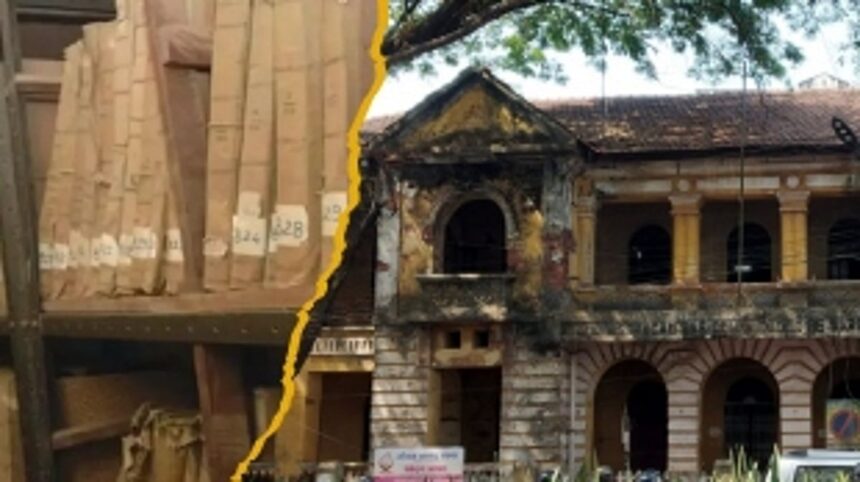
Over the centuries, Comunidades, among other organizations, have accumulated a wealth of historical documents outlining their vibrant histories. However, the maintenance of records has often fallen short. Recently, a convention resolved to digitize these documents.
The documents, primarily in Portuguese but also in the Modi and Hale Kannada scripts, trace back to even the pre-Portuguese era. The convention, organized by the Revenue Department, advocated for the digitization of important records while emphasizing that the data should remain within the purview of the respective Comunidades.
Each comunidade possesses its own unique office and records. These include title documents like Tombo I and II books, detailing comunidade properties, lease agreements, and land allocations. Additionally, intricately crafted cloth maps, known as plantas, offer localized representations of areas.
Gaonkars, integral components of these ancient bodies, expressed dismay over the neglect and decay of the records. Many highlighted the poor conditions of archive rooms, such as the one in Panjim’s Central Zone Office, which resembled a neglected dungeon.
Efforts to restore such historical treasures have been sporadic. While some buildings have undergone restoration, archive rooms still await attention. Some Comunidades have taken proactive measures to digitize their records independently.
Digitization efforts aim to preserve the historical perspective and valuable property information contained within these records. They serve as a testament to the unique institution of Comunidades, whose legacy deserves preservation for future generations.