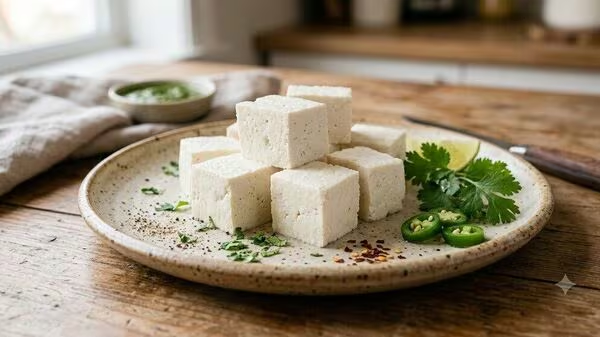
India’s food safety regulator is considering a nationwide ban on analogue paneer, as authorities step up inspections of food products ahead of the festive season. The move comes after several states introduced restrictions on non-dairy alternatives that resemble conventional paneer but may use vegetable fats or oils in place of dairy ingredients.
The Food Safety and Standards Authority of India (FSSAI) is also working on proposed rules to limit the sale of foods high in fat, salt and sugar within a 50-metre radius of schools across the country. The initiatives form part of a broader effort to improve food safety and encourage healthier eating habits.

FSSAI Chief Executive Officer Rajit Punhani said the regulator is preparing a central framework to prohibit analogue paneer. The proposed nationwide measure follows action already taken by eight states.
Punjab, Karnataka, Maharashtra, Gujarat, Chhattisgarh, Madhya Pradesh, Himachal Pradesh and Uttarakhand have introduced restrictions on analogue or non-dairy paneer. These measures can cover several stages of the supply chain, including manufacturing, processing, packaging, storage, transportation, distribution and sale.
Analogue paneer is generally designed to resemble traditional dairy paneer but can contain non-dairy ingredients such as vegetable oil or vegetable fat instead of milk fat or milk solids. The regulatory concern centres on products that may be sold in ways that could leave consumers unclear about their actual composition.
Alongside the proposed paneer regulations, FSSAI is focusing on food sold through online marketplaces and quick-commerce platforms. According to Punhani, the regulator remains concerned that manufacturing and expiry information is not always clearly displayed on digital food listings.
The regulator wants e-commerce companies to make such information more visible so that consumers can make better-informed purchasing decisions. Enforcement teams have also conducted inspections and raids in several locations ahead of the festive period.
Another major focus is children’s nutrition. FSSAI is drafting nationwide rules aimed at preventing the sale of foods high in fat, salt and sugar in and around schools. The proposed restrictions are linked to the regulator’s broader Eat Right campaign, which seeks to promote healthier food choices.
Maharashtra has already introduced measures restricting the sale, advertising and free distribution of junk food within 50 metres of schools. Delhi has also taken steps in a similar direction following legal proceedings.
The proposed national framework could therefore build on measures already being implemented at the state level. By reducing children’s exposure to unhealthy food options around schools, authorities hope to encourage better dietary habits and potentially reduce health risks associated with excessive consumption of foods high in fat, sugar and salt.
The developments signal a broader push by FSSAI to strengthen food regulation, improve transparency for consumers and create a healthier food environment, particularly for children.