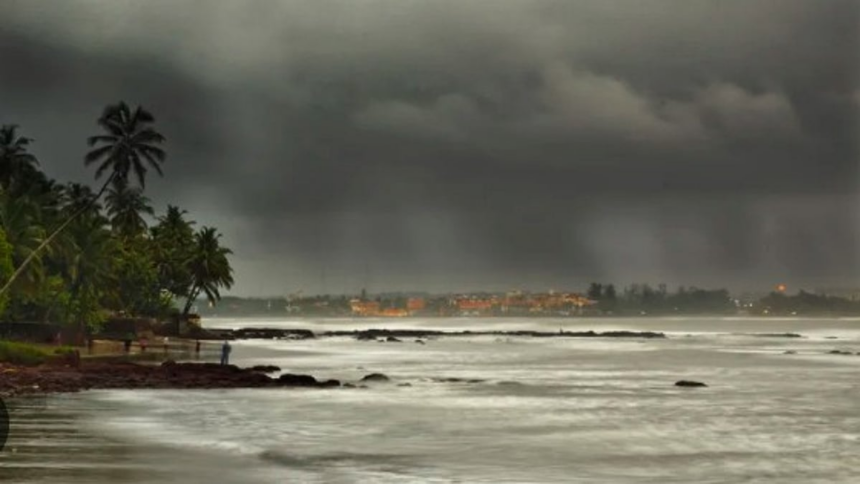
The monsoon season in Goa, which typically runs from June to September, is far more than a meteorological phenomenon—it is a season steeped in tradition, resilience, folklore, and joy. With its lush green landscapes, the rhythmic sound of raindrops, and the earthy aroma after a downpour, the Goan monsoon is both a cultural event and a seasonal transformation.
Life in Sync with the Monsoon
By the end of April, every Goan household gears up for the rains—roof repairs are completed, firewood is stocked, and petroleum oil for lamps is stored, a tradition that dates back decades. “We stored about five units of petroleum oil until we got electricity in 1972,” recalls Piedade Miranda from Virabhat, Margão.

Despite pre-monsoon maintenance, frequent power outages are still common. But Goans have turned even these blackouts into moments of family bonding. Sitting by candlelight with hot tea and crispy boje (pakoras) has become an enduring image of monsoon evenings.
The Arrival of the Rains
Goa often sees its first showers by early May, accompanied by thunder, lightning, and strong winds. While some scientific benefits are linked to this—like increased soil fertility from lightning—folk wisdom abounds. “Loud thunder brings down venom levels in reptiles,” elders often say, a belief passed down through generations.
Faith and Folklore
Rain is deeply interwoven with spiritual and cultural practices in Goa. If the rains are delayed, prayers are offered to saints and deities. Catholics pray to St. Anthony, while tribal communities worship Gajlaxmi, a forest goddess depicted with elephants pouring water over her.
Goans also believe in “mirg” days—June 5, 6, and 7—sacred days for the Catholic, Muslim, and Hindu communities, respectively, on which rains are believed to be divinely granted. “Our God heard our request!” is a common refrain when rain blesses a particular community’s day.
Traditional Flood Forecasting
Based on observation and oral traditions, Goans historically predicted three major floods during the monsoon:
June 24 – São João
June 29 – São Pedro/São Paulo
August 10 – São Lourenço
Early warnings like May 3’s “Vôl” (soil moisture) and June 13’s “Pául bhor udok” (ankle-level water) prepared villages for these natural events.
The Many Faces of Goan Rain
Goans even named the rain based on its intensity and the emotions it evoked:
Matriancho paus (Rain of the aged): Heavy, chilly rain in early July.
Bhurgiancho paus (Rain of the children): Playful, intermittent showers in late July.
Dhuancho paus (Rain of the daughters): Quick, graceful rain in early August.
Sunnãcho paus (Rain of the daughter-in-law): Prolonged and punishing rain in mid-August, often blamed for infections from prolonged exposure to waterlogged fields.
Another curious cultural idiom is “Makdachem Kazar” (a monkey’s wedding), used to describe the phenomenon of sunshine during a rain shower. Superstitions also abound around weddings and rain. “If it rains on your wedding day, people said the groom had eaten from a ‘kunne’ (wide-mouth clay pot) the day before,” recalls Catarina Aguiar from Sernabátim.