With Vasco da Gama’s discovery of the maritime route to India and the affirmation of the Portuguese military force in the Indian Ocean, the norms came to be dictated by the power of the sword and the fire of cannons.
Approached by Timoja, Afonso de Albuquerque took possession of Goa on 25th February, abandoned it and reconquered it on 25th November, 1510.
Goa was not freed from the Muslim dominion in order to be handed over to the previous Hindu possessors, but was conquered for establishing Portugal’s power base in the Indian Ocean.
From 1543 onwards, Bardez and Salcete passed to the Portuguese. The region of New Conquests was annexed definitively in the eighteenth century, towards the end of which, due to Anglo-French rivalry, the English temporarily occupied Goa, between 1799 and 1813.
While the countries under German and Japanese rule regained their independence, never did the Portuguese rulers, during the long period from 25th November 1510 to 17th December 1961, give Goans an opportunity to choose to continue under Portuguese sovereignty or decide to opt for self-determination and independence.
Likewise, India too never asked whether Goa wanted to be independent. Had it been done and had the Goans voted mostly for integration, the inference would be that Goa had been released from Portuguese rule. Since that never happened, the question still remains open like an unhealing wound.
Analyzing the present reality, in the treaty established between representatives of India and Portugal, on 31st December, 1974, in New Delhi, Portugal recognised the status quo of Goa.
As far as India was concerned, the Supreme Court decided on 26th March 1969, that the occupation of 20th December, 1961 was not a belligerent occupation or even a pre-planned occupation but a true annexation by conquest and subjugation.
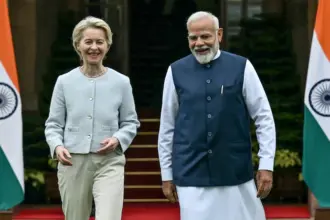
Recently, António Costa, the Portuguese PM, was warmly received in India by his counterpart Narendra Modi, the ties between the two countries have started growing, especially due to the efforts of India’s current ambassador to Portugal, Nandini Singla.
Reflecting on whether our decision to leave Goa for Portugal after December 1961, was worthwhile, I do not wish to speak for others, but put forth my own thoughts.
When it occurred, I cursed the liberation of Goa for many reasons, which I avoid repeating as they are mentioned in my books and articles. I remember that when I saw the Indians coming, I asked a friend on the night of the 18th, at Betim, on the opposite bank of Panjim: “And now, who is going to get them out of here?”
Basically, I was afraid that Goa would be colonised by the Indian Union.
However, I have to recognise that evils often result in benefits and that opportunities do arise in times of crises.
On reading the curriculum vitae of many young people who left with me, it is unquestionable to conclude that most of them were successful.
Despite this, it is legitimate to ask the following question:
Had they stayed in Goa could they not have done as well or better?
Knowing roughly the companions of our journey and taking into account their competence, and social influence I can infer that most of them with a few exceptions, would hardly have the possibility of success in the new established order.
It is scientifically proven that changing mindsets is a slow and time-consuming process, so let us see how our youth reacted and behaved.
Most Goan youngsters were unwilling to take time out and decide about their future. They believed in their own abilities and had the art of transforming obstacles into energy and added enthusiasm.
It was with great difficulty and determination that they faced terrible hurdles, and carried on through the new course they chose, because they knew there was no other way, except overcoming their adversity with redoubled courage at their own risk.
Indeed, it was the blessed invasion that opened their eyes and awakened them to the existence of a world far beyond the frontiers of Goa, and forced them to face all sorts of challenges and to defy the uncertainty of the unknown.
Viewing the situation at that time, they admitted to themselves, that the doors of the world were indeed opened and beckoning.
Some fulfilled their dreams; others have readapted their aspirations to the multiple circumstances of life. The fact is that, it was the rupture of the paradigms of December 18th, 1961, that permitted them to cherish the possibility that somewhere, there existed a hidden hope, more in keeping with dreams to be realized.
When I recently enjoyed my stay in Goa, I had the opportunity to witness, large numbers of Goans at the door of the Portuguese Consulate, early morning, to obtain their passport with the intention of emigrating.
It is well known that the choice of emigration is decided for a variety of reasons, either due to economic, social, political, religious, cultural and family dissatisfaction, or due the incapacity to adapt to the environment in which one lives or for other reasons like a simple desire for adventure.
As an emigrant, I want to remind young Goans that we often make the grave mistake of looking for gems by wandering all over the world, when they are actually right beneath our feet.
Hence I advise potential emigrants to strive at first to succeed in the land of their birth, but if they consider this option impossible to realise, not to forget that they need to genuinely believe in their own abilities and be physically and mentally prepared to face all kinds of difficulties, without ever giving up, bearing in mind that it is we who have to adapt to the country of reception and not the other way around.
Prof Dr Valentino Viegas, 75, a historian and writer, born in Pangim, left Goa in 1962 and now lives in Lisbon where he has published several books and written many articles for magazines and newspapers
Translated from Portuguese with the support of Pedro Elvino de Sousa and Shanti Colaço