The India Meteorological Department (IMD) has forecast another week of heavy rainfall across several parts of northwest India, with Uttarakhand likely to face a heightened risk of flash floods. The weather agency has advised residents and local authorities to remain alert as intense monsoon activity is expected to continue over the coming days.
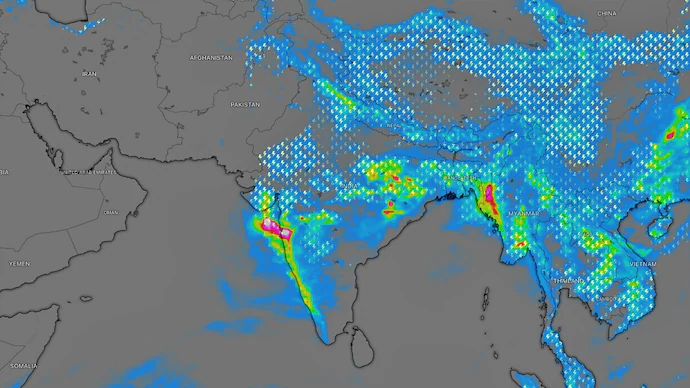
According to the IMD, widespread rainfall is expected over Jammu and Kashmir until July 12, while Himachal Pradesh and Uttarakhand are likely to receive heavy showers between July 11 and July 16. Eastern Uttar Pradesh is also expected to witness significant rainfall during July 11-13. Although rainfall over Jammu and Kashmir is likely to reduce after July 13, isolated showers are expected to persist through July 16.

The weather office has issued a low-to-moderate flash flood risk warning for several districts in Uttarakhand, including Dehradun, Nainital, Chamoli, Pauri Garhwal, Rudraprayag and Pithoragarh. Heavy rainfall could trigger waterlogging, surface runoff and localized flooding, particularly in low-lying and hilly areas.
Over the past 24 hours, extremely heavy rainfall exceeding 21 cm was recorded in parts of Uttarakhand, Himachal Pradesh and western Uttar Pradesh. Very heavy rainfall was also reported from east Madhya Pradesh, Bihar, Haryana, Meghalaya and sub-Himalayan West Bengal and Sikkim, while heavy showers affected Delhi, Punjab, east Rajasthan and west Madhya Pradesh.
The IMD has also forecast thunderstorms accompanied by lightning and gusty winds of 40-60 kmph, with speeds touching 80 kmph at isolated locations across several states, including Uttarakhand, Rajasthan, Madhya Pradesh, Gujarat, Maharashtra, Telangana, Karnataka, Kerala and Tamil Nadu.
Meanwhile, central and southern Peninsular India are expected to witness relatively subdued monsoon activity over the next six to seven days, with only isolated to scattered rainfall. However, widespread rainfall is likely to continue across northeastern states and along the west coast, including Konkan, Goa and coastal Karnataka, keeping monsoon activity active in these regions.