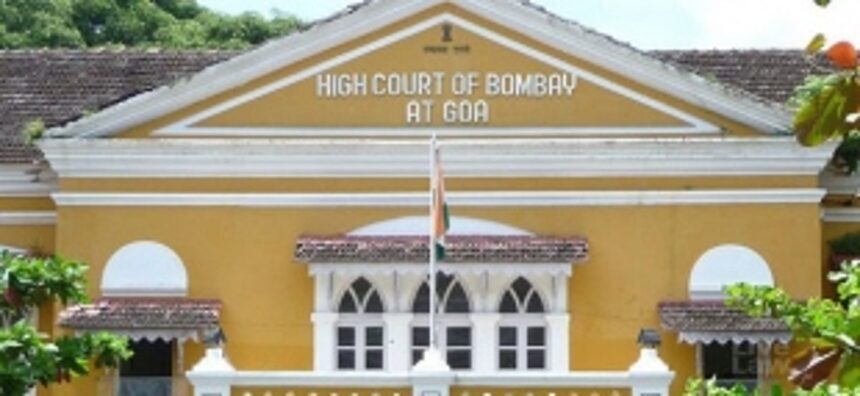
PANJIM: The High Court of Bombay at Goa has declined to interfere in the Goa government’s decision on the ongoing curfew and unlocking procedures. The petitioners had raised an issue regarding the imposition of lockdown, curfew or unlocking procedures as they referred to strategies adopted by different States and the experience gained from them.
The Division Bench comprising Justice M S Sonak and Justice M S Jawalkar said that the Expert Committee should be taken into confidence related to the issue.
“Again, we feel that since the State authorities are alive to these issues, it will not be appropriate for us to issue any specific directions. We may only add that the Expert Committee should be taken into confidence even in matters concerning curtailment of curfew or the unlocking procedures,” the Bench observed on Monday, while disposing off all the Public Interest Litigations regarding COVID-19 management except for the PIL by South Goa Advocates Association.
The court stated that the opinion of the medical experts is quite vital in such matters because they will be better suited to make related recommendations and to assess the medical position and the load on medical infrastructure in the State.
The Bench also noted that some lessons will have to be necessarily learnt from the experience of the disastrous consequences of the second wave when during the interval between the first and second waves, Goa was brimming with tourists and others who were granted entry without any restrictions.
Therefore, the Court opined that the Expert Committee should invariably meet and deliberate on this vital issue and offer its opinion or recommendations in writing to the State Task Force and the authorities under the Disaster Management Act. “These authorities or for the matter the District Magistrates must take into account such opinions and recommendations before they take any decisions on such vital issues concerning the curtailment of curfew, unlocking procedures, etc. We direct accordingly,” the 56-page interim order stated.
Amidst apprehensions about accuracy of the Rapid Antigen Tests (RAT) in detecting COVID-19, the High Court directed the Expert Committee to decide about continuing the test as an option on the visitors at the borders of Goa.
One of the petitioners had said the State Authorities are permitting persons who have tested negative by undergoing RAT and there is sufficient medical literature that establishes that RAT is a relatively weak test, as compared to RT-PCR or TrueNat, or CBNAAT tests, which are far more reliable.
The petitioner had pointed out that the State Authorities must now insist upon negativity certificate based upon the later tests, instead of RAT, if the third wave has to be effectively contained.
To this, Advocate General Devidas Pangam submitted that even the ICMR has accepted the RAT, as a test for screening at points of entry. He submitted that in any case, even these issues can be left to the decision of the Expert Committee.
The Court then noted that the issue can first be considered by the expert committee and directed it go into the issue as to whether the persons tested negative based on the RAT can be permitted to enter into Goa, or whether only the persons tested negative by undergoing the RT-PCR, or TrueNat, or CBNAAT tests, should be permitted to enter into the State.
The State is further asked to place before the Expert Committee the statistics which are to be found in the affidavits filed in these petitions where the emphasis is only on the adoption of RT-PCR or TrueNat, or CBNAAT tests as a precondition for entry into the State; based on which the Expert Committee should take an appropriate decisions and forward its observations and recommendations to the State Task Force. The State Task Force to then take appropriate decisions on this issue based upon the observations and recommendations of the Expert Committee.
All this exercise, the Bench said, has to be completed before the next date on July 12, 2021.