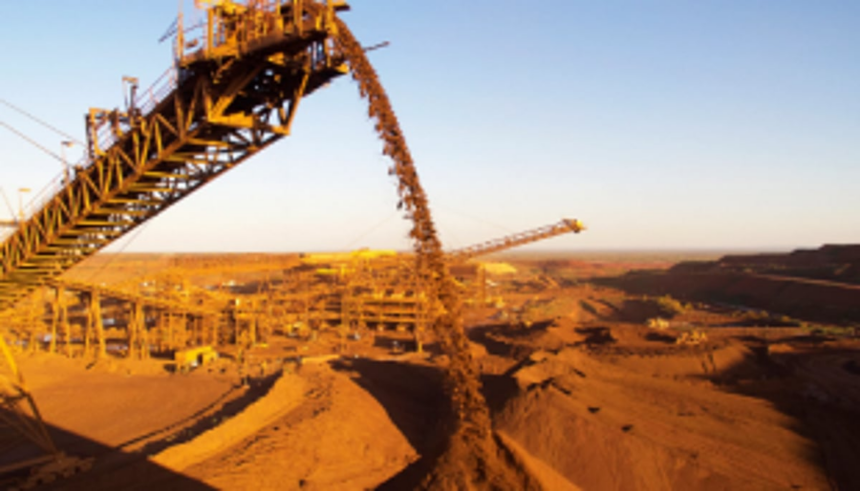
Panjim:The closure of the iron ore mining industry in the State of Goa has impacted revenues worth over Rs 34 billion with household income level witnessing at least 50-30 per cent drop across talukas, says a recent study.
The Indian Institute of Technology (IIT)-Indian School of Mines, Dhanbad has conducted a study on the impact of stoppage of mining in Goa on socio-economic life of the people dependent on the sector.

Mining in Goa came to a halt in March 2018 after the Supreme Court quashed the renewal of 88 mining leases.
“The survey results clearly demonstrated a sense of all-round gloom in the state economy and social life,” the study said.
As per the survey, with mining closure, the drop in income level has been very sharp not only in mining talukas but the impact has also been felt all across the State.
“Post closure, there has been at least a 30 per cent drop in income across talukas and in some talukas like Mormugao the drop is as high as 50 per cent,” it said.
“Stoppage has impacted revenues worth over Rs 34 billion and the livelihoods of several dependent segments have been affected and left the stakeholders of the industry without any alternate sources of income,” it added.
The report also claimed that the savings of the households have dipped drastically after the closure of the mines and has also resulted in loss of direct and indirect employment and has affected over 3,00,000 households in Goa.
The closure of mining has dealt a devastating blow to the livelihoods of people, which includes both in mining and non-mining areas. Agriculture, art and craft, tourism and all allied industries have suffered because of suspension of mining activities, it said.
The State Government collected Rs 43.11 crore in Mineral Royalty in FY 2015-16.
The same increased to Rs 314.5 crore and Rs.239.6 crore in the FY 2016-17 and 2017-18 respectively.