Team Herald
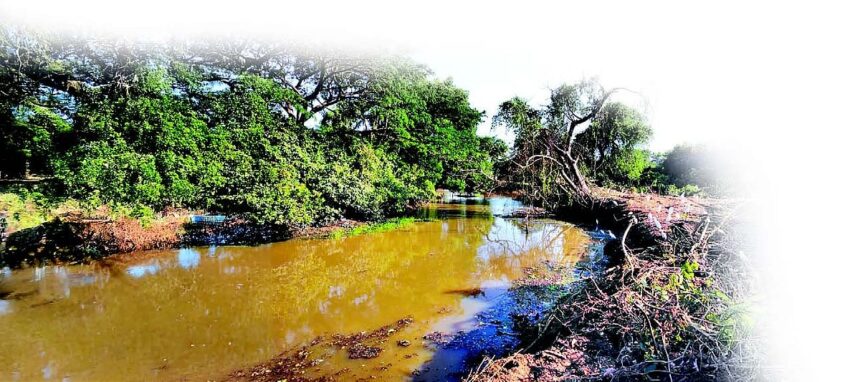
MARGAO: The decision to transport water from River Sal for Republic Day celebrations in Delhi has cast a spotlight on the river’s alarming pollution levels. While the gesture aims to honour India’s martyrs, it also raises questions about the river’s deteriorating state and the failure to address its environmental degradation effectively.

The pollution of River Sal has been a matter of legal and public concern for years. A Public Interest Litigation (PIL) filed by Navelim resident Prof Antonio Alvares has prompted the High Court to monitor the issue closely. In response, agencies like the Margao Municipal Council (MMC), Sewerage Infrastructure Development Corporation of Goa Limited (SIDCGL), and the Public Works Department (PWD) were directed to tackle illegal sewage connections. However, enforcement has been inconsistent, and the river’s condition remains critical.
The PIL also highlighted the pollution of Salpem Lake, which receives untreated sewage from Margao through stormwater drains before the contaminated water flows into River Sal. Despite the court’s directive to install phytorid bed treatment systems—a natural method of treating polluted water—progress has been negligible, leaving both the lake and the river in a worsening state.
In addition, a National Green Tribunal (NGT) action plan to rejuvenate River Sal remains largely unimplemented. Though it called for measures such as controlling industrial and domestic pollution, restoring the river’s ecological flow, and conducting periodic water quality assessments, untreated sewage still flows freely into the river, particularly along the Fatorda-Margao stretch.
Studies by the Goa State Pollution Control Board (GSPCB) and the National Centre for Sustainable Coastal Management (NCSCM) paint a grim picture. The GSPCB found high fecal coliform levels between Khareband and Mobor, making the water unfit for bathing and recreational use. The NCSCM reported sediment imbalance at the river’s mouth in Mobor, further harming its ecosystem.
Local voices have been vocal in their criticism of the Republic Day gesture. “Transporting water from Sal without addressing its pollution concerns is meaningless. Real benefits will only come once the river is cleaned, and proper pollution control measures are implemented,” said Roque Fernandes, a resident of Benaulim.
Environmental advocate Abhijit Prabhudesai framed the issue within a broader context of neglect. “If these martyrs were alive today, they would undoubtedly advocate for cleaning the river first. How can we honour their sacrifice while allowing our environment to degrade?” he asked, highlighting the lack of political will to tackle Goa’s environmental challenges.
Anthony D’Silva from Ambelim criticised the central government’s decision to nationalise the river, arguing that it has weakened local oversight. “This river is losing its true essence. The central government’s decision to nationalise it has stripped it of its power, depriving both the state government and the people of their authority,” he said. He stressed that restoring local control and enforcing strict pollution control measures are essential to reviving River Sal.
The irony of the situation is not lost on residents. While the Republic Day initiative aims to symbolically unite the nation, it inadvertently underscores the stark disconnect between symbolism and meaningful action. Once considered Salcete’s lifeline, River Sal now reflects the consequences of unchecked urbanisation, untreated sewage, and inadequate waste management. Activists argue that the focus must shift from symbolic gestures to actionable solutions. Measures such as plugging illegal sewage connections, installing advanced treatment systems, and managing solid waste must move beyond planning to execution. Without these, River Sal’s plight risks becoming a permanent reminder of systemic failure.