PERNEM The root of the water crisis is so easy to figure out. What is hard to figure tough is why can’t the system of governance address this? The taluka needs much more than 30 million litres of water daily. It gets 15 million litres of water daily and counting down. This means the spillages due to rusty and broken pipelines bring down the quantity of available water even further.
The water comes from the Chandel Water Treatment plant that supplies water to 22 villages of Pernem taluka located at Chandel. But it’s clear why the 15 MLD that the taluka is supplied is not enough.
Around 3MLD water is supposed to be supplied to each village located at the beach belt. With 15 MLD available, this water can meet the needs of just five villages. The situation is getting worse. The increasing number of tourists in the belt is raising the demand to more than 3 MLD per village.
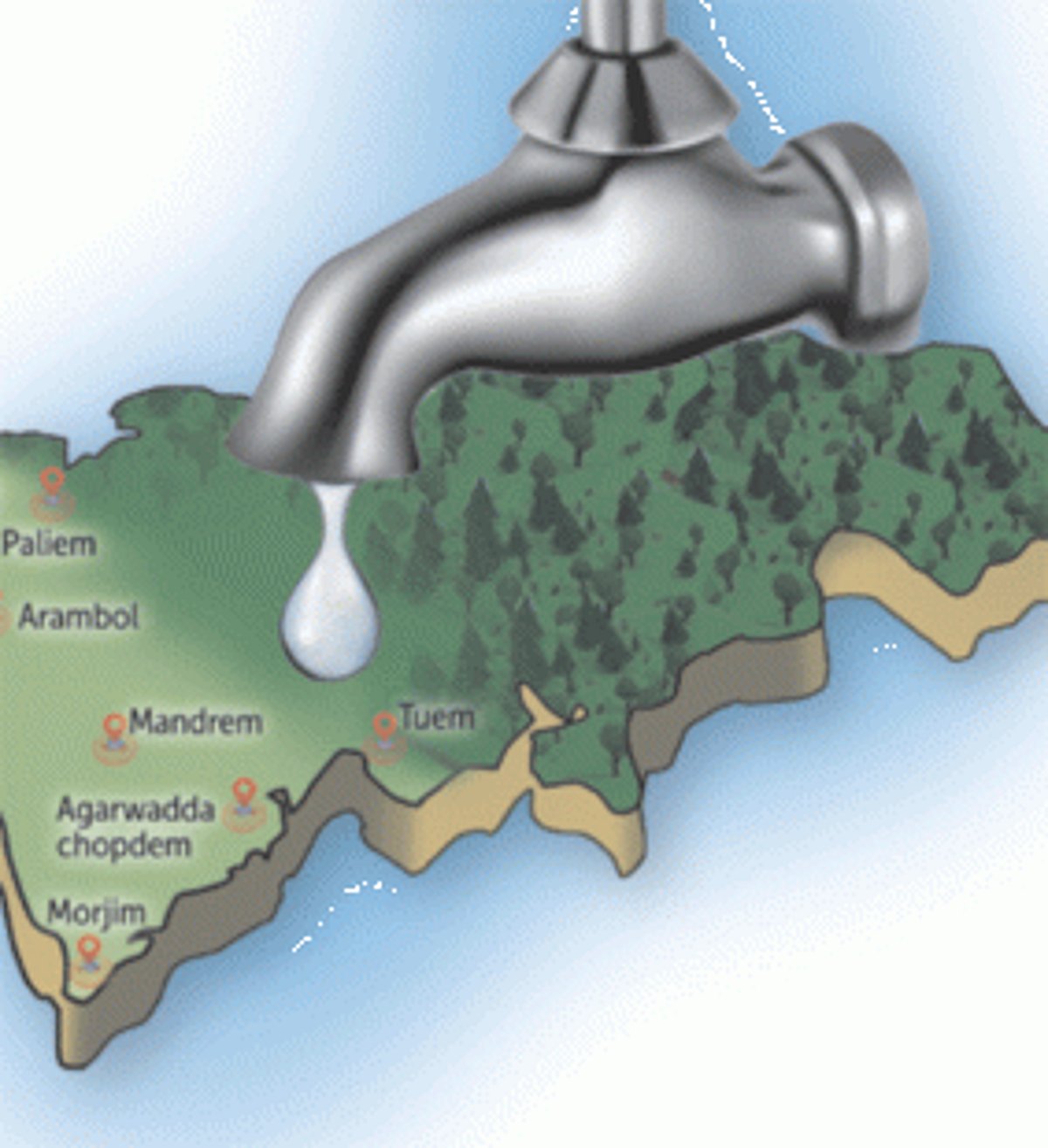
Pernem taluka has beaches such as Arambol, Morjim, Mandrem and Keri and these four villages are the most affected villages since they are located at the tail point of the taluka. Tuem, Agarwada Chopdem, and Parsem also face the issue of irregular water supply.
With only 3 MLD of water supply to these particular villages such as Morjim, Arambol, Mandrem and Keri, many times locals are forced to call private tankers of water.
Meanwhile, the demand for water is increasing. There are more than 17,488 tap connections registered at PWD Pernem.
Each month around 25 to 40 new connections get added but the amount of water supply from the Chandel plant has remained the same.
The year-old water pipeline which faces constant leakage due to damage also adds to the issue of water supply.
Meanwhile, the augmentation of the existing water treatment plant at Chandel from 15 MLD to 30 MLD is under progress. Santosh Mhapne, PWD Chief Engineer told Herald, “We have started work to expand Chandel plant with additional 15 MLD capacity, which will take care of Pernem. While for Mandrem, we have tendered a water treatment plant at Tuem, which is 30 MLD. Both plants will be completed by 2023. Currently, we are providing water by tankers.”
There are also allegations from people in the coastal belt that the PWD supplies water to commercial projects like the hotel industry as the hotels get water 24×7 while the locals are left to suffer.
Another root cause for the poor water supply is the old pipeline. The present pipeline is more than 40 years old. There are leakages at several points. Sometimes these minor leakages go ignored by the PWD staff, and as a result, the water gets wasted and flow decreases, especially the pipeline which passes under the road.
However, those within the PWD feel that the pipeline is in good condition and there are no plans to change the pipeline.
The solution to this water crisis lies purely in doubling the current availability of water and plugging leakages.
Mandrem sarpanch Adv Amit Sawant said “Irregular water supply issue is a nightmare for the people of Mandrem especially in Ward No 1 Sawantwada where despite having a water tank, people don’t get water. Instead of providing water to locals, water tankers are filled and taken away. One day I followed a tanker, which was transporting water to Kadshi, Mopa. We want to question the department concerned why a tanker is transporting water from Mandrem to Kadshi Mopa when the existing Chandel plant is much closer than Mandrem. When we confronted the AE on this, he failed to provide a satisfactory reply. We doubt that this water is supplied to private project.”