MARGAO: It certainly hasn’t been smooth sailing for the fishing community in Goa who has had to face rough conditions in recent times, both with the uncertain weather and the unresponsive government.
The issues the fishing community faces can be broadly divided into seven large areas of concern.
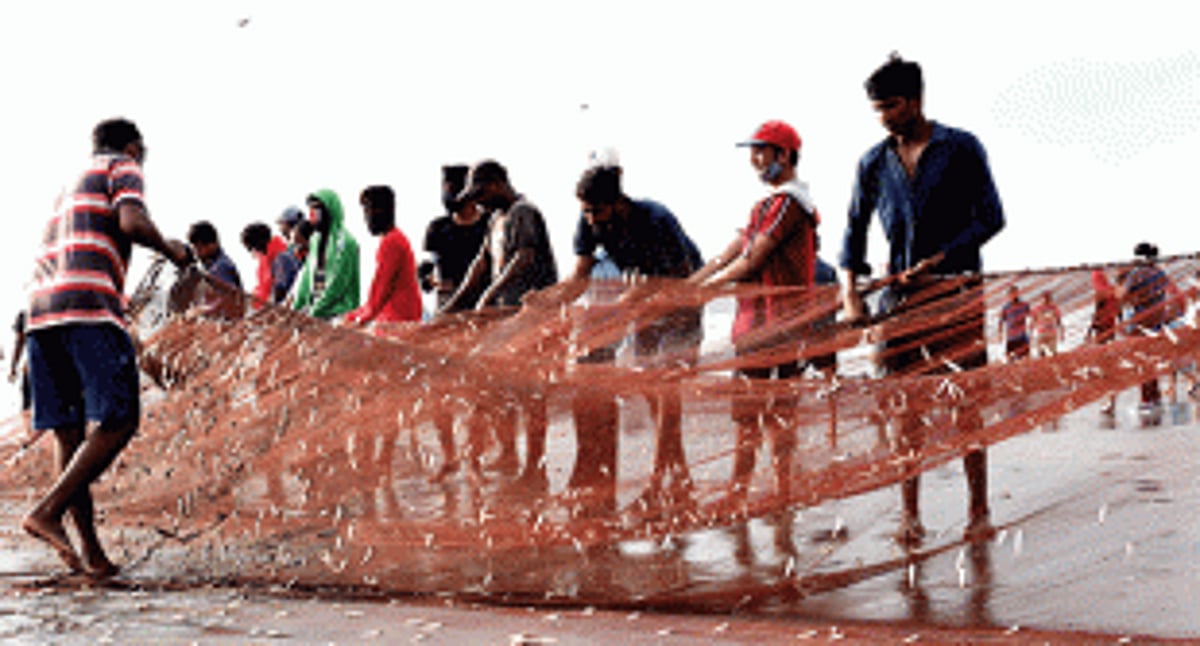
The biggest problem, the traditional fishermen and the local trawler owners have is that the State Fisheries Department has not been proactive enough to stop fishing vessels from neighbouring States operating in the territorial waters of Goa.
Here, they point out that not only do these boats use illegal fishing equipment that scoops out all the fish catch, especially smaller-sized fish, but that they also have managed to get away with such illegal activity regularly.
Recently, fishermen from Canacona and Salcete had to complain to the Coastal Police following which there were some cases where action was taken against such boats and the personnel onboard. But these acts, they say, have been inconsistent and greater precedents are required.
“It is an utter shame that even after the local fishermen have caught these illegal boats and brought this to the notice of the Fisheries Department, still these boats is conducting fishing without fear of law,” said Agnelo Rodrigues, the President of Goenchea Raponkarancho Ekvott (GRE).
The second major complaint that has been repeatedly conveyed to the government by various traditional ramponnkar associations is about the use of bull trawling, LED lights and other illegal fishing gear.
“We have demanded strict action against destructive gears like bull or pair trawling, high speed engines and the use of LED lights equipped with or with generators. The unchecked misuse of such gears has adversely hampered the livelihoods of the traditional fishermen. Goa will soon become like Norway, Denmark, Oman, New Zealand, Australia etc where such destructive gear had brought the fishing to a standstill,” Rodrigues added.
Members of GRE and the National Fishworkers’ Forum (NFF) further lamented that these gears have been banned in the territorial waters and Indian Exclusive Zone (EEZ) since 2016 but that the violations still continue. Their contention is that fish breeding is being destroyed and that if fish species are not allowed to grow, develop, soon there will be no fish in the sea.
The third major demand of the fishing community, particularly for the trawler owners is for a higher diesel subsidy to them, getting similar diesel rates as compared to what other States are offering and for the timely reimbursement of VAT and that too for it to be given trip wise.
“It is no longer feasible on various fronts to operate in the current set up. The cost of diesel has increased but we still require so many litres per trip and that makes it expensive,” said Mandar Phadte, a trawler owner.
Phadte also raised the fourth demand and that is for better infrastructure for the fishing community. He said there is a need for better cold storage facilities for the fish, holistic welfare support to staff, etc.
Coming to the fifth demand, Pele Fernandes, the popular ramponnkar from Benaulim felt the Fisheries Department should compensate small boat owners, whose vessels were destroyed in rough sea conditions. He recalled how due to erratic weather conditions, many boats capsized in the sea and were totally destroyed while the personnel on those boats had to be rescued later on. He added that boat owners lost lakhs of rupees when this happened and also their source of livelihood.
On the issue of compensation, Joseph Cardozo, another ramponnkar said the community has suffered due to Covid pandemic when they could not venture out and natural calamities like cyclones where their boats were destroyed. The sixth demand of the fishing community is for better control of the main fishing markets as they allege that non-Goan traders are ruling the roost at Goan markets instead of them. They have also called for action against non-Goan vendors who sell fish in unauthorised places, thereby taking away the business of traditional Goan fishermen.
The final demand of the fishing community is for their places of dwelling to be saved from being demolished due to any Coastal Regulation Zone (CRZ) related issue on the grounds that they have been living and working there for generations.