SHASHWAT GUPTA RAY

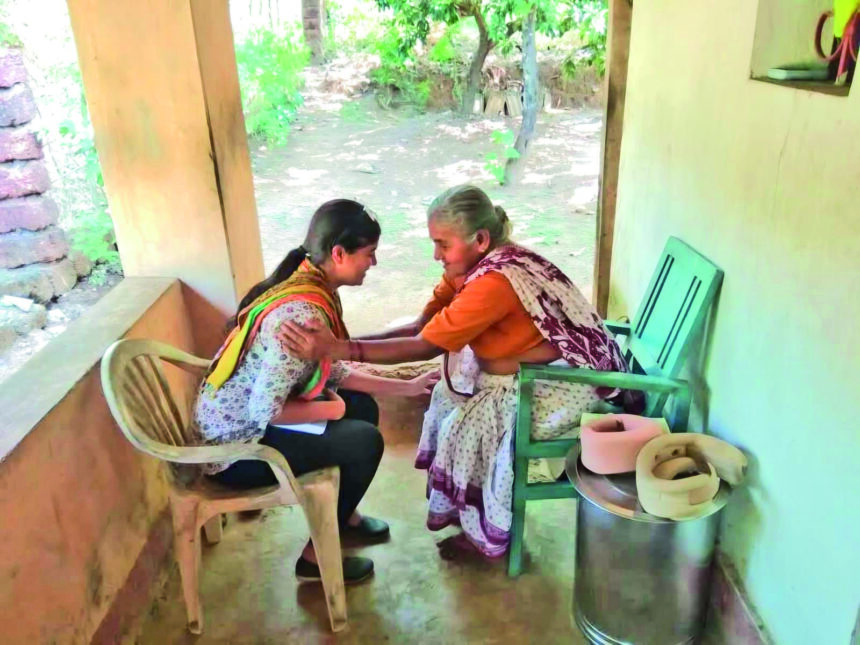
PANJIM: Life has been very cruel for 68-year-old Radha (name changed) from Vasco. First she lost her husband to HIV-AIDS in 2008. Then she realised that her husband had infected her. If this dual shock weren’t enough, she also had the added responsibility to raise two young daughters, who thankfully were not infected.
She toiled hard all her life to support herself and her daughters, who are married now. But her challenges haven’t ended. She doesn’t have any work and is dependent on her daughters, who occasionally support her with groceries and other basic necessities.
“I rely mainly on a widow pension of Rs 2,500 per month, which is insufficient to meet my daily living expenses, medical needs, and other essential requirements. I depend on government healthcare services, including Goa Medical College and the local Sub-District Hospital, for my treatment. Living alone further increases my vulnerability and need for social support,” she said.
She urged the government to increase the widow pension and senior citizen pension to at least Rs 5,000 per month to help meet basic living expenses. She also sought continued support from NGOs and society through food assistance, healthcare support, palliative care services, home-based care, and other welfare initiatives designed for widows and senior citizens.
“My prayer is to live a dignified life with good health, respect, and peace. I hope to receive the care and support needed to meet my daily needs without becoming a burden on my family,” she said.
Eighty-year-old widow Chandravati Gad, who lives alone in Siloim, doesn’t have any source of income, barring government pension. But that is proving to be grossly inadequate for her.
“I don’t have any other source of income except for the Rs 2,500 pension that the government gives. But that is grossly inadequate. I live alone in my house. Nobody comes to check on me or spend time with me,” she said.
Like Radha and Chandravati, Sofia Fernandes from Margao too lost her husband early. Life has been a battle for survival. But she chose to fight back.
“Following my husband’s passing in 2005, I dedicated myself to building a sustainable business to support and educate my two sons. My career began in tailoring and artistic carving, eventually transitioning into the bakery and pastry industry. Over the past 21 years, I have established myself as a specialist in wedding cakes and pastries,” 58-year-old Sofia said.
Through these efforts, she has successfully raised her sons. Her elder son is currently serving as a police officer in the UK, and the younger son has pursued a career in hotel management.
“I realised very early the need for financial independence. Despite all the hardships, I have ensured a self-sustainable life because dependence on others makes you vulnerable,” she said.
Having successfully fought all the adversities in life, Sofia is committed to empowering others like her through the voluntary organisation Vidvanchem Apovnnem Talloani Taronn (VATT), working towards uplifting widows in Goa.
“I offer guidance on financial independence and personal resilience. My philosophy has always been to rely on one’s own skills than being dependent on others and not worry about what others think about us,” she said.
Dattaprasad Pawaskar, Manager of HelpAge India, Goa and Konkan (Maharashtra), said that widows face two primary obstacles: financial dependency and social stigma.
“Many widows are shunned by their relatives who consider them an ill omen. The situation is more critical for elderly widows, as they don’t have any income source. These factors further hinder their ability to sustain themselves and their families,” Pawaskar said.
Director of Social Welfare, Dipak Desai said that under the State Government’s flagship programme Dayanand Social Security Scheme (DSSS), all widows receive Rs 2,500 as a monthly pension and those with children under the age of 21 get Rs 4,000.
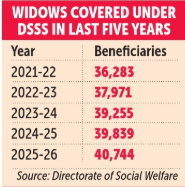
According to official data, the number of widows benefitted under the DSSS has increased by 12.29% in last five years, from 36,283 in 2021-22 to 40,744 in 2025-26.
“This shows that we are covering more widows than before. We are doing our best to help them in sustaining themselves. Decision regarding revising the pension amount is government’s prerogative,” Desai said.