Elsa Angel Rose
According to a report published in The Lancet journal (Global Burden of Disease Study), anxiety disorders in India rose significantly by 123.5 per cent between 1990 and 2023. The study examined the prevalence and burden of mental disorders among both sexes across 204 countries and territories over the same period. The findings showed that major depressive disorder increased by about 24 per cent, while anxiety disorders rose by more than 47 per cent globally. The study also found that women experienced higher rates of anxiety and depression than men. Meanwhile, neurodevelopmental and behavioural disorders such as ADHD, conduct disorder and autism were more common among males, with prevalence peaking during adolescence.

“I have seen this change, a trend of increased diagnosis of anxiety cases,” said Dr Akshada Amonkar, a consultant psychiatrist. Many people visit clinics due to headaches, back pain, and stomach issues, but when spoken to, psychiatrists found out that they have underlying anxiety (The gut and the brain are directly wired together), which is causing these issues. “Anxiety cases have gone up in the last five years, is what I have seen,” said Dr Akshada. The most common triggers for anxiety are relationship issues. Secondly, it is job stress, not getting good jobs, financial issues due to the loss of jobs, and family issues. “Family difficulties are when they are not able to talk emotionally to someone or vent out in the house. Other triggers are social media, which also causes a lot of anxiety. A lot of things shown on social media can trigger social anxiety. Content on sexual abuse, rape, and more can trigger anxiety and issues like health anxiety or lead to other anxiety-provoking situations,” said Dr Akshada.
The pandemic may be over, but the anxiety remains

For obvious reasons, people are still not over the pandemic. The fear and anxiety after the crisis are appearing in varied forms of mental health issues, adding to the already existing physical troubles. “Not a strain of COVID, but mental health came to the forefront during the pandemic. People are aware that they should be careful about their mental health. Secondly, COVID has brought many unnatural and sudden cardiac arrests and strokes in young patients. I think people are wary of the suddenness and acuteness of illnesses, especially cardiac arrests and strokes among young individuals,” Said Dr Veena Kantak, another consulting psychiatrist. The fears of losing loved ones, jobs, and relationship issues are major ones. “I have seen a lot of increase in the diagnosis of anxiety disorder in Goa in the last five years since COVID hit. A lot of people lost their jobs, a lot of them had issues with their relationships, and work from home also started causing a lot of emotional disturbances,” said Dr Akshada.
Women and teenagers face greater mental health risks
Mental disorder burden peaks among 15–19-year-olds, which is a critical developmental period that can shape trajectories for education, employment, and relationships. “The onset of mental health disorders is usually during the 15–19 years of age, even serious ones like schizophrenia and bipolar disorder. This can be due to predisposition, changes in life stages, and other crises,” said Dr Veena. The study found that women experience higher rates of anxiety and depression, while men are more likely to experience behavioural and neurodevelopmental issues. “Neurodevelopmental disorders are most commonly diagnosed in men, though ADHD is also very common among women, but it is very rarely diagnosed. Anxiety and depression are more common among women, maybe because of gender, social rules, stress levels, and also because of the stigma that is attached to mental health, which makes women much less likely to seek mental health support,” said Dr Veena.
Does a susegad lifestyle promise reduced anxiety?

“While the state of Goa is often associated with a relaxed susegad lifestyle, the psychological well-being of its people is shaped by a combination of personal, social, and biological factors rather than the pace of life alone,” said Kripa RCI, a licensed clinical psychologist from Bambolim. Regardless of the pace you are taking in your life, the evolving demands of modern life, including work and academic demands, relationship challenges, increasing digital engagement, and everyday life stressors, can all contribute to stress, anxiety and depression. “A slower pace of life can certainly support emotional well-being by reducing stress and promoting better work-life balance. But while slowing down may act as a protective factor for some individuals, it does not necessarily eliminate the risk of developing a mental health disorder, as they are complex conditions that develop through the interplay of biological, emotional, and environmental influences,” explained Kripa.
Bridging the mental health treatment gap
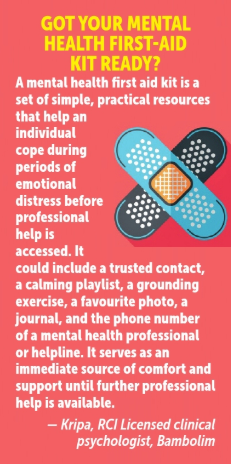
According to the study, just 9% of people with depression and anxiety receive minimally adequate care, including treatments such as medication and support from a healthcare provider. “I would not say that Goa’s mental health infrastructure is currently adequate to meet the demands, but I think we are all working together towards it. Yes, we have a tertiary care unit in Goa, IPHB, which caters to the population of Goa. There are private psychiatrists like me practising in Goa; we are spread out across different regions of Goa. We are not quite there yet, but we are certainly moving forward,” said Dr Akshada, regarding Goa’s mental health care infrastructure.
In Goa, the most important causes of the treatment gap are stigma, less availability of psychiatrists, psychologists, and other trained mental health professionals across all areas. “Financial constraints, lack of awareness, and difficulty in diagnosing it as a mental health problem or a medical disorder are other major reasons,” said Dr Veena. Concerning the treatment of anxiety, not only does a psychiatrist need to work in collaboration with a psychologist, “because anxiety is not something situational. It has got bearings in childhood and trauma; hence, working hand in hand with a psychologist will help the patient to cope with anxiety,” said Dr Akshada.