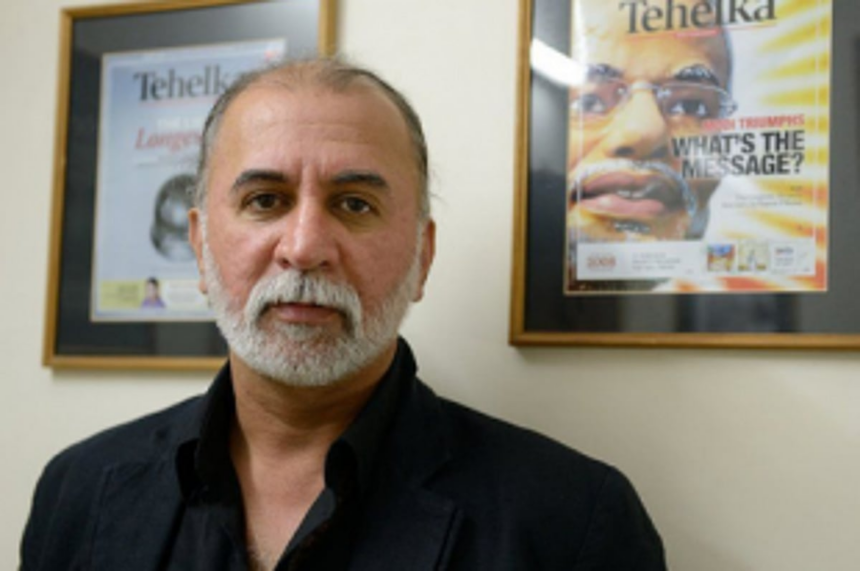
It is a settled practice that when any judgment is given by a lower court, the party which does not get a favourable judgment, especially the government with its presumed sense of responsibilities, waits for the judgment to be released and studied before deciding on the next course of action. In the case of journalist and the Editor-in-Chief of Tehelka, Tarun Tejpal, it was highly surprising for Chief Minister Dr Pramod Sawant to give a kneejerk reaction and declare that his government would move the higher court against the lower court judgments. The State is well within its rights to appeal as it has done. But the hasty manner in which the State government rejected the verdict without reading a single line of the judgment is indicative of the pre-determined manner in which Tejpal was declared guilty by the State, the investigating officer and sections of the media even before the trial had begun.
Without taking anything away from the Justice that the prosecutrix (the alleged victim) and anyone who approaches the system for justice against a heinous crime, should we totally obliterate that the trial looks at both sides? And while the State has moved the High Court, virtually rubbishing the verdict, shouldn’t the people of Goa know what the 527-page judgment of Lady Judge Justice Kshama Joshi said, laying bare the manner in which the investigation was done and how material evidence was destroyed to disfavour the accused Tarun Tejpal?
Yes, the law of the land is meant to protect victims of dastardly crimes, but it is the same law that also decides if the crime has been committed or not. We have the courts to see that both ends of justice are met. No guilty should be spared and no innocent should be sent to jail. The District and Sessions Court in its judgment has been explicit about how the investigation was botched up to go against Tejpal.
And by the way, State vendetta does exist. After reading the judgment of Justice Kshama Joshi (excerpts of which we shall quote in this article) let the people of Goa decide of the then Manohar Parrikar government’s administration indulged in a vengeful witch hunt or whether they pursued the ends of justice for the alleged victim meticulously. When monuments are erected in the memory of leaders, right in the middle of public beaches, there should also be a thought given to acts of vengeful vendetta, observed by courts, by administrations run by them, against those – including senior journalists and editors – who have been critical against the functioning of their government of parties, through their research and investigations.
Yes, it is the right of every victim and the duty of the State to protect the rights and ensure the safety of every girl or woman. But this call of duty should never be misused, we repeat NEVER BE MISUSED, to settle scores against those who have done their professional duty honestly, like journalists. Let the people of Goa decide if that has been the case in the investigation against Tarun Tejpal based on the judgment.
Secondly, can the State tell us the countless murder, rape and other heinous crime cases where investigations are pending and the trial has not even begun? What about justice for those victims? What about fast tracking those cases? Was this about targeting Tejpal or was it about justice?
And one hopes Chief Minister Pramod Sawant will also respect the court’s observations on the manner in which the investigation was carried out because that is an indictment of the professional standards of his investing agencies.
Herald for its part has never indulged in a media trial or commented on the investigations while they were on. It is also reporting the grounds of the State’s appeal in explicit detail. But once a judgment has been given by the court, after examining all witnesses and hearing both sides, its observations should not only be out on record, but the State and those who were not in the know, should at the very least acknowledge the observations and conclusions without the dismissive tone that was clearly evident within hours of the verdict before the detailed judgment was released. This is totally unprecedented.
Now let us simply view the judgement and assess its strong impact:
– “Anomalies. Discrepancies, improvements, omissions, contradictions and sheer impossibilities mark the narrative of the prosecutrix (the complainant victim). Yet the IO (Investigating Officer) and the prosecution have turned a blind eye to them at every stage”, the verdict mentions.
– “According to the prosecutrix, in that encounter (where the alleged ‘rape’ was committed), she was trapped by him in an elevator that he managed to stall, whose doors refused to open and which she could not get moving…..the Defence has during cross-examination established through CCTV footage that the lift, in fact, did open twice on the ground floor during the relevant period though the prosecutrix claimed they absolutely did not open” (In the Judgment)
The CCTV footage of the first floor was in fact seized and viewed by the investigating officer but then that footage disappeared, as the judgment confirms
– “It can be said that because the footage of the First Floor would have wholly destroyed the Prosecution’s (Government’s) case. The IO sought to keep out the relevant footage for the first floor and render it unavailable” (In the judgment)
– “If the first-floor footage was viewed on 29/11/2013, where did it disappear and there is absolutely no explanation for the same from the prosecution…the only conclusion that can be drawn is that the Investigating Officer tampered with and destroyed CCTV footage of the first-floor guest lift of block 7 since it would conclusively corroborate the defence of the accused (From the Judgment)
– It is crucial to note that the contradictions are often so glaring that the exact opposite of what the prosecutrix is claiming actually happens on screen yet, the IO did not even question the prosecutrix on the same.
While a lot else has been said in the judgment isn’t it significant that the court has concluded that the most crucial part of CCTV footage was sought to be destroyed and suppressed by the Investigating Officer of the Goa Police, evidence which would have gone in favour of Tejpal? Ultimately that footage was found and the court was pleased to conclude that the very basis of the rape charge sought to be established by the prosecution was hollow and biased.
We leave it to the people of Goa. Very seldom has the State’s role in destroying evidence to deny the accused his rights been exposed so blatantly by a Court.