SHASHWAT GUPTA RAY
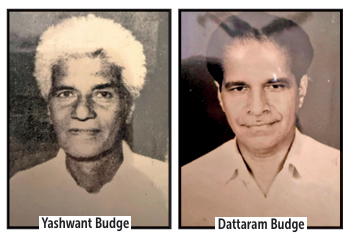
On June 18, 1946, Indian socialist leader Ram Manohar Lohia and Goan campaigner Julião Menezes held a massive public meet ing in Margao to challenge the oppressive regime of António de Oliveira Salazar. This gave Indians, who were already enjoying freedom, the impetus to come forward and partic ipate in Goa’s struggle for liberation. There are many lesser-known stories of individuals who took part in that struggle and the re cords they left behind. Two recent publications by the Department of Goa Gazetteer and Historical Records — Trial of Naraina Patil & Shashikant Shukla and Trial of Banudas Polgi & Others — bring some of these stories back into pub lic view. Published as part of the ongoing series, Source Ma terial on the History of the Goa Freedom Movement, the books present English translations of trial pro ceedings that were orig inally recorded in Portu guese and will be released today to mark Goa Revolu tion Day. “While both volumes fo cus on specific court cases, they also tell a much larger story about Goa’s freedom movement, the people who took part in it, and the risks they were willing to take. One volume deals with the trial of Naraina Esvonta Patil and Shashikant Shukla. The other focuses on Banudas Polgi and others who were involved in the flag-hoisting movement at Parcem,” Di rector of Archives, Govern ment of Goa, Balaji Shenoy, told O Heraldo. The story of Naraina Es vonta Patil and Shashikant Shukla begins on January 26, 1955. The date itself is significant. While the rest of India was observ ing Republic Day, the two young men crossed into Portuguese-controlled Goa through the border vil lage of Torxem in Pernem taluka. Patil was a 23-year-old farmer from Alibag, while Shukla was a 21-year-old student from Kanpur. They came from different back grounds and different parts of the country, but both had joined the satyagraha movement that sought to challenge Portuguese rule through non-violent action. “According to the records reproduced in the publication, the two entered Goa carrying the Indian na tional flag and distributing pamphlets related to the freedom movement. Their stated aim was to carry out satyagraha for the libera tion of Goa and its integra tion with the Indian Union. What is striking when read ing the records today is their age,” he said. One was barely out of col lege and the other a young farmer. Yet both willingly entered a territory where arrest was almost certain. Their actions reflected the spirit of the satyagraha campaigns of the 1950s, when volunteers crossed into Goa fully aware that they could face imprison ment. “The consequences were severe. The two were arrest ed and brought before the Territorial Military Court. Shukla was sentenced to nine years’ imprisonment, while Patil received a sen tence of five years. Both were also fined and ordered t guese territory after serving their sentences,” the Direc tor of Archives said. The second publication takes readers to Parcem in August 1954 and tells a very different story. Unlike the satyagraha campaign carried out across the bor der, this episode unfolded within Goa itself. “At the centre of the case were Banudas Polgi, Dat taram Bugde, Yeshwant Bugde, Soma Damagi, Kr ishnanath Parsekar and Balo Parsekar, who were linked to the hoisting of Indian national flags in the village of Parcem. Flags were raised at the local temple and on a nearby hill. During a period of political uncertainty, the flag be came a visible expression of support for freedom and change,” Assistant Research Officer at the Department of Goa Gazetteer and Historical Records, Govern ment of Goa, Arya Prabhu dessai, said. What may have appeared to some as a symbolic act soon attracted the atten tion of the authorities and became the subject of offi cial investigations. Arrests followed, and the matter eventually reached the Ter ritorial Military Court. “Patil and Shukla were not famous political lead ers. Banudas Polgi and those associated with the Parcem episode are not names that commonly ap pear in school textbooks. Yet their stories help us understand how the free dom movement worked at the grassroots level. It was built not only by prominent figures but also by students, farmers, villagers and vol unteers who chose to act according to their beliefs,” she said.