VISITACAO B MONTEIRO
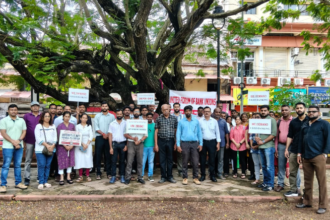
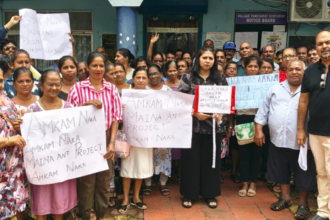
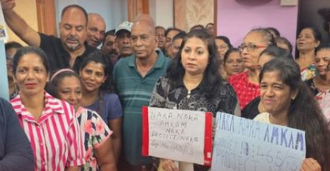
The Goa State Notification dat ed January 30, 2020 which declared 56 villages of Goa as “urban areas” under the Land Rev enue Code was withdrawn by the order dated February 18, 2020, fol lowing public protests. The revival of the proposal through a letter dated May 13, 2026, from the Under Secretary, (Rev – I), Vrushika P Kauthankar, (which is understood to have been withdrawn), strikes at the very root of our Goenkarponn—the only and last remaining straw that recognis es the bi-millennial existence of our village communes, which form the most ancient Heritage Institution of Goa. Today, Goa has nothing else to show the world as old as the “Vil lage Communities of Goa” known from their inception as Ganvkaris or Ganvponn and later in the Por tuguese appellation the “Comuni dades Aldeanas de Goa”. These Village Communities have given Goa its identity, its language, ethos, culture and communal har mony which constitute our Goen karponn. They are well known and appreciated throughout the World.

Historians who continue to study this village self-governing system consider it the best system of gov ernance. Only those who do not un derstand and appreciate all this will meddle with them to change their “village status” into “urban status”. Down the corridors of time Goa has grown itself to a State of auton omous “Village Republics”, even be fore the arrival of any ruler on the scene. Goa’s peculiar geographical situation of hills, valleys, plateaus, plains, paddy fields and rivers con tributed to this unique setup of Vil lage Communities taking care of all the needs of the village mainly land, agriculture and governance. History shows that these struc tural village units predate the Christian Era (CE). This is what we call unique and distinct identity of Goa. Separated from the rest of the country between the Ghats on the eastern side and the Arabian Sea on the west and the river Tiracol sep arating Maharashtra in the North and the river Galgibaga separat ing it from Karnataka in the South. This particular geography of the region contributed to the formation of Goa’s “unique identity”, a real “diversity” within the unity of our Motherland.
The Village Communities took a concrete shape between 5-4 centu ries before the Christian Era (BC). In the third and second centuries BC, Goa came under the rule of the Ashoka Empire, specifically the dynasty of Chandragupta Maurya. From the first century BC to the third century AD, the Satyavanas Dynasty ruled over Goa. It was followed by Chalukyas, Silaharas, Rastrakutas, Kadambas, Yadavas, Bahamanis, Yousuf Adil Shah and finally the Portuguese till 1961. In this space of 25 centuries, no ruler claimed landlordism or State Land Tenure over the Goan Village lands. On the contrary they consistently accepted the Goa’s land identity was unique and that the rule was of the Village Communities or Ganvkaris or Comunidades. The State was a protector of the land rights of the Goans and for this service of provid ing protection of their land rights, the Ganvkaris were paying the Rul er a tribute or a certain percentage of their total annual produce which was mostly in kind.
The Portuguese acknowledged the land Rights of Goans and sol emnly declared them through the enactment of Foral de Afonso Mexia which incidentally completes 500 years on September 16, 2026. This enactment is known as the “Magna Carta” (Charter) of Comunidades of Goa. Presently the State’s role is to provide administrative tutelage to the Village Communities/Comuni dades. Village people have to clearly understand what the word “urban isation” will mean for them. Before the village is declared “urban area” the consequences are to be weighed properly by the villagers i.e. sustain able development, carrying capac ity, population density, impact on bio-diversity and intergenerational equity. Urbanisation will also entail the following: a) The village roads will be wid ened into 10 mts or 15 mts and many houses will have to be demol ished. Where will the people go? Ad ditional problems as water scarcity, electricity supply and loss of tree canopy will have to be considered. b) Many villages around the cit ies will be merged into municipali ties or corporations. This will mean their village identity will be lost for ever. c) Additional taxes will be one more burden of this urbanisation d) Garbage/sewage problems will increase.
Now only the mu nicipalities can’t tackle their own garbage and sewage. How will they tackle additional burden of the add ed village areas? e) Mega projects will add to the already existing village problems where every village is in turmoil because of unbridled construction activity. “Goan Village Identity” will be lost forever in urban anonymity. Mahatma Gandhi said: “India lives in its villages”. He was all for village life where people know each other, care for each other and to gether in a true spirit of community living work for the full development of their village without the interfer ence of the State. Goa has shown the world this model of “Village Governance” where the village people have ruled themselves beyond two millennia, through their self-given laws and rules based on customs and usages. In the space of the last 25 centuries nearly 17-18 rulers (sometimes dynasties extending through centu ries) ruled Goa until 1961, but none of these rulers claimed landlordism over Goan village lands. We know that the villages of Goa through their self-efforts and self-govern ance have grown independently, where the State has only played a “supervisory administrative role”. This role limits itself to oversee that the functioning and governance of the villages are smooth and within the legal perspective. In retrospect what has been with the villages over two millennia can the State in a short span of time appropriate to itself the powers of the Village Communities asking them to comply with its terms and conditions against the interests of the villagers? To clarify this, it may be stated that the Comunidade vil lages are regulated by usages and customary laws of centuries, which laws are laid down in the Code of Comunidades.
Can they be regulat ed by the Land Revenue Code (LRC) 1968, which can be applied only to the revenue villages belonging to the State and not Comunidade vil lages which rightly belong to the villagers? In this context what is the proce dure to be followed to declare some Comunidade villages as “urban are as” when such term as urban area is not in accordance with the Code of Comunidades? The word “urban” presently con notes some idea where one village is highly developed than the other villages, but such nomenclature to differentiate such villages from the other villages has never been found in the Code.
It is observed that Portuguese legislation is much more forward and clearer wherein they developed the concept “Predio Urbano” mean ing “Urban Property”, where there is a house and “Predio Rustico” meaning “Rustic Property” which is not developed or agricultural. So, every plot of land in private holding is with an urban or rustic denomi nation and the remaining area is under the direct ownership of the Comunidade as per the designated land use, stated in its “Tombacao”. I hope this article will throw some light on the confused minds of poli ticians and people and lead them to preserve the village identity of Goa. (The author is a well–known columnist and author of the book ‘Goan Village Communities’)