SANTOSH NAIK
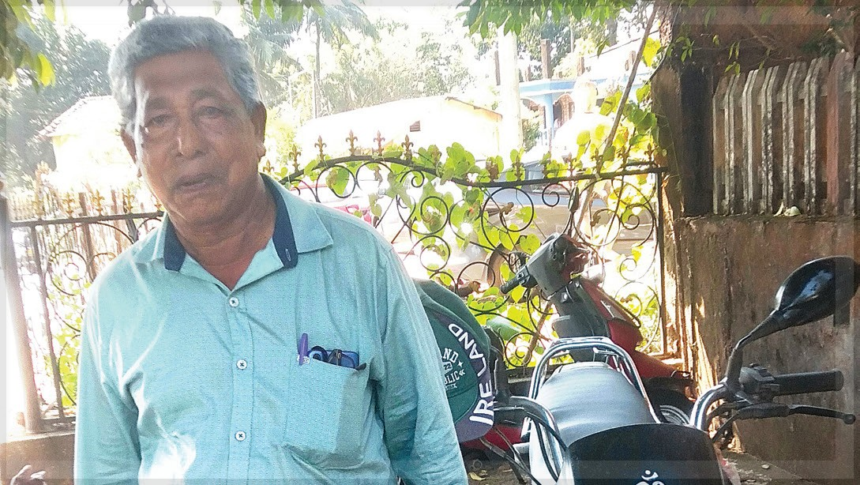
PONDA: Narsiha Vishwanath Chari, a motorcycle taxi pilot who has served the people of Goa for over four decades, marked a milestone on January 4, celebrating his 75th birthday. A resident of Mahalaxmi in Bandora and a familiar figure at the Ponda Bus Stand, Chari reflects on the changing times and how they have turned a once-thriving profession into a daily struggle for survival.
“The motorcycle taxi business has always required hard work. For over 40 years, we operated through scorching heat, heavy rains, and late nights,” said Chari. “But today, it has become nearly impossible to survive in this profession. The earnings are meagre, often not exceeding Rs 200 a day.”
Chari explained that in earlier decades, motorcycle taxis were indispensable in Goa. With limited buses and no mobile phones, people relied on them for emergencies, festivals, and urgent errands, particularly in remote villages. “Our services were the lifeline for locals in emergencies—be it to deliver an important message, attend a family function, or even during religious events,” he said.
However, he lamented that the landscape has changed drastically. “Every household now has two-wheelers and cars. With such conveniences, the demand for motorcycle taxis has sharply declined. This was bound to happen, but it has made the business unviable. Younger generations are reluctant to even consider this as a profession,” he added.
Chari shared the physical toll and dangers of being a motorcycle taxi pilot. “There have been instances where customers refused to pay after using our services. Some have even threatened us with knives. It’s a risky job where we spend long hours away from our families,” he said.
He also recounted a personal setback: “Years ago, I suffered a severe accident that fractured my leg and hand. The cost of treatment was so high that I struggled to recover financially.”
Now at 75, Chari continues to work because he has no financial safety net. “There are no benefits for pilots like us who have spent decades in this profession. We are left to fend for ourselves when we are too old to work.”
Chari emphasised that Goa’s motorcycle taxi system is unique and deserves to be preserved. “It is the only service of its kind in India, and we should be proud of that. The government needs to step in to support us before this tradition disappears entirely.”
He suggested measures such as building shelters for pilots at bus stands, financial aid for pilots nearing retirement age, and educational schemes for their children. “At this age, many of us are struggling to earn a livelihood. A government-backed retirement scheme would help not just us but also our families,” he said.
Chari also pointed out the need for immediate intervention to support the next generation of pilots. “If we want to ensure that this legacy continues, steps must be taken now to make the profession viable for younger individuals. Without that, this unique part of Goa’s identity will vanish.”
Despite the challenges, Chari looks back fondly on his four-decade career. “In the past, we played a vital role in people’s lives. The gratitude we received from our customers made the job fulfilling. Even with the hardships, there was a sense of pride in being a part of such an essential service.”
He also recalled how motorcycle taxis were especially relied upon during emergencies. “Back then, when no buses were running or people were stranded in villages, we were the ones they could count on. It was a different time, and we were proud to serve.”
Now, with his two children engaged in their respective jobs, Chari hopes that his message reaches the authorities. “The government should recognise our contribution and take action to secure the future of motorcycle taxi pilots. It’s not just about us but also about preserving a Goan tradition that is unlike anything else in the country.”