MARGAO: The practice of baking is not indigenous to Goa and was introduced to the State probably in the 16th century, by European missionaries. In the State, not every community was allowed to run a bakery. You couldn’t choose to be a baker just because you were passionate about baking. Only the Catholic ‘Kshatriya’ (Chaddo) community was permitted to own and run a bakery due to the high level of cleanliness observed in their houses. Isn’t it interesting to see that the caste system prevails even among the Catholics living in India? So, when locals belonging to the ‘Sanatana’ dharma converted to Catholicism, they insisted that their varna/caste be continued in their new faith.
We have whole villages in Goa dedicated to bakeries. Ambajim, a small village located in Fatorda (then known as ‘Maddant’), is among the several of these, traditionally only resident to the Catholic ‘Chaddo’ community. Sadly, any area around Ambajim is also referred to with the same name. On striking a conversation with one of the sons of Late Senhor Bazilio Andrade who owned a bakery in Ambajim, which is currently run by another son of his, we get insights into the old days, the working of his family bakery for over a period of sixty to seventy years.
Andrade explains that the dough had to be kneaded by hand in a wooden basin called ‘Kongi’, till about fifty-three years ago, before the arrival of electricity in 1970, and even after, during times of power failure. Post the introduction of electricity in the village, a dough kneading machine of the company Mangal metalworks, was purchased by Bazilio, all the way from Belgão. Flour was purchased from Francis and Manuel Quadros, who had their wholesale outlet at the Mercado do Vasco da Gama (Old Market) in Margão. Pre-1950s, palm toddy was the only fermenting agent used in bread-making, which was procured from one João, living in Bolle-Pand, Fatorda, and another supplier known by his nickname, ‘kosladh’. Today, yeast being a cheaper and easily available substitute to toddy, is used in fermentation of dough in bread making.
Different types of bread made were Polli, Khatrea unde, Lamb unde, a coiled serpent-like bread called Revdam, Kankon (a bangle shaped bread), Poxe, Kopiad (sweet bread prepared with jaggery) and bread loaves prepared in a moulded tray called ‘raath’. The tray in which the bread was baked was otherwise known as ‘forma’.
The bread was sold at the municipal market at the Tinto de padeiro in the Mercado do Afonso de Albuquerque, Margão (New Market), supplied to restaurants and home delivered by ‘bhoias’ who were boys working for the bakery. These boys would go door-to-door selling bread. They would wear a characteristic outfit called ‘Cabaia’ (a long tunic with wide sleeves, introduced in India with the coming in of the Muslims), supporting a basket full of bread on their heads and a staff made of bamboo, attached with bells in one of their hands, which they would hit on the ground to produce a typical “jang-jang” sound. Prior to the 1850’s, the Tinto de padeiro would have been functional at the old market when the new market never existed.
He mentions that they would bake only once a day. After the kneading was done at around 7 pm, the dough was left alone for approximately six hours for fermentation. Shaping of the dough into bread, followed by baking, would happen somewhere around 3 am!
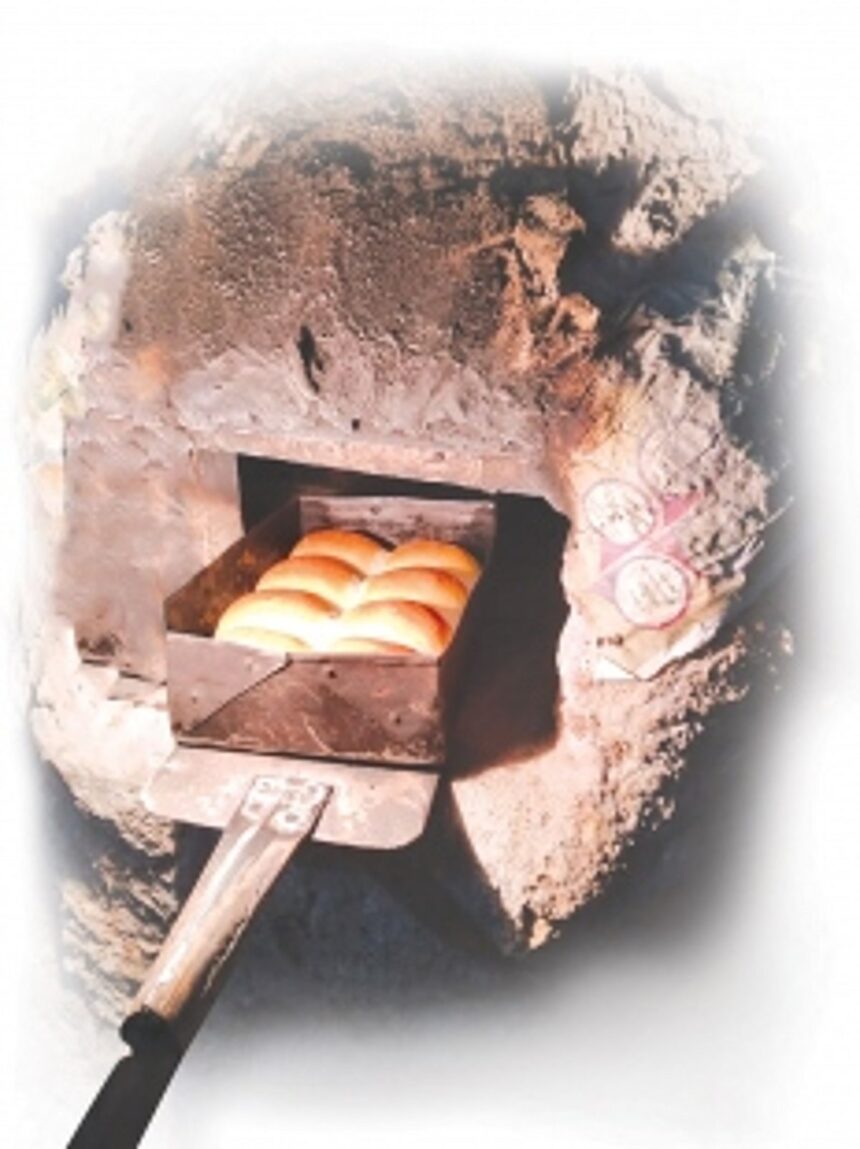
Vicente Miranda from Virabhatt, Fatorda was one of the few who knew how to construct the vaulted laterite furnace. The floor of the furnace was filled with heat retaining materials like salt, broken glass pieces obtained from codd soda bottles and sand, which were topped with baked terracotta tiles.
Since not everyone had an oven at home, during festivals like Christmas, a village feast, celebrations like weddings, villagers would get their stuff like a stuffed Duck or even a marinated pigling, to be baked at the bakers furnace, for a small fee.
The village ‘Poder’ as he may be referred to locally, is sadly a fast dying breed. Cheaper bread made in industrialised bakeries is one of the main reasons for their diminishing business. Their children sadly are not up for continuing their traditional profession with pride and prefer venturing into other areas.