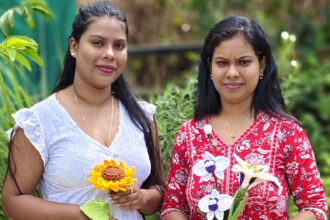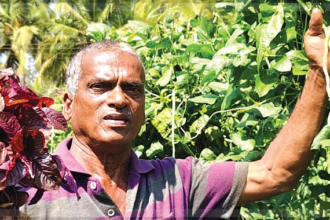
PARSEM: In the village of Parsem, where the general sentiment often sees agriculture as a loss-making and labour-intensive endeavour, a remarkable couple is defying the norm and setting a shining example for others to follow. Meet Shriram and Pramila Parsekar, a dynamic duo whose innovative approach to farming has turned their ancestral land into an agricultural treasure trove.
Shriram’s journey began with a farm that was primarily populated with cashew and mango trees. His father, like many in the region, had focused solely on cashew and mango farming. However, Shriram had grander aspirations. He wanted to take agriculture to new heights and explore beyond the conventional. “I always aimed to surpass my father’s farming practices,” Shriram declares. “For those with strong determination, the sky is the limit, but for those without, excuses abound.”
What makes Shriram and Pramila’s farming story exceptional is their commitment to hands-on agriculture. They personally invest their time and care into nurturing their plants, creating a personal connection with every crop. Shriram has managed to transform a hill plateau into a thriving farm. This ambitious undertaking involved installing a three HP pump in a well near his house, followed by laying a water pipeline with a vertical incline of two kilometres to reach the plateau, showcasing the Parsekars’ resolve to merge tradition with technology.
In addition to the water pipeline, Shriram has created pits for water harvesting and installed solar panels to generate electricity at the farm. Their commitment to sustainability shines through, as they opted for solar-generated electricity to minimise both environmental impact and power bills.
Pramila, Shriram’s partner in both life and farming, is no less remarkable. She serves as a director on the board of the Pernem Farmers Union and actively participates in various agricultural programmes, even traveling to share her knowledge and expertise.
In addition to their vast farm, the couple has ventured into poultry, dairy, and the distillation of feni, ensuring that there is no off-season in their agricultural pursuits. The Parsekars believe in being constantly present among their plants, communicating with them, and providing the personal touch that leads to bountiful yields.
Their innovative approach includes intercropping various plants, such as marigold, ladyfinger, cucumber, jowar, bajra, groundnut, osanne, moong, virvil, and millets, alongside their cashew and mango trees. This not only enriches the soil but also maximizes the benefits for both crops. “We take pride in the lush canopy of our cashew and mango trees, along with the thriving vegetable plants,” Shriram states. “Our produce is in high demand, thanks to the personal attention we provide.”
Shriram’s adoption of improved hybrid cashew varieties has increased yields while reducing the labour burden. He believes in farming for maximum income and strives for high yields year-round.
In recent times, Shriram has been harvesting around 30 kilos of various vegetables, especially cucumbers and ladyfingers. With each additional vegetable variety, their production increases. To protect their crops from peacocks, wild boars, and bison, they have put protective measures in place.
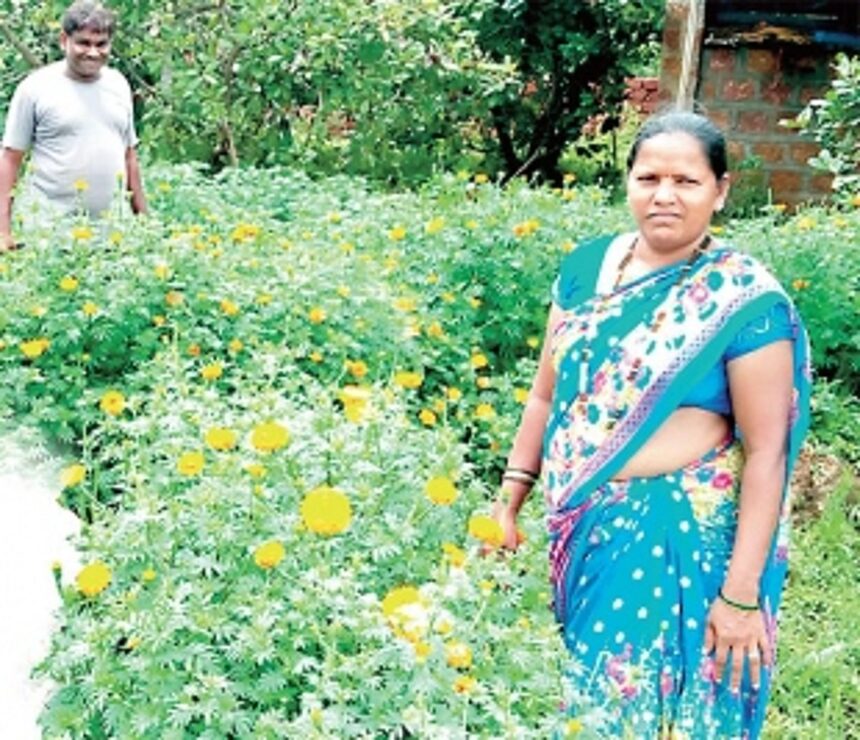
They also grow stunning marigold flowers, planting them in June, ensuring that it blooms during Ganesh Chaturthi and Dussehra, adding a touch of colour to their farm. But for Shriram, success in farming isn’t just about independence and self-sufficiency —it’s also about timing and adherence to a strict schedule.
“For a farmer to succeed, a timetable must be strictly followed,” he emphasizes. “A proper timetable leads to success. Planting, manuring, and other activities all have their schedules. Farming expenses exist, but they should be covered, and profit should be maintained. That’s the mark of a true farmer.”
“Often, cashew farmers tell me that they plant cashew grafts on hills in August and then forget about them. This is absolutely wrong. Plantation should be done in June and you must regularly keep visiting them so they feel connected to you, and grow well,” he says, earnestly.