MAPUSA: In a world where materialism often overshadows genuine concern for humanity and the environment, Tanuja Divkar from Mapusa stands as a beacon of hope. Originally from Taleigao, Tanuja married into one of Mapusa’s influential families. Tanuja, an architect by profession, lives on a street named after the late MLA Chandrakant Divkar. Despite her background, she has taken up thrifty living, and dedicated herself to promoting eco-friendly living and supporting the underprivileged.
Tanuja’s journey into sustainable living began ten years ago after a personal misfortune. This event led her to embrace a more health-conscious and nature-friendly lifestyle through yoga, meditation, and a deeper connection with nature. During this transformative period, she met Sarita Sudhakaran,
who had initiated an eco-friendly group promoting sustainable living and a ‘waste-less’ culture. Inspired by Sarita, Tanuja decided to immerse herself in this field and spread the message of ‘reduce, re-use and recycle’.
“Mostly everything in our life can be recycled, reused, and regenerated. There are certain things, like plastic, which we need to completely discard,” Tanuja emphasises. Her catchphrase, “Maka Naka Plastic,” reflects her stance against the non-biodegradable material. She decided to create awareness about eco-friendly products, noting the lack of such shops in Mapusa, which forced like-minded people to travel to Panjim or shop online for these items.
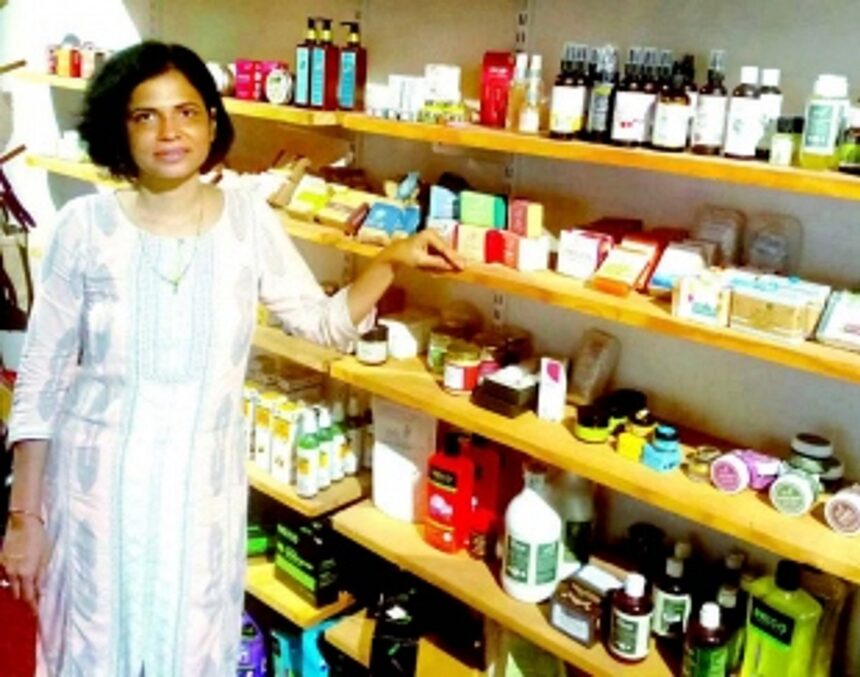
Tanuja opened a small eco-friendly store in her office at Duler, sourcing items from distributors like Vaishalli Chawan. As demand grew, she moved to a larger space near the Paulo Garage, converting an old house owned by her in-laws into her business centre. Today, she offers over 300 types of eco-friendly products, all promoting sustainable, waste-free living.
Her commitment extends beyond her business. Tanuja believes in supporting local artisans and promoting their work, helping them earn a livelihood. She travels extensively across India, especially to economically backward areas, identifying talented individuals and partnering with them to sell their products. She is deeply moved by the poverty she witnesses and feels a strong responsibility to help.
Tanuja’s efforts also include a partnership with Good Karma, a thrift store that sells second-hand clothes, with 25% of proceeds going to various NGOs each month. She believes in living for others and making the world a better place. “If people like former President Abdul Kalam and Ratan Tata can reach out to the needy and donate their earnings to the poor, why can’t we?” she asks.
Tanuja’s journey from a small shop with shelves made of scrap wood to a full-fledged eco-friendly business centre highlights her dedication and impact – especially since she has never hung up a poster or signboard to promote her store, being vocal against public defacement. “Initially it was mostly tourists and non-Goans picking up sustainable goods, but more Goans have become regulars now,” she’s happy to report. Her work embodies the philosophy of living in harmony with nature and supporting humanity