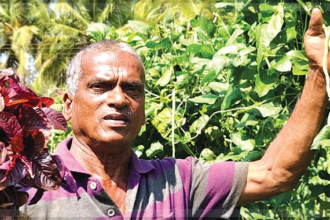
RAIA: The quaint village of Raia boasts of its magnificent Igreja de Nossa Senhora das Neves, built in 1699. On the feast of Saint Michael celebrated on November 19, anyone passing by the church would spot the vibrantly coloured sweet stall run by Eknath Raikar, 67, a resident of Santemol, Raia, whose grandfather, Gopinath Raikar, had moved to Karai, Shiroda, to escape religious conversions happening in Raia during that period. In Shiroda, he interestingly carried out baking (an occupation introduced by the missionaries who came with the Portuguese in the 16th Century) to make a living.
Putu Raikar, Eknath’s father, returned to his hometown Raia in 1922-23 to start the business of making sweets – Eknath is a second generation confectioner. When asked about the different types of sweets he makes, he rattled them off, “Khaje (kadio-bodio), laddu, revdeo, jalebi, halwa, aalyachim kaapam (ginger sweets)…traditionally, we would make a few more products like gumti (sugar dome-shaped sweets), bends (red-coloured sugar sticks), sheg-nanne (sugar-coated ground nuts), and sugar-coated cashew nuts, which are no longer made,” he adds.
The cost of cashew nuts has surged so much that the product cost goes up exorbitantly and hence has no buyers, rues Eknath. With a heavy heart, Eknath says that his children show absolutely no interest in carrying ahead their traditional second-generation family occupation. He entirely depends on his labourers to prepare his sweets. Further to add to the pain, he informs that there is absolutely no support from the government and urges the government to encourage traditional occupations like his own through incentives, which would indeed mean a lot of help in carrying ahead small traditional family businesses such as sweet making, pottery, basket weaving, and so on.
“Sourcing labourers to work with me is getting extremely difficult and at the same time, the cost of raw materials needed to make sweets have drastically risen, which is the reason I am forced to raise the prices of my products,” says Eknath.
Teary-eyed, he mentions that hardly anyone purchases sweets from him these days. He urges young parents to purchase sweets from local vendors like him so that their children too will be habituated to buying these traditional sweets on occasions of feasts and zatras, and this will encourage Goan vendors to carry on their traditional businesses.
Eknath recalls that in his earlier days, one Raath (200g) of sweets would cost Rs 4 and today, costs Rs 80. “Earlier when there were no motor vehicles, I would transport my sweets to different locations for village fairs, on a bullock cart,” Eknath recalls, adding that he has even travelled even to Betul on a bullock cart, which took nearly all day. He would eat out on those days. Today he sets up his stall as far as Vasco da Gama and around Salcete and manages to get fresh food from home, due to quicker transportation in today’s times.