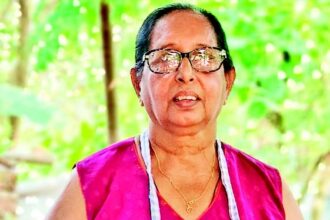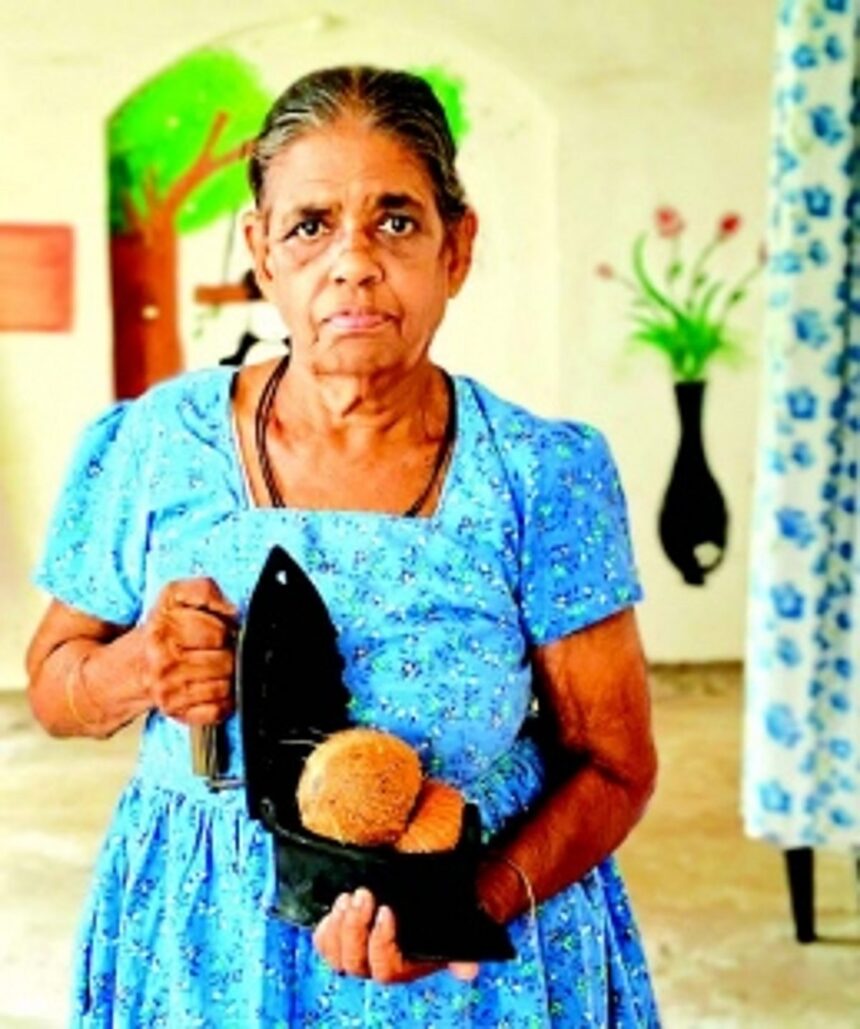
ALDONA: At 77 years old, Juliana D’Costa from Cottorbat-Soddo in Aldona remains dedicated to her lifelong profession as a dhobi. She began this work at the tender age of 10, following in the footsteps of her mother, who herself practiced the trade for over 70 years. Despite her age, Juliana continues to work diligently, determined to carry on the tradition for as long as she is able.
Juliana recalls her early days in the profession, which started while she was still in school. After completing her studies up to the 5th standard, she left school to fully commit to the family business. “My mother and I would go house-to-house, collecting clothes, making bundles, and delivering them on foot, carrying the loads on our heads,” she recalls, misty-eyed. The absence of vehicles made the work physically demanding, yet they persevered.
In those days, they received a substantial number of clothes from a nearby convent, boys boarding school, and local residents. Juliana describes the meticulous process they followed: separating clothes for washing, drying, ironing, and packing for delivery. They used soaps that were chemical-free and effective in cleaning, unlike the modern products that are often harsh and cause allergies.
Juliana reminisces about the simplicity and hard work of hand-washing clothes. Each garment was soaped, washed, dried, and ironed by hand, a labour-intensive process that she believes preserved the quality of the clothes better than modern washing machines. She fondly remembers using an iron heated by burning coconut shells, a treasured possession, akin to a family heirloom, she still holds on to.
The work, though challenging, was rewarding. Juliana’s services were highly valued by her customers, who appreciated the dedication and quality she provided. Despite the rise of modern conveniences and changes in society, she remains committed to her work, believing it to be more fulfilling than many modern office jobs. “I used to launder 500 to 600 garments a week, and make multiple trips to
Throughout her career, Juliana faced numerous challenges, including the lack of transportation and the use of rudimentary tools. “Today, everything has become so costly, that it is difficult to make ends meet. In my younth, there were plenty of financial hardships, I used to earn as little as 50 paise to 1 rupee per job, yet, somehow, I managed to support my family. The work was not just a means of income but a way of life that keeps me active and connected to my roots,” she says.
Juliana’s children have often suggested she retire, but she continues to wash clothes by hand, convinced that this method is gentler on the fabric. She laments the loss of traditional soaps that were made with natural ingredients and were cost-effective and efficient to use. “Washing clothes by hand is gentler on the fabric and keeps it looking new for longer. Washing machines cause clothes to become discoloured and the soap required for machine-wash are harsh and laden with chemicals that are not good for the clothes or the environment either,” she quips.
As she looks to the future, Juliana hopes that the next generation will recognise the value of this age-old profession and the fulfilment of hard, physical labour. She acknowledges that times have changed, and children today have different ambitions. “While I cannot force my children to follow my footsteps and become dhobis, I hope they will understand the importance of my work and the role
it played in their family’s history. I may not have as much energy now, but I have no plans to retire and sit idle; I shall continue my life’s work for as long as I am able to,” says Juliana.