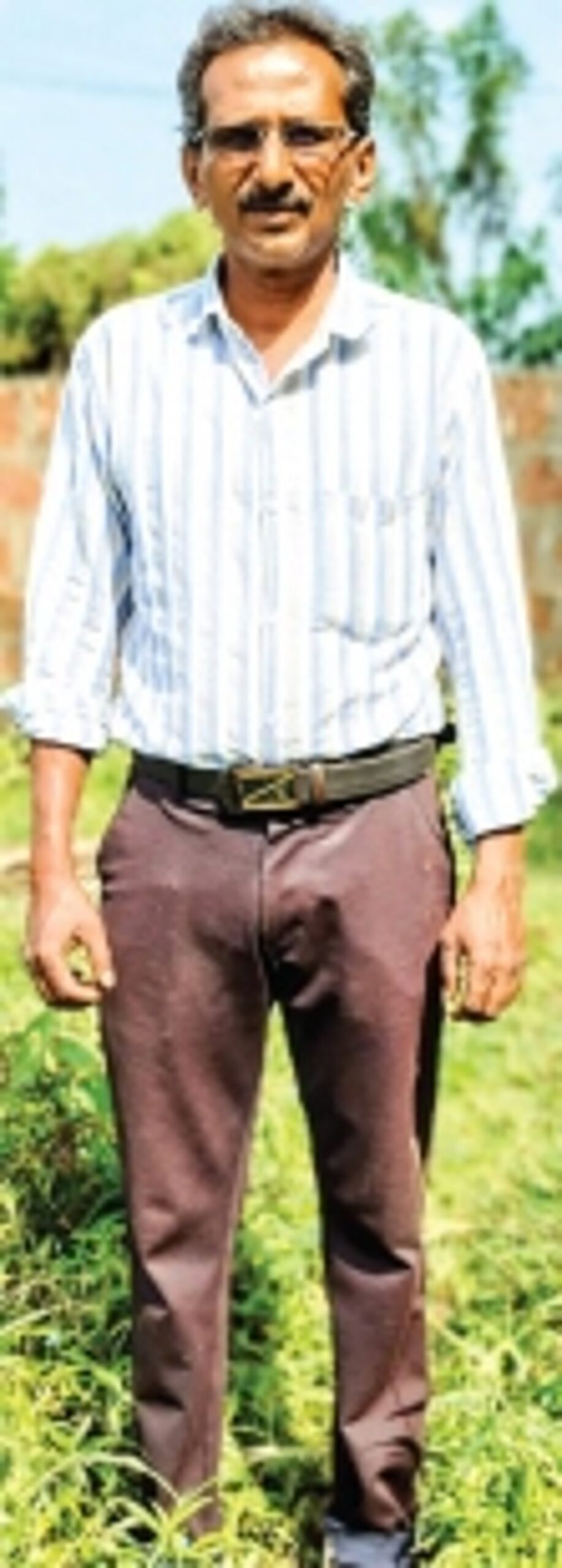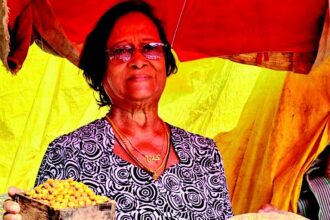
MARGAO: Domingos Fernandes, 57, from Mazilvaddo, Benaulim has been regularly setting up his stall at the fair for the feast of Our Lady of the Immaculate Conception in December and on the feast of the Holy Spirit, celebrated sometime in the month of May.
It is heartening to see Domingos, along with his wife Piedade, working in sync as partners, roasting their gram as a labour of love. “Our family probably got into roasting gram in 1918, and we are the fourth generation proudly carrying ahead this legacy of our ancestors. Domingos began this business in 2000 when he took it over from his father, Manuel Zuzinho Fernandes, and mother Calloth Fernandes.
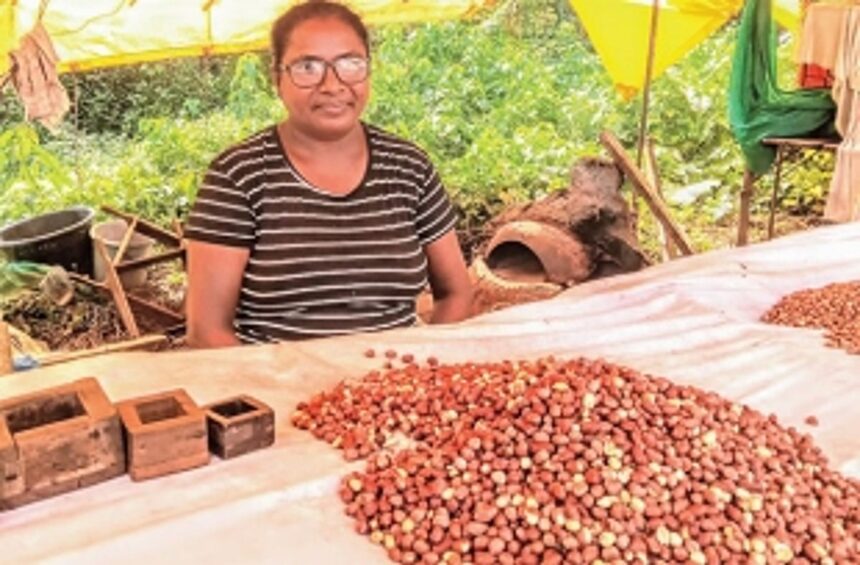
Fernandes uses traditional roasting techniques where the vessel used to roast grams is now made of steel and strengthened using clay. Traditionally, the vessel was made of terracotta and would often break on account of being fragile. Firewood is used as fuel for the fire, and sand sourced from the seashore is used as the medium to roast the grams uniformly, since it helps retain heat for greater time periods. The whole setup is referred to as the ‘Bhatti.’ “We source our groundnuts and gram from Bombay,” mentions Fernandes. The grams are roasted with turmeric and salt for that golden hue, while the groundnuts are seasoned with salt alone, before being roasted in hot sand.
“I am proud of my children namely, Vema, Aollyen, and Anvel, who since a very young age have been taking a lot of interest in learning and understanding gram roasting and try to help us in whatever manner they can,” mentions Piedade. “The smile seen on my son’s face after he roasts some nuts fills my heart with content. My family was never into roasting gram and this was something completely new to me when I married into the Fernandes family. However, I took it as a challenge and learned how to do it and began assisting my husband with his work. We face a lot of problems in sourcing firewood since we are mainly dependent on wood sourced locally from people around,” she shares.
“Today, with improvements in transportation, things have become quite convenient. Earlier my father would travel on a bullock cart and in places like Betul, he had to literally walk through a flowing stream of water to reach the Chapel of Saint Francis Xavier,” says Domingo. Earlier due to poor transportation, they would stay overnight at the place of their stall, where they would cook and sleep. Now they carry lunch from
home and travel to and fro. “The various places we set up our stalls are Nuvem, Betalbatim, Colva, Chandor, Curtorim, Assolna, Chinchinim, and Betul. Earlier, we would even go to Canacona, but sadly not anymore,” adds Piedade.
“We manage everything by ourselves with just one helper to assist whenever needed. There was a custom in Assolna that newly-married brides would purchase large quantities of gram in a wooden unit measurement called ‘Paili’. This practice is rarely observed today,” she says. Earlier, roasted gram was available only for feasts, but today the same is available throughout the year, which is one reason vendors like him aren’t having much business to do.