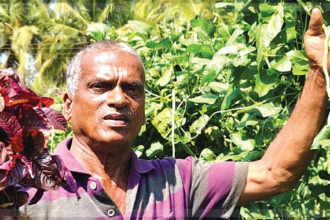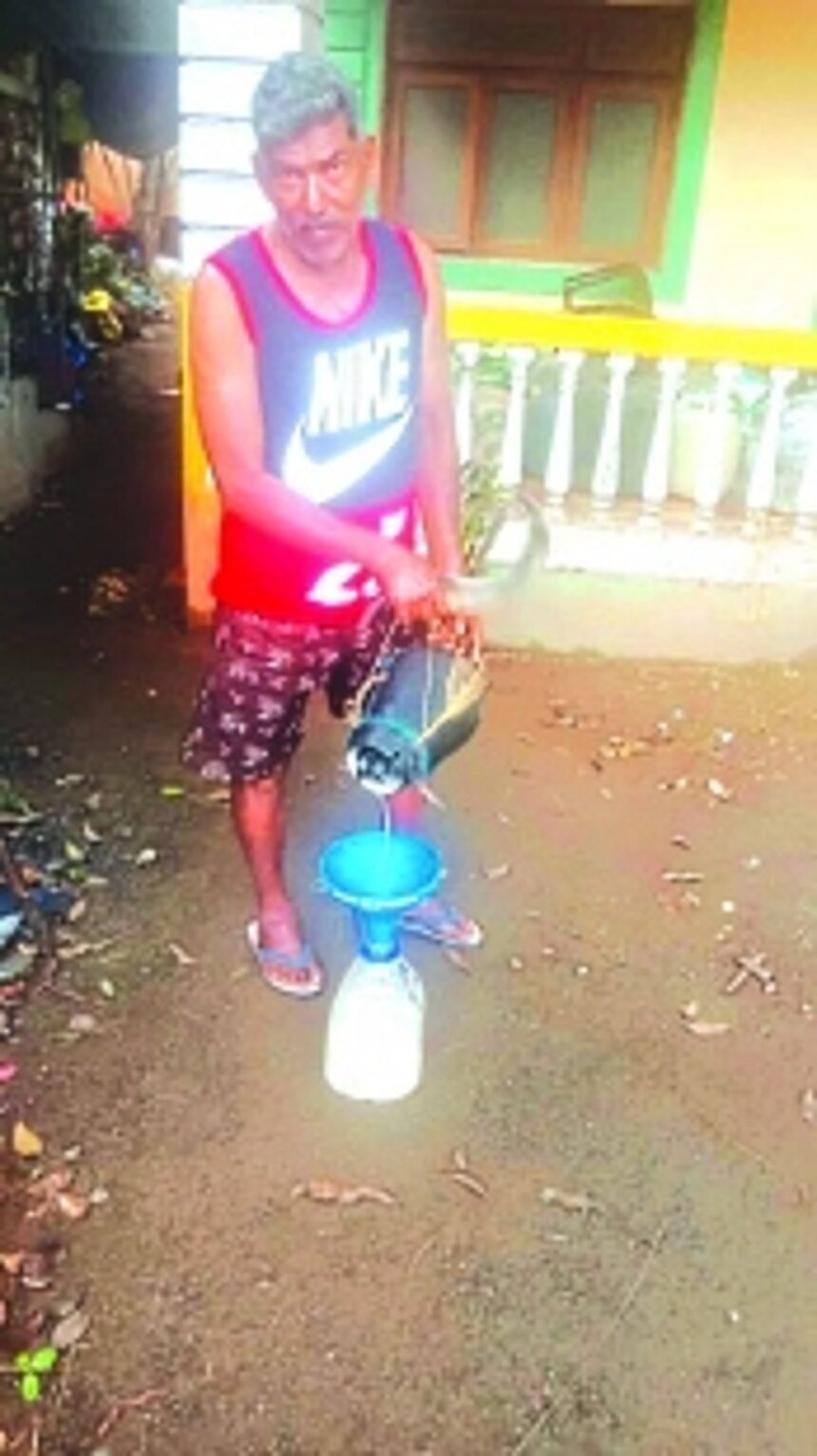
SIOLIM: Often referred to as the cradle of Bardez, Siolim has produced numerous talented individuals who have risen to prominence in various fields, bringing pride to Siolkars. While most of the village’s shining personalities are native-born Siolkars, one man stands out as a settler who has made an indelible mark on Siolim. Meet 63-year-old Lawrence Rodrigues, affectionately known as Piqueno, who has become an institution unto himself, mastering a multitude of trades.
Born to parents from South Goa, his family migrated to Siolim when he was just a year old. Growing up without formal education, Lawrence’s mischievous nature prevented him from setting foot in a school. As a child, he recalled a time when his parents sent him to stay with relatives in the south to curb his mischief. However, he managed to find his way back to Siolim, eluding his unsuspecting relatives.
Coming from a modest background, Lawrence took on various odd jobs during his childhood to support his family. At the age of 10, he embarked on his dream of climbing coconut trees to pluck coconuts. Lady luck smiled upon him, and Lawrence’s skills soon made him a sought-after coconut tree climber. From plucking coconuts to working in the fields, he honed his abilities until the age of 23 when he ventured abroad to work in Kuwait and Iraq.
During his time overseas, Lawrence’s commitment to his work caught the attention of his superiors. He became proficient in various trades such as motor mechanics, plumbing, and electrical work, despite his lack of formal education.
Lawrence felt compelled to return to his homeland after spending 18 years abroad and resumed his former profession of climbing coconut trees and also delved into the fishing business while leasing mango trees. From that point on, there was no turning back for Piqueno. Today, he is highly regarded for his skill in toddy tapping, not only in Siolim but also in various parts of Bardez.
Recalling his early days as a coconut tree climber, Lawrence reminisced about earning meagre monthly wages denominated in annas—fifty or seventy-five paisa. However, with the shortage of pluckers, the demand increased, and the price per tree rose to around Rs. 100. Lawrence’s expertise expanded to include toddy tapping and vinegar
production, a craft he has fully immersed himself in for the past 20 years.
While toddy is highly sought after and used in numerous food items, the declining interest in toddy tapping worries Lawrence. He laments the lack of apprentices and expresses his willingness to teach, but there are no takers.
In peak season, from November to January, Lawrence often runs short of toddy due to the high demand. However, his loyal customers persist in purchasing from him. Any excess toddy is used to produce vinegar, which fully matures after seven months. While ready-made vinegar has presented stiff competition, fresh toddy remains sought after by many.
While doubts linger regarding the impact of toddy tapping on coconut trees, Lawrence dismisses them as baseless myths. “Toddy tapping is not harmful to the trees themselves. It depends on the owner and how they manage the trees,” she says. Genuine toddy tappers like Lawrence must climb the same tree thrice a day to extract toddy, demonstrating the dedication required for this craft.