MARGAO: When Dr Shraddha Mulgaonkar Patil moved to her marital home in Cortalim around 30 years ago, the sleepy village was vastly different. Surrounded by forested hills that were dotted with vibrant, flowering Goan trees, it was a haven for wildlife. Over the past couple of decades, thousands of trees have been axed to make way for roads, highways and human habitations, and more recently, for the elevated expressway that dominates the skyline today.
“There’s been rampant hill-cutting, and sadly, builders tend to be overzealous when clearing hillsides and end up cutting swathes of forest trees even in areas where no construction is planned. As a result, we have lost so much of our tree cover. The trees that have always thrived in Goa can hardly be seen anymore,” says Shraddha, who has been on a mission to revive traditional Goan species. “There are now acacias all around, which are not indigenous, reduce the fertility of the soil, and do not support our biodiversity,” she adds.
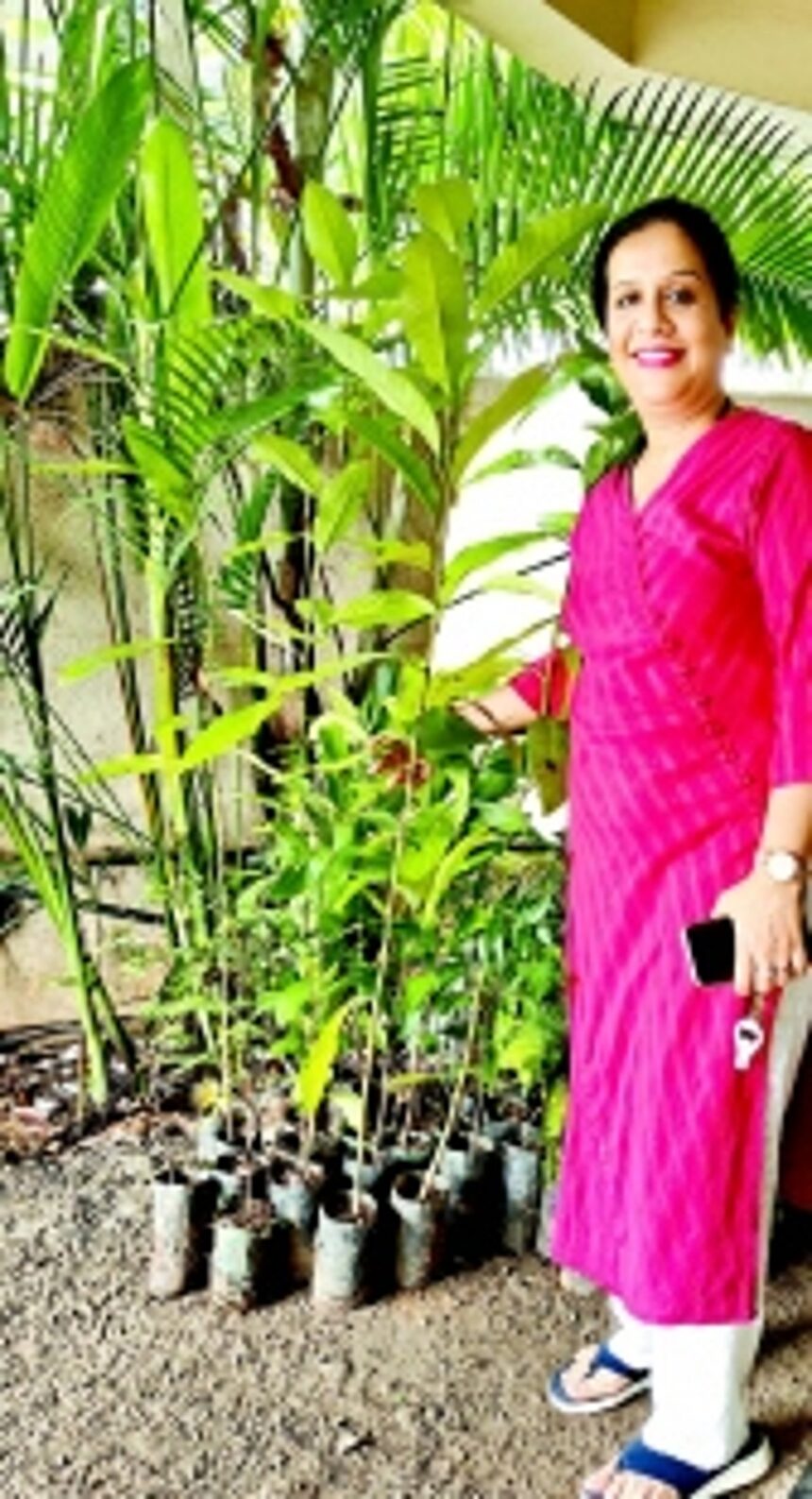
Supported by her network of like-minded individuals and with the help of local MLA Anton Vas, Shraddha managed to get space allotted along the highway, next to the Bhandiatulo Khuris chapel, to plant saplings of the flowering trees she remembers from her childhood. Shradda has procured Onvlam (Mimusops elengi), Surangam (Mammea suriga), Nagchafo, a type of cannonball tree (Couroupita guianensis) and Kadamba (Neolamarckia cadamba), alongside jamun, gooseberry and other fruit trees from the Forest Department, to be planted this week to commemorate Vana Mahotsav. “It’s not enough just to plant saplings and forget about them – they need to be cared for, at least for the first few years,” adds the 54-year-old gynecologist. While she’s been raising funds for tree guards to safeguard the saplings from animals, she plans to convince her friends and neighbours to each adopt a tree and be responsible for it. “I envision a sort of community grove on this stretch, where locals can enjoy the shade, anyone can pluck the fruits and flowers, and children can learn about our natural heritage,” she beams.
Dr Shraddha admits that her bid to re-green the village has faced opposition from some people in the community but takes it with a pinch of salt, acknowledging that her profession has helped further her cause in many ways. “I’ve been practicing here for a long time- three decades of delivering babies in this area have garnered me a level of trust and credibility, making people more receptive to my views,” she remarks. “I was quite upset with the engineers from the construction company, whom I met when the bridge was being built – they were supposed to plant trees to replace the ones that were lost, and regreen the stretch; funds were allotted for this task,” she says. “All we can see now are bougainvillea plants along the median under the highway, which is rather foolish, since bougainvillea requires direct sunlight and does not make for a good hedge plant on medians,” she points out.
Shraddha says she grew up around Tivim and picked up her love for gardening from her grandmother, who was very fond of local flowering trees. “She always used to wear traditional flowers in her hair, and during celebrations and for poojas, the house would be full of flowers – I can still remember the fragrance, it takes me right back to my childhood,” she says wistfully. Her garden is a riot of colour, filled with an impressive collection of plants and trees allowed to grow naturally, attracting a variety of birds, butterflies and bees.