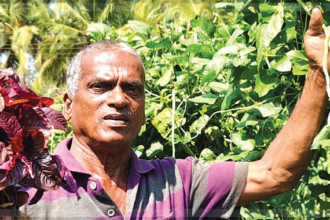
ALDONA: Sandeep Matondkar, a 53-year-old traditional farmer from Naik Vado in Pirna, has embarked on a unique venture—crab farming—that has become a testament to his passion, dedication, and innovative spirit.
“I cultivate seasonal vegetables and during monsoon, rice. Farming has been my core occupation, passed on to me by my parents. I also work in a private company but my passion is farming. I get more happiness in cultivating the land, than other things,” says Sandeep.
“Today, it feels like the whole world is accessible on your mobile. One day I began browsing YouTube to pass the time. A video on crab farming popped up and I started to watch it. As I watched more videos, I got hooked and wondered to myself, will this work or is it just a video on YouTube. As I kept watching related crab farming videos, I thought to myself, why can’t I do it?” he recalls.
Introducing the idea to his family wasn’t met with immediate enthusiasm, but after watching the YouTube videos, they too found the concept fascinating. Undeterred by the lack of local support or guidance, Matondkar took the initiative to build the required tanks and set out to catch crabs from a rainwater drain near his house, during the monsoon.
With no formal training but armed with determination, Matondkar started his small crab farming venture approximately nine months ago. Initially catching crabs by himself, he later involved his son in the process. Overcoming the fear of crab bites, he even purchased leather gloves for protection.
Observing the success of the crabs in a single tank, Matondkar expanded his operation by building a second tank, separating large and small crabs. The larger tank houses around 3,500 crabs, while the smaller tank, primarily for breeding, accommodates over 4,000 small crabs. “The tanks I built are simple and mimic the crab’s natural habitats, which have limited water, mud and stones. I feed them with fresh fish heads,” he adds.
Emphasising the simplicity and cost-effectiveness of crab farming, Matondkar highlights that, apart from the initial investment in building tanks, all the rest is ‘nature’s gift’. He releases water from the tanks every four days, adds fresh well water, and maintains a minimal water level just above the stones.
Matondkar expresses his willingness to share his experience and help others interested in crab farming. He mentions that, if someone wishes to start crab farming next year, he is ready to provide them with crabs to start off with. While Matondkar currently has no plans to sell the crabs, he sees the potential for significant income if the venture is expanded on a larger scale. “So far, I have no plan to sell these crabs, but in the future, I will only give them to others who would like to start farming them. The value of these crabs is much higher than other crabs, as they are rarely found in the market for sale. It’s available only during the monsoon,” he adds.
In hopes of government support, both financial and otherwise, Matondkar envisions his crab farming initiative becoming an example for others in Goa. He believes that with the right encouragement, this innovative form of farming can thrive and contribute to the local economy. “I doubt such crab farming is undertaken anywhere in Goa, which is strange, considering that people here are crazy for fish and crabs. Although the growth is slow, the expenses and investment is low, making it a great side-hustle,” he adds.