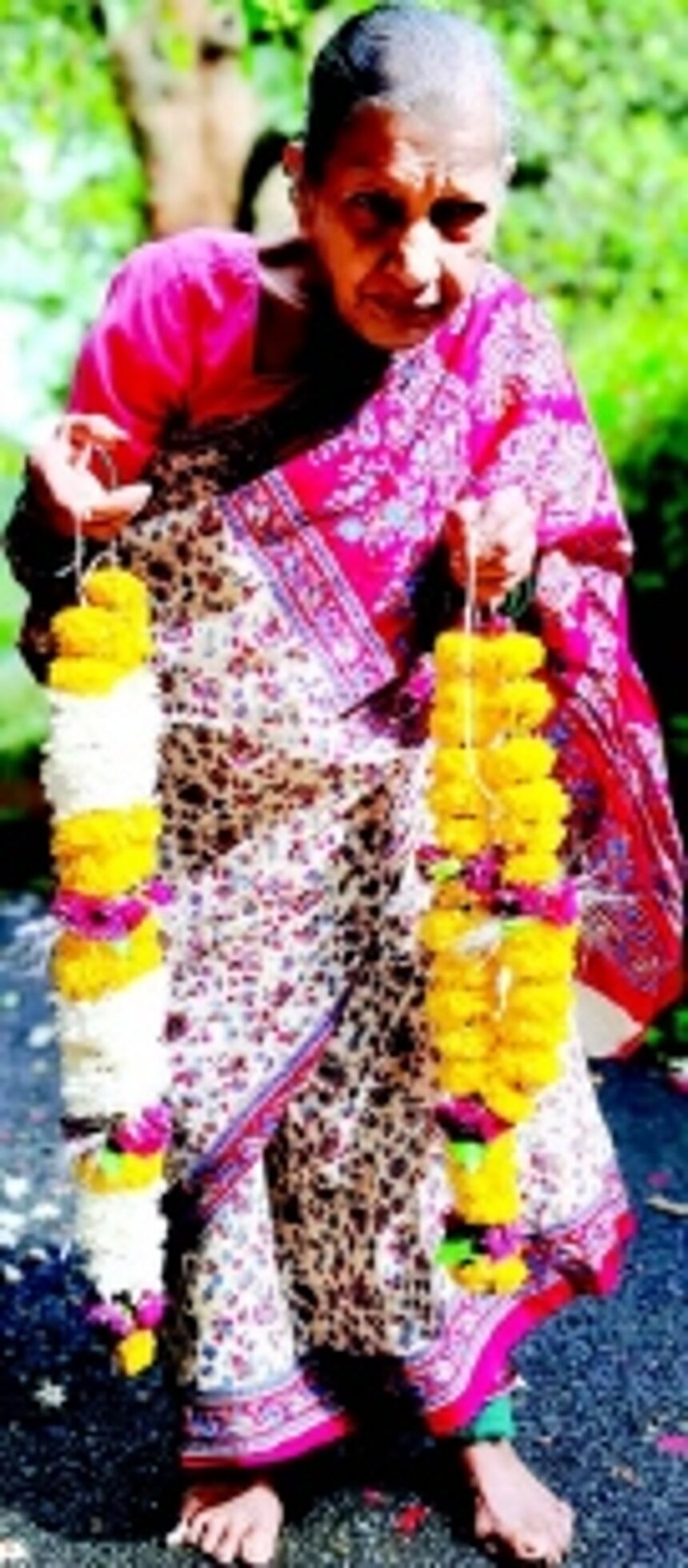
MAPUSA: In the bustling heart of Mapusa Market, where vibrant colours and fragrant aromas dance in the air, there’s a figure who has been a steadfast presence for half a century. Laxmi Sakhalkar is an 80-year-old woman from Cuxem, Corjuem, who has been selling flowers since the age of 30.
Her wrinkled hands have woven countless garlands, and her eyes, now cloudy, have witnessed the changing tides of time.
“I used to get 25 to 50 paise for each flower garland back in the day,” Laxmi reminisces, her voice carrying the echoes of a bygone era. “I began this work out of necessity. My family needed support, and I had to step up. But I did it with dedication and joy.”
Back then, a kilo of flowers cost a mere 12 rupees, and Laxmi expertly transformed them into beautiful garlands. Today, the prices have soared, but her determination remains unshaken. “I sell all types of flowers in the market. My health may be deteriorating, but I’ll continue selling flowers as long as I can,” she affirms.
Laxmi’s presence in Mapusa Market spans over 45 years, making her a familiar face to many. “I like to work hard; it’s what made me and my family who we are today,” she proudly declares. “I was the first one to sell flowers in Mapusa, and now, I’m the oldest.”
Age has slowed her steps, and her mobility isn’t what it used to be, but that doesn’t deter her. With a slow, steady gait, she takes the bus to the market, even in the rain, armed with an umbrella. “The commute is daunting but compared to years ago when I had to take multiple buses to reach the market, it’s easier and quicker now,” she says. A fall has left her unable to carry heavy bags, so she occasionally takes a pilot ride to work.
Laxmi draws her strength from within and credits her resilience for keeping diseases, including Covid, at bay. “I’m not afraid to travel alone; God protects me and my family,” she says, her unwavering faith shining through.
In an age where many youngsters shy away from selling flowers, Laxmi points out that it can be a profitable venture. “Today’s children want everything easy, spending their time on mobile phones and in offices. They forget the value of core family businesses like flowers,” she observes.
“Our ancestors had no choice but to work from home, and that’s how families thrived. We’ve educated our children through this business, turning them into great individuals.”
However, she laments the decline in their business due to the influx of migrant vendors. “They sell flowers everywhere, and our business has suffered. They source flowers from other states and have taken over our spots,” she explains.
Reflecting on her journey, Laxmi acknowledges that her life took an unexpected turn. “I might have worked in an office, but God had a different plan for me,” she says with a smile. “By selling flowers, I educated my children. I don’t know if they’ll continue this work, but I can say that I’ve worked hard and cherished every moment.”
As we part ways, Laxmi leaves us with a profound thought: “In everything, there is treasure hidden. Don’t just look for government jobs; sometimes, you can create your own path, like selling flowers. Don’t look back; always look ahead.”