Anisha Francis
anisha@herald-goa.com
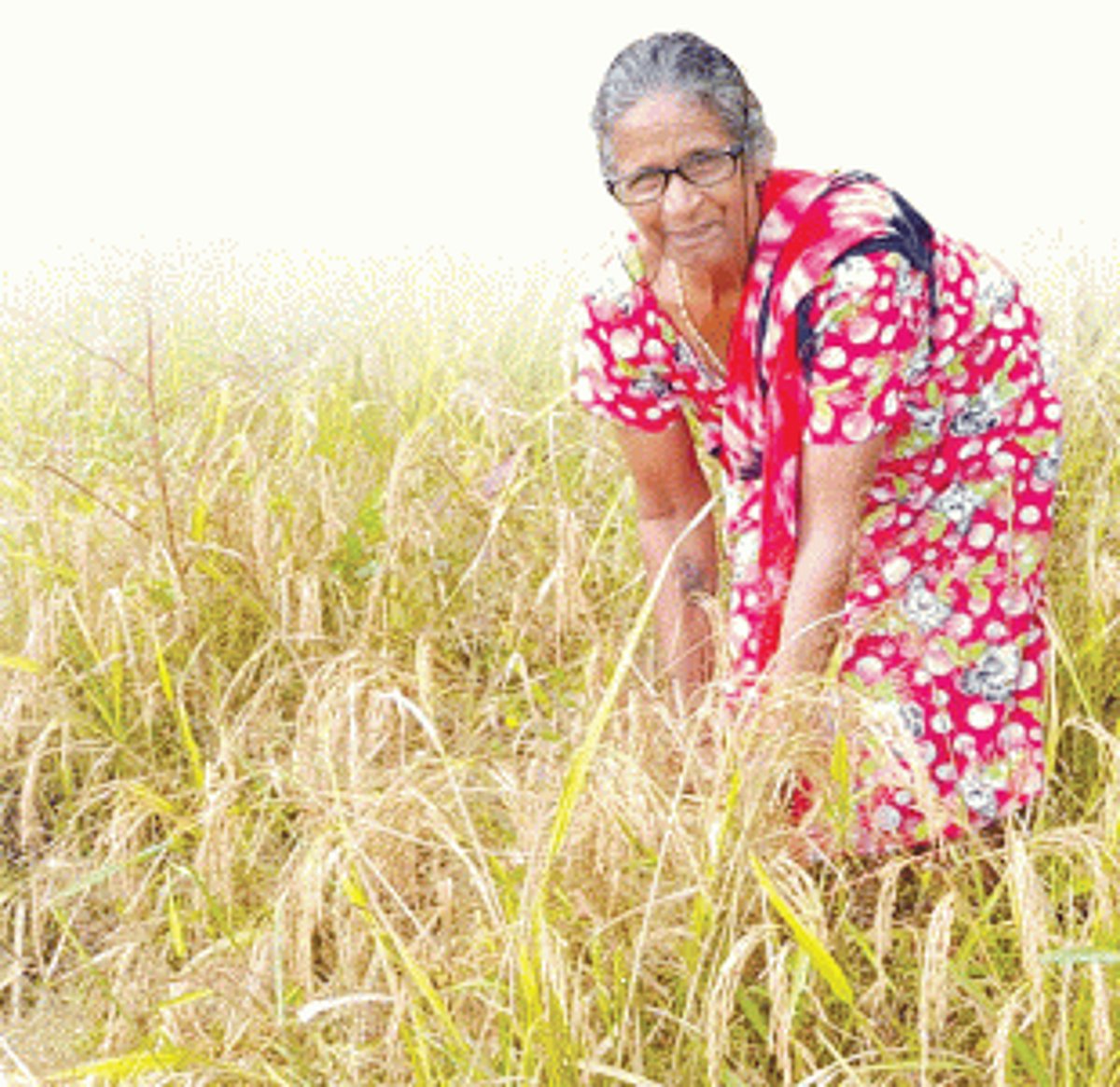
CALANGUTE: Every morning, as the first light breaks, 70-year-old Maria’s day begins with the crowing of a rooster, her trusty alarm clock. Her daily journey takes her from her home in Calangute to Sangolda, where she cultivates her acre of land, assisted by her sister, Cecelia Rodrigues. The duo, despite their age, toil in the fields from dawn to dusk, handling all tasks themselves without the need or means for farmhands.
Maria finds solace and purpose in working the land, ensuring her field remains the cleanest and neatest in the area. This field is not just a piece of real estate; it’s her life’s work, a source of sustenance, and a constant wellspring of satisfaction. At a time when many in Sangolda are cashing in on the booming land values, she has steadfastly refused offers exceeding a crore for her cherished plot, emphasising that her work is her identity and her livelihood.
The farming duo follows a diverse crop rotation. During the Kharif season, they grow the Jyoti rice variety, while in the Rabi crop, they cultivate pulses, black-eyed peas, and various vegetables. Sangolda & Calangute lack adequate facilities for drying produce, so Maria transports the rice to her daughter’s place in Dhargal, Pernem. There, for three weeks, she dries and cleans the harvest, undertaking a tedious process that involves boiling, drying, milling, and eventually taking the rice to the market.
In her younger days, when she recalls selling rice at a mere 10 paisa per ‘pod’ (a local measure), today she
receives Rs 80 for the
same quantity.
Remarkably, one wouldn’t guess that Maria has a handicap; she possesses only one eye. As a child, her parents, both daily wage laborers, couldn’t afford medical treatment when
something injured her eye. Consequently, she lost it.
To help supplement the family income, Maria began working at the tender age of eight, accompanying her parents on foot from Calangute to Sinquerim, where they were engaged in sand extraction on the beach.
Maria’s life took a turn for the better, when at 19,
she married a fisherman,
Joao Mascarenhas.
Joao was part of a community of around 60 fishermen who relied on daily fishing for their livelihood. Maria would take their catch to the market, and they also dried excess fish to turn into manure, which was in demand and fetched extra income.
“Back in those days, kingfish was cheap, selling at 100 pieces for Rs 150, and mackerel was a mere 10 paisa for 50. Calangute was tranquil with barely any houses, no electricity, and no refrigerators. People slept outside during the summer, enjoying a life free of mosquitoes, disease and the worries of today’s world,”
she reminisces. As their children grew, Maria managed to provide them with an education. However, her husband’s health deteriorated due to heart problems, and he had to give up fishing, staying home for the past 15 years. In this challenging time, Maria took on the responsibility of providing for the family and has not looked back since.