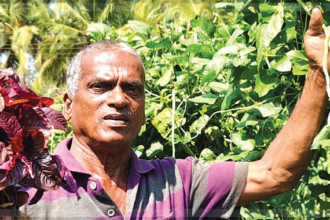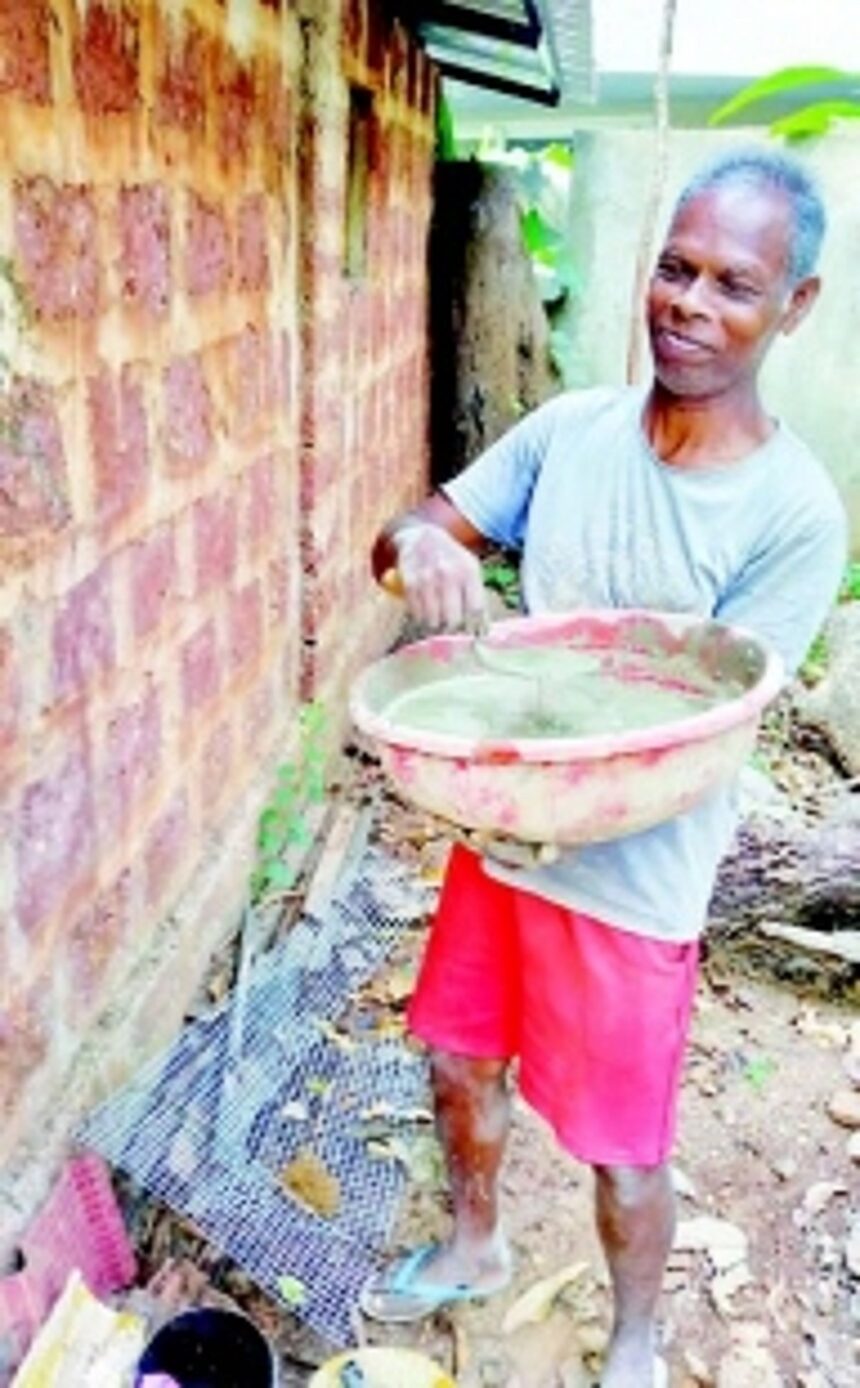
MANDREM: Mahadev Arjun Naik, who inherited the craft from his father Arjun Naik, stands as a testament to the talented Goan masons now facing extinction. Hailing from a humble background in Mandrem, Mahadev, the eldest of two sons, completed his education in Marathi at the Mandrem school. His father, Arjun, was a highly skilled and sought-after mason from the 1960’s to the early 90’s. After finishing his basic education, Mahadev, being from a poor family, joined his father in masonry work as a helper.
“I had no other option, and it was a matter of learning the skill. I thought, what better than learning this work from my father itself, though I initially took it lightly,” says Mahadev. His father paid him Rs 30 per day in those days when he started working as a helper. It was after learning the intricacies of the art from his father that Mahadev decided to establish his own credentials as a mason.
Mahadev, having spent about 30 years working exclusively as a mason, possesses a unique skill set that sets him apart from contemporary masons. He emphasises knowing the right proportion of sand to cement, ensuring clean work and avoiding material wastage. Over the years, Mahadev has received no complaints about his work, and it has stood the test of time.
Today, Mahadev charges Rs 1,000 per day for his skilled labour. Despite not owning a two-wheeler due to financial constraints, he limits his work to the talukas of Pernem and Bardez, considering transportation factors. Mahadev takes pride in reaching his work site by 9 am, regardless of the location, demonstrating his commitment to his craft.
Mahadev paints a grim picture for the future of Goan masons. He believes that this section of society is fading into oblivion because people prioritise speed and quantity over quality. According to Mahadev, the market has been overtaken by non-Goan masons who lack the craftsmanship of true Goan masons. Builders and contractors, aiming for quick and cheap work, contribute to the decline of traditional masonry. “Earlier, Mandrem had an army of masons- today, hardly 10 Goan masons are left here, who inherited the skill from their ancestors,” he laments.
Mahadev also notes that the younger generation shows little interest in learning masonry work, and even his own son is uninterested. He predicts a bleak future for Goan masons, stating, “Once this lot is gone, it is the end of Goan masons.”
Despite these challenges, Mahadev continues to work, upholding the legacy of his father. He criticises non-Goan masons for their poor workmanship, citing instances of wasted cement, a stark contrast to the meticulous work of traditional Goan masons.
Despite his reservations, Mahadev hopes to continue working for another twenty years, maintaining the pride of Goan masons until his old age. “As long as I can work, I will work to carry on the ideology of my father; once my health stops permitting, it is then hands down for me,” he says.