ANISHA FRANCIS
anisha@herald-goa.com
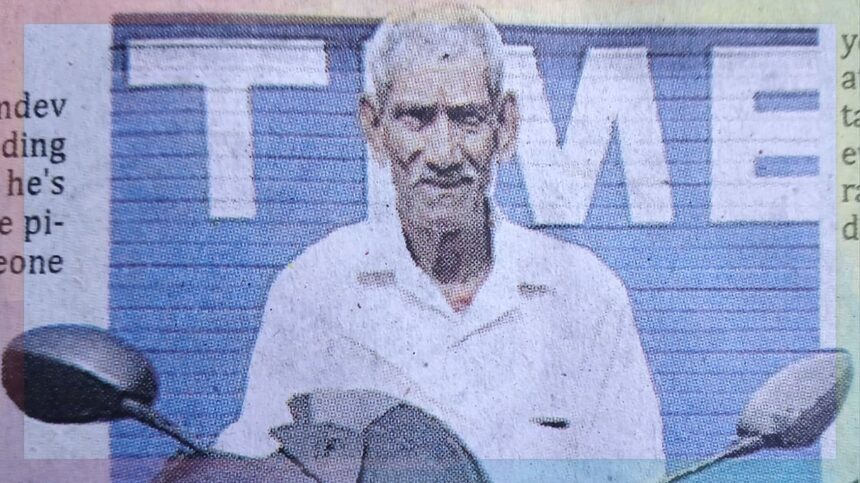
SIOLIM: At 70-something, Namdev Chodankar is the last of his kind, still riding between Siolim and Mapusa, a route he’s known well for decades. The motorcycle pilot, a term once used to describe someone who ferried people for a living, has become a rare figure in today’s Goa. Now, he rides alone, the only one left of the eight colleagues who once operated the same route from Siolim. “All of them have passed away, and so have all my old customers, whom I would meet at the market every day,” says the old timer. “Now, it’s just me.”
Namdev’s journey into this line of work began under difficult circumstances. At just three months old, he lost his father to a tragic accident. His father fell into a well while fetching water, a loss that left his mother to raise him alone. “Without land or means to earn a living, my mother worked in different homes to support my brother and I. We survived on leftovers from kind neighbours who offered what little food they could spare,” he recalls, misty-eyed.
By the age of eight, Namdev had to drop out of school to help his mother. He started working as a daily wage labourer, earning what he could from small jobs in the fields. Despite the hard life, he remained determined to change his circumstances. His first big break came when he managed to save and bought a pair of oxen for Rs 1,000, using them to plough fields across Bardez. “At that time, our working hours were long. We would leave home at 3 am, with a lantern hanging from the oxen’s yoke. Ploughing would start after a cup of tea at 5 am, until 12 noon, when the oxen would take a break to rest and graze. We would walk everywhere, across Aldona, Revona, Bastora, and Calangute. often finishing work after dark,” he says.
His fortunes slowly began to improve. After several years, Namdev saved enough money to sell the oxen and buy a Rajdoot motorcycle. With a small loan from a local bank manager, he was able to make the downpayment of Rs 5,000, paying Rs 150 each month. The motorbike was a prized possession back in the day, and soon, Namdev was ferrying passengers between Siolim and Mapusa. For just a rupee, he would transport students to St Xavier’s College. A good month would earn him around Rs 300, enough to cover his expenses and start thinking about a future beyond the road.
As time passed, Namdev’s role evolved. Motorcycle pilots, in those days, were an essential mode of transport. Before cars became commonplace, people relied heavily on these pilots to take them to nearby towns, run errands, and even assist with transport at wedding homes. Namdev wasn’t just a motorcycle pilot; he became someone people depended on, both for work and his trustworthiness. He also made firm friends with foreign tourists who visited during the 70’s and 80’s.
The demand for his services, however, has now drastically declined. Government-run rent-a-bike and rent-a-car schemes, along with the growing popularity of private transport, have shrunk the market for motorcycle pilots. These days, people are more likely to own their own vehicles, leaving only a handful of older locals with no other transport options who still rely on him. Namdev now charges between Rs 200 and Rs. 250 for short trips, a far cry from the Rs 50 he would charge for long rides to Margao and Ponda in earlier years.
Now, as the roads he once rode so frequently have filled with cars, buses, and other forms of transport, the future of his profession looks uncertain. But Namdev still climbs onto his bike every morning, heading out from Siolim, continuing the legacy of the motorcycle pilots who were once an integral part of life in Goa. As long as he can, Namdev Chodankar will keep riding, the last of a disappearing breed.