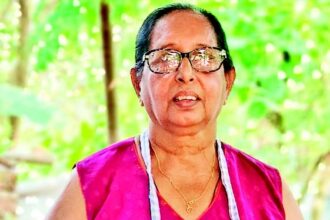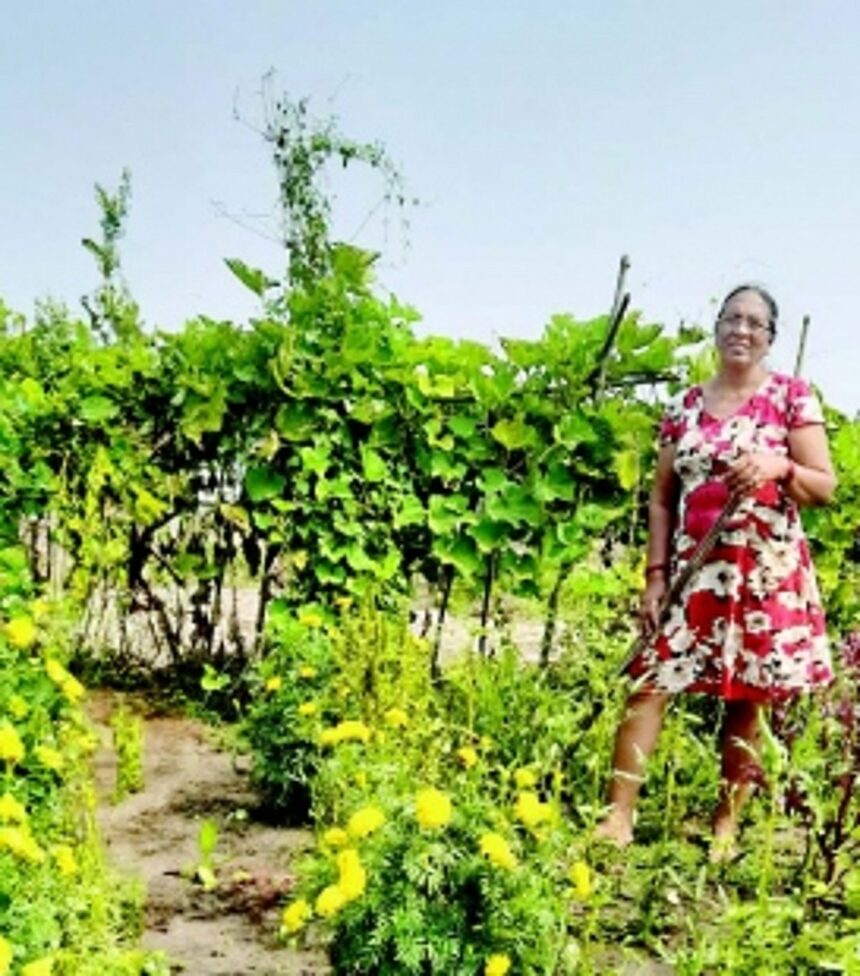
ORLIM: Ida de Paula Dias from Orlim believes in the concept of “know what you eat” and puts it into practice by growing her own food.
“My mom has always been into agriculture, inspiring me from my early school days. As soon as I finished my studies and homework, I would rush to the field,” Ida recalls. She has always enjoyed
agriculture and never found it burdensome. “My mom’s brother, José Vas Martins, was also a farmer. My mom helped him with his cattle and fieldwork. During my summer holidays, I happily accompanied her to the field, assisting in any way I could,” she says.
Ida’s husband, Luis Coutinho, along with a few labourers as needed, works as a team to cultivate their fields. They grow various crops, including paddy (Jaya, Jyothi varieties), red spinach, long beans, ladyfingers, pumpkins, and chillies. “Paddy is the only crop we sell; the other produce is generally for home consumption. If there is excess, we sell it,” Ida explains. She cultivates paddy during the rainy season, pulses in November, and other vegetables in December. She uses cow dung, leaf ash, and goat dung as fertilizers, with synthetic fertilizer applied once for paddy.
“Initially, for transplanting the ‘thorvo,’ we use manual ploughing techniques with bullocks. The rest of the ploughing is done using modern methods, while vegetable planting is entirely manual,” she says. They used to rely on water from their field pond for irrigation, but for the past three years, they have been using water from their well, pumped with a petrol-powered water pump.
They irrigate their field on alternate days. To protect the crops from animals like pigs and cattle, they have put up fencing, but birds such as pigeons and peacocks, along with erratic weather, still cause damage.
“We sell our paddy at government collection centres, while other farm produce is bought by people who come to our home,” Ida says. She avoids synthetic pesticides, using ash from a baker’s furnace and neem oil to keep pests like worms and flies away. “Watching my little
grandchildren involve themselves in farming and post-harvest processing brings a smile to my face, as I can connect them to the land of their birth,” she adds.
Ida spends about two hours each morning, from 8 to 10 am, in her field, with another visit after 5 pm if needed.
Farming keeps her fit and active, and she finds great satisfaction in harvesting what she has sown. She urges parents to send their children out of their comfort zones and into the field, believing it will make them stronger and more connected to their land.
When she’s not tending to her beloved plants, Ida enjoys singing, composing poems, and writing Konkani songs (cantaram) on social issues for children participating in various events at St Michael’s Church in Orlim.
She also writes Konkani plays, mando, and reads books. Her home is never silent when she is around, filling the air with her melodious singing.