AGONDA: Technological and scientific advancements in the modern world have undeniably made life more convenient for humans. Yet, this convenience often comes at a hefty price, affecting long-term health. While scientists made swift progress in finding a treatment for Covid-19, the human race still grapples with diseases that lack definitive cures.
Skin diseases are among the common ailments affecting many Indians. Despite residing in a sun-rich country, at least 75% of Indians suffer from vitamin D deficiency, leading to fatigue, weakness, and loss of bone density due to insufficient sun exposure. The modern urban lifestyle has compelled people to confine themselves to concrete buildings, reducing their chances of being exposed to the sun and subsequently causing vitamin D deficiency.
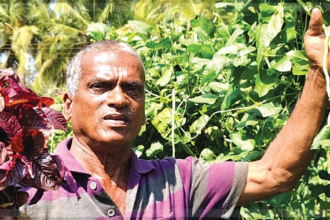
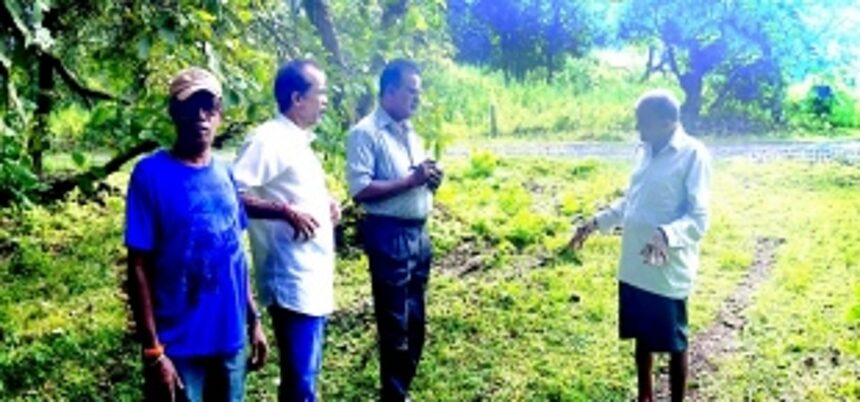
Although the healthcare industry has witnessed significant advancements, many, especially in rural areas, may not afford these treatments. This is where local medical practitioners step in. India has a rich history of Ayurveda, a medical practice rooted in natural therapies. Pandurang Naik Gaonkar from Agonda, Canacona, is one of the last remaining practitioners of this ancient medical system in Goa. Known as a ‘vakhdali’ in local terms, Gaonkar has been treating patients with natural therapies since the age of 18, almost 45 years ago. Before Goa’s Liberation, every village had its ‘vakhdali’, well-versed not only in the patient’s illness but also in their family’s medical history, which facilitated accurate diagnoses and treatments.
“Vakhdalis would utilise various medicinal plants, shrubs, roots, and leaves to treat patients. However, the disciples were expected to embrace a selfless lifestyle as instructed by their gurus. Selflessness was paramount in patient care,” Gaonkar explains.
Gaonkar acquired the art of healing from his grandmother, Taramati. “My grandmother, known as Baay-kaak in the village, passed down her knowledge of local medicine to me. I’ve treated individuals with skin diseases such as shingles, chickenpox, simplex virus, and stomach aches. The herbs needed for preparing these medicines are found in the nearby forest,” he says. “What’s crucial is that patients maintain a clean diet. During illness, a vegetarian diet is recommended as it’s easier to digest. Avoiding non-vegetarian food when sick is advised, as it can stress an already weakened body,” adds Gaonkar.
Despite his expertise, Gaonkar has never advertised his services, believing that the art of healing is sacred. “I don’t request payment from my patients. I accept whatever they can offer. To date, no government authority has recognised my work, which is perfectly fine. I don’t expect anything from anyone,” concludes Gaonkar humbly, with a warm smile.