MARGAO: Walking through the crowd milling around the stalls in the fair celebrating the feast Our Lady of the Immaculate Conception, celebrated at the Igreja de Deus Espírito Santo, probably since 1762 or earlier, one would never go back without visiting a ‘khajekar’ (sweet seller). It was a ritual to purchase some sweets on one’s way back home after attending Mass at the church, not just in Margao but at any parish across the State.
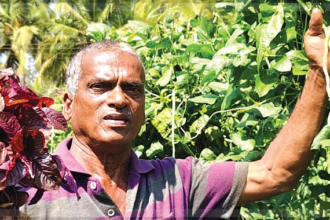
Rohidas Tallaulekar, 59, is a humble soul, a native of Ponda but currently resides in Margao. On striking a conversation with Rohidas, asking him for insights into his family occupation, he proudly mentioned that he belongs to the Vaisha vanni community, and his ancestors were into this occupation since time immemorial.
“My father Pandurang Suria Sawant Tallaulekar moved to Margao somewhere around 1941. When he stayed in Borim (Ponda) he commuted by boat crossing the river Zuari (Aghanashani),” he says. “We were engaged in cultivating and selling watermelons and mangoes during the off-seasons for sweets,” he adds.
Rohidas lists the different types of sweets currently made by him- Khaji (Kadio-bodio), Bundhi ladu, Godda ladu, Gelebi, Allia kappam (ginger-based sweets), and Godda kappam. In the earlier days, in addition to these, there were other sweets like Ghumti (sugar cups), bends (sugar rods), and sheg-nanne (sugar-coated nuts), says Rohidas. He adds that they also sell fried tapioca tubers (Manihot esculenta), locally known as manna. “Around 15 kg of the tubers costs about Rs 20,000!” he exclaims. “Processing the tuber includes washing the tapioca in river water, slicing, salting, drying, and frying and is quite a tedious procedure,” Rohidas explains. He laments that his younger generation is showing no interest in continuing the legacies left behind by their predecessors. Sourcing labour is also getting difficult day by day, he mentions with deep worry as he ponders over the most likely death of his age-old family occupation.
He recalls traveling to different locations with their stock of sweets, on bullock carts in the earlier days. “Now transportation has become very easy, and we use a tempo carrier,” he says.
Rohidas sets up his sweet stall for most Catholic feasts in the South of Goa and the feast of St Francisco Xavier, in Old Goa, which he believes to be the most important among others.
The various temple festivals he caters to are the Margao Dindi, The Zambaulim Gulal, Shirgao Zatra, and Saptah in Vasco da Gama.
In the earlier times, he would stay overnight in the place he set up his stall and cook there, but now with improved transportation, he commutes to and fro every day and carries lunch from home.
Rohidas recalls the prices of sweets to about Rs 4 per raath (200g) around 35 years ago, while today the cost of the same amount has gone up to Rs 80, due to the rise in prices of raw material and labour charges.