PERNEM: While most people have switched to shopping online and tend to purchase clothing from apps that give them access to brands from across the world, there is nothing like the perfect fit of a piece of clothing personalised to your liking by your good old neighborhood tailor. While getting fitted out for school uniforms and traditional wear for a special occasion is a rite of passage for most children growing up, adults today can hardly spare the time to get their clothes tailored, preferring to go the ‘fast-fashion’ way instead.
The skill of tailoring used to be considered essential, at least to be able to mend one’s own clothes and fix trivial damage. In Goan culture, tailoring was also a skill passed down generations of families, as new brides would put together a trousseau of an assortment of embroidered clothes, tablecloths, decorative crochet items, woolen clothing etc to her marital home, and this was even a means to display her skills to her new family.
The tailoring profession is nowhere as popular as it was a couple of decades ago, as each generation is becoming more career oriented, preferring to pursue reliable jobs than to nurture their skills, such as tailoring, music and singing or art.
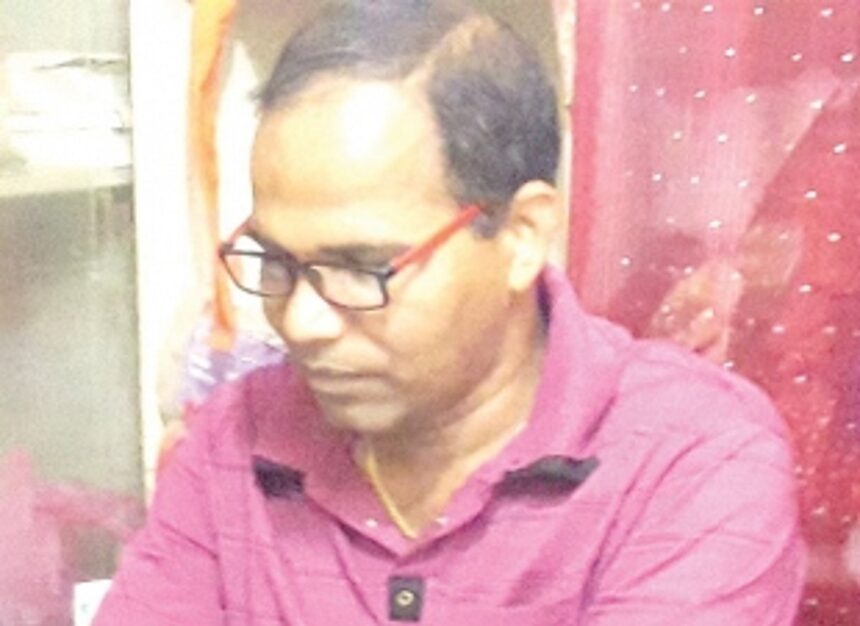
But for Sanjay Satoskar, a 52-year-old resident of Mandrem, tailoring is a passion and he hopes to keep the skill alive and flourishing, through his work. Considered the best tailor in all of Pernem taluka, Satoskar’s skills are in great demand even today, with people from both Hindu and Catholic communities approaching him to sew their clothes.
Satoskar says he developed an interest in sewing during his childhood and began to learn tailoring at 10. “I’ve now been a tailor for 30 years. I embarked on this path in life with a grand investment of only Rs 100. Today, I have built a successful business on that Rs 100,” he says, adding that it was not an easy task. “When I started out, nobody supported me, neither financially nor mentally. People used to mock me, and remark that I have chosen to do ‘ladies’ work’,” he said. However, he did not let the sexist taunts get to him, and since he was genuinely interested in tailoring, he stuck with it.
“In the old days, people were more particular about the quality of their clothing, as a new outfit was special, and had to last long and be worn on multiple occasions. More care was taken, in choosing the material, ensuring that it is durable, breathable and suitable for one’s climate, and getting it stitched to one’s size and style was the only way to go,” says Satoskar.
A self-taught tailor who has had no formal education in needlework, Satoskar makes embroidered designs on sarees, lehengas, Sherwani, Maharashtrian Dhoti, and apart from clothes, he also creates tablecloths with embroidery and thread designs, decorative items, door hangings and other personalised garments. The fame of Satoskars skills are not restricted to Pernem or Mandrem alone, but people from distant places such as Vasco, Margao and even families from Maharashtra and Karnataka make it a point to give their clothes to Satoskar to be tailored.
“My wife Sampada and my children also help me with my work. Right now, my children are studying, but they have always shown interest in this work. In the future, if they do not go for jobs, then I’m confident that they will definitely take this business forward,” says Satoskar.
Satoskar says that not everyone is blessed with such skills. He lamented that today’s youth have completely lost interest in such skilled activities.