SHIRODA: For generations, the salt pans at Shiroda have served as the lifeblood of the community. In a culture known for its unique practices, Goans have long relied on storing fat or local salt for the monsoon season—a tradition now fading away. In bygone days, iodized or table salt was non-existent in Goan households, and locals depended entirely on the sea salt harvested from their own shores. Large earthen pots and bamboo baskets were filled with this local salt, stored in preparation for the rains. Carts would traverse the villages, selling salt, or people would visit the agor (salt pans) directly to purchase in bulk.
This sea salt not only served as a seasoning but also had positive effects on the region’s majestic trees such as coconut, mango, and jackfruit, acting as both an insecticide and a natural fertilizer. However, with modernization and changing times, much of this ancient culture and tradition have been lost. Salt pans that once thrived in locations like Agarwaddo, Calangute, Anjuna behind Gaumwaddy, and Chopdem along the northern coastal belt have vanished, victims of neglect and a lack of preservation efforts by policy-makers.
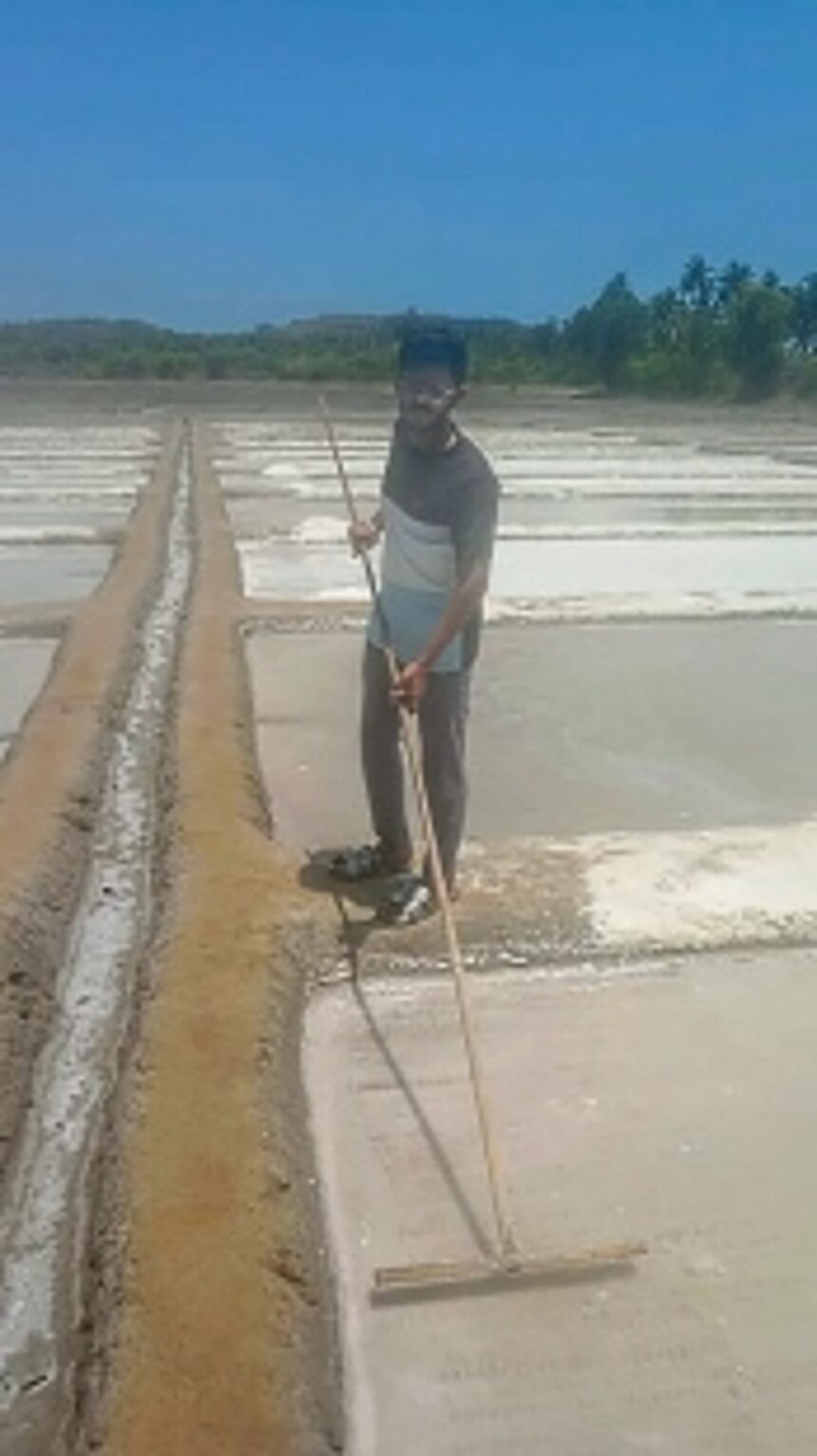
However, there is a flicker of the past that remains alive in Shiroda village, located just across the border in Maharashtra. Shiroda boasts of expansive and historic salt pan areas, stretching over 16 acres, where vast quantities of salt are collected during the months of April and May. Priced at a nominal rate of just Rs 10 per kilogram, this high-quality salt has become a sought-after commodity for many Goans.
The salt pans at Shiroda have a remarkable history, spanning more than a century. Hardik Redkar, one of the salt pan owners who tends to about nine acres, explains the significance of this salt and its demand among Goans. “This nine-acre salt pan has been our family’s livelihood for generations. It was established in 1836 by our great ancestors in collaboration with locals. In 1936, exactly a hundred years later, our ancestors joined the historic Salt Satyagraha movement here, responding to Mahatma Gandhi’s call. Many people were present, and the movement made a profound impact, with some sacrificing their lives,” he shares.
Unpredictable weather patterns, including unseasonal showers, can occasionally pose challenges, but Redkar emphasizes their preparedness to overcome such obstacles. Due to the high density of saltwater in the pans, minimal dissolution occurs during brief showers. However, continuous rain over two or three days poses a threat to the harvest.
Marcelino D’Souza from Siolim prefers to purchase salt from Shiroda due to its superior quality. He remarks, “The salt from Shiroda is quite impressive—clean and thick. Its quality surpasses what is available in Goa, which is why I always choose to buy it.”