SIOLIM: Traditional art is slowly fading away, with youngsters showing little interest in learning and preserving it. With ready-made items ruling the roost today, the demand for handmade Goan products is gradually declining.
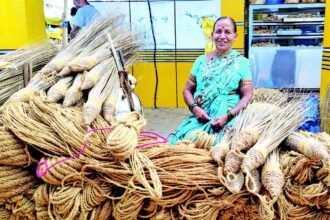
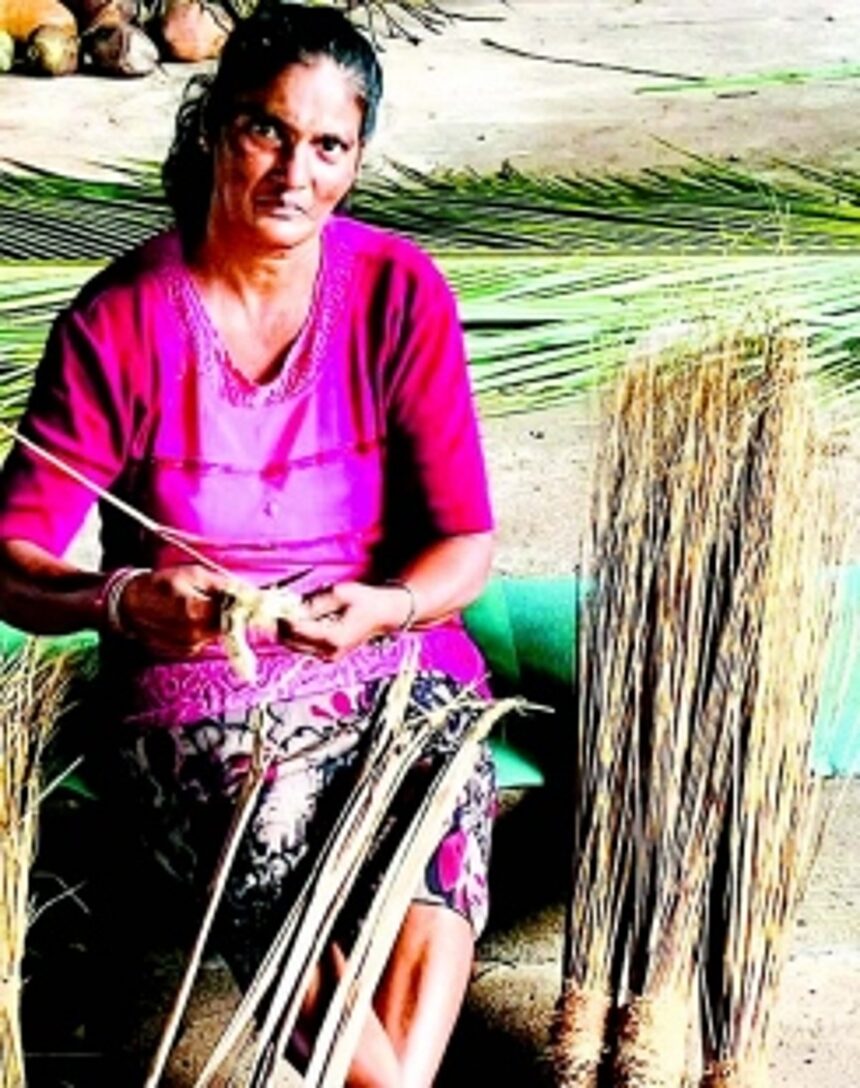
The older generation, as long as they are alive, may continue these traditional arts. However, without anyone to carry the torch forward, Goan traditions may eventually die a natural death. Some middle-aged and senior Goan artisans are striving to preserve various traditional arts because they do not want to see them fade away in their lifetime. Luisa Dantas, a Siolim-based artist, is one such individual who is deeply passionate about her work and believes that the younger generation should carry it on.
Luisa hails from a modest family in Anjuna, where her mother used to craft coconut palm spine brooms and sell them in the market. In those days, transportation was limited, so people would either visit their home to purchase these handmade items or they had to carry them to the town market on foot.
Luisa reminisces about the sturdy and long-lasting brooms her mother used to craft, which were highly sought after due to their quality. In those days, people depended on coconut palms and firewood for cooking, making these brooms essential for daily life.
As the years passed and Luisa got married in Siolim, her husband provided the support she needed to continue her family’s trade. From that point on, she wholeheartedly embraced the work, creating and selling brooms at any available platforms. You can frequently find Luisa at the weekly Wednesday Siolim church area market, showcasing her handmade brooms.
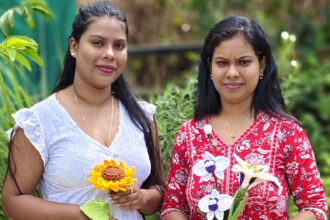
Recognising the fading art of broom making, a young woman from Siolim, Tanya Carvalho, enlisted Luisa’s help to conduct classes on broom making. In the past, obtaining coconut palms was more challenging, but today, as coconut palms are less sought after, they are easier to acquire. Luisa explains that for broom making, only the middle portion of wet palms is used, and about three palms are needed to create a single, robust broom.
For those who work continuously, it takes approximately three hours to complete a broom, and it may take longer for newbies.
Regarding the market for her brooms in today’s competitive age, Luisa acknowledges that there are cheaper, machine-made alternatives, and even plastic variants that pose a threat to genuine handmade broom makers. However, she believes that quality can retain customers. The brooms she creates are strong, sustainable and durable due to the meticulous weaving and tying process, making them less prone to loosening. The price of each broom is modest, not exceeding Rs 200, considering the laborious process. Nonetheless, Luisa laments that some people haggle for prices as low as Rs 100 or Rs 150, which can be disheartening after putting in three hours of hard work.
Despite these challenges, Luisa remains determined to continue her work as long as her health permits. Broom making primarily involves sitting and weaving, requiring minimal physical exertion, making it suitable even for elderly individuals.
When asked whether she believes her children will continue this craft, Luisa acknowledges that today, very few are attracted to this work because of the low income and the substantial effort required. While it may not be a high-paying profession, it is crucial for preserving tradition. Luisa emphasises the importance of upholding Goan traditions, as they reflect the essence of the Goan identity. Allowing these traditions to vanish would leave Goans with little to call their own, she says.